
Regressive politics surrounding the unhoused growing in California
As homelessness continues to rise in the United States, “progressive” cities like New York, Chicago and Seattle have been critiqued for failing to deal with such a pressing catastrophe.
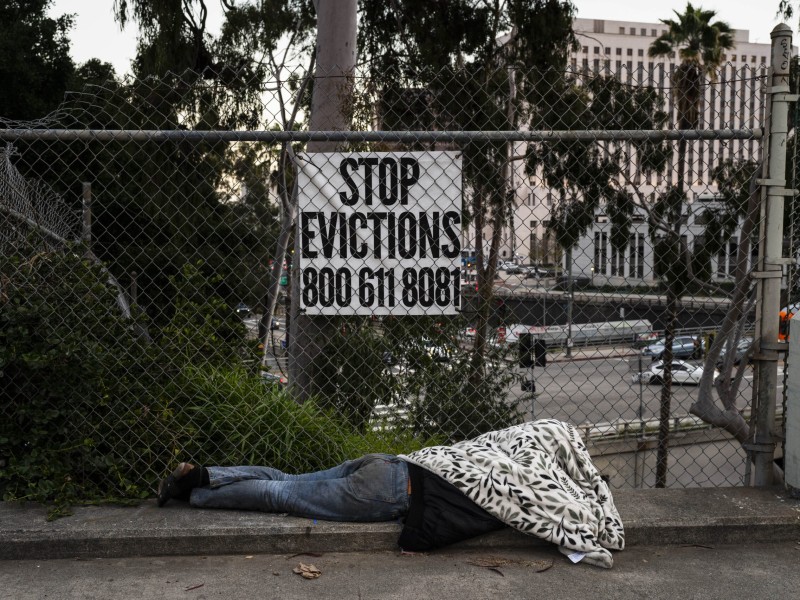
As homelessness continues to rise in the United States, “progressive” cities like New York, Chicago and Seattle have been critiqued for failing to deal with such a pressing catastrophe.
Nowhere has the issue become more ubiquitous than San Francisco and California more broadly. Indeed, homelessness is very much on the minds of voters in the state.
But recent years have seen the rise of a reactionary backlash to city governments and their supposed enabling of homelessness.
For example, a recent New York Times op-ed by billionaire Sequoia Capital honcho Michael Moritz placed the blame on the so-called radicals in the Democratic Socialists of America, the “malleable” nature of local governance and the city’s Board of Supervisors.
This, according to Moritz, is a major factor in why a “fentanyl epidemic, homeless encampments, housing that is unaffordable for most, deteriorating school systems and have become chronic in the City by the Bay.
Such conditions, Moritz explains with cutting, intellectual prose, make it so “even Superman equipped with a lightsaber would not be able to govern San Francisco.”
Besides being an exhausting writer, Moritz’s observations are hardly novel. Other members of the 1%, like journalist and heiress Nellie Bowles, and right-wing activists have already waxed poetic on the failures of the Bay’s namby pamby, granola-istas who are supposedly more concerned with pronouns and political purity than problem solving.
When it comes to homelessness, these privileged few argue, somebody needs to just step up and just do something.
In reality, what these critics all share is their innate disdain for the unhoused and the apparent inability of local and state government to implement the policy they would like to see: removing the unhoused from public view.
However, this coterie of hand-wringing weirdos has been strangely quiet when it comes to the actual actions being taken.
As reported in The Appeal, both California Gov. Gavin Newsom and newly-elected Los Angeles Mayor Karen Bass are forcibly removing people from the street. In Newsom’s case, this involves compelling individuals with mental illness into coerced psychiatric environments.
And under Bass’ leadership, this has meant clearing camps without articulating a plan for permanent housing.
But what both these bad faith critics and the targets of their disdain share is an inability to deal with the root cause: economic stratification. The Bay Area has an astonishing amount of income inequality — a factor that is demonstrably connected to the kind of crime and social destitution that people like Moritz’s claim to be worried about.
As the poverty reporter Wes Enzinna points out, the mental illness, drug addiction and homelessness we’re seeing in major cities is deeply rooted in the inability for working people to exist in our current socio-economic arrangement.
Enzinna has actually spent time living in the kind of camp that people like Moritz gawk at, and, as he puts it, many of its denizens were not the stereotypes we imagine. “Among the camp’s 30 or so residents, there are many drug and alcohol users as well as two people suffering from severe mental illness,” Enzinna writes.
“But the encampment has also served as a temporary home of last resort to a UPS worker who lost his job after a serious injury; former homeowners; a professional soccer player; a transgender DoorDash driver who moved from Louisiana to escape bigotry; and retirees and disabled persons whose Social Security checks of about $1,000 a month aren’t enough to afford them an apartment.”
Heartland Signal encourages news organizations and content creators to use our content. You're welcome to republish this article for free as long as you follow our republishing guidelines.
Related Articles
GOP Wisconsin legislator Zimmerman missed 225 votes last session, some to attend AI summit
Reps. Tip McGuire and Shannon Zimmerman were both booked on the same Milwaukee AI panel on June 24, 2025. McGuire withdrew so he could finish voting on the Assembly floor. Zimmerman made the panel, and votes kept being recorded in his name after he left his seat.
Ohio’s Ramaswamy and McColley have long backed near-total abortion bans
Even after Ohio voters overwhelmingly passed a 2023 constitutional amendment protecting abortion rights, GOP gubernatorial nominee Vivek Ramaswamy and state Senate President Rob McColley remain committed anti-abortion advocates. Audio from a recent rally shows McColley framing the constitutional defeat not as a setback, but as a shift in strategy.
Ryan Mackenzie’s stance on data centers collides with his policy record
Rep. Ryan Mackenzie says data centers should pay their fair share. His record includes a 2021 tax exemption vote and support for limits on local oversight.