
Rep. Bill Huizenga has a 15-year record of voting to cut Social Security and Medicare
More than 330,000 people in Bill Huizenga’s district collect Social Security or Medicare. Over 15 years in Congress, he has voted repeatedly to shrink both.
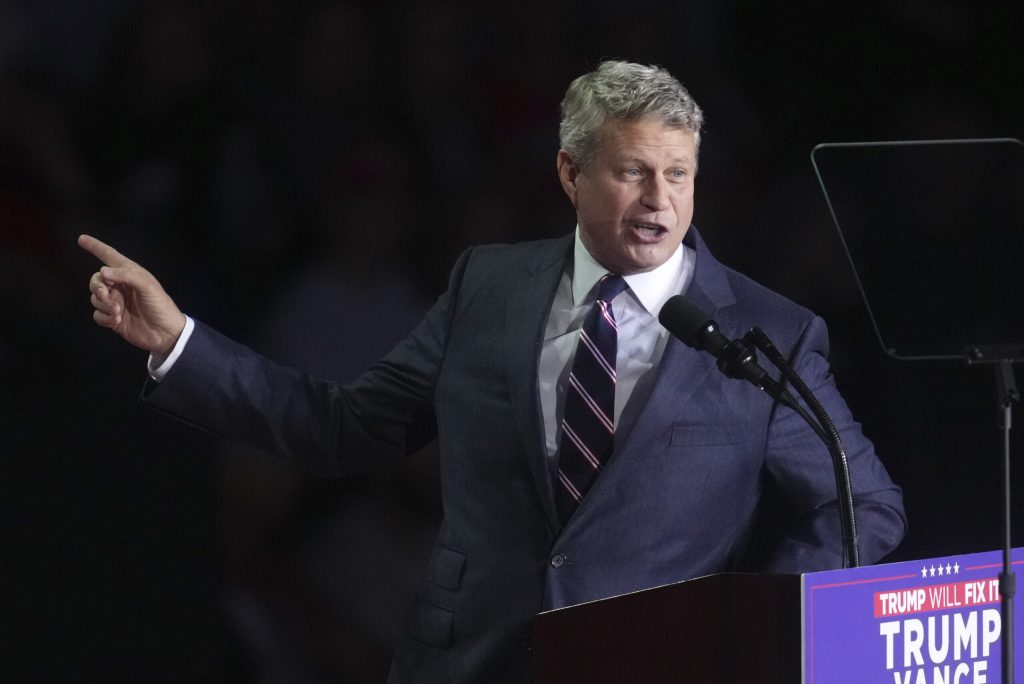
For more than 15 years in Congress, U.S. Rep. Bill Huizenga (R-MI) has repeatedly advocated for and voted to reduce Social Security and Medicare benefits. These votes directly impact more than 330,000 residents in Michigan’s 4th Congressional District who rely on these earned-benefit programs.
Over 178,000 residents in Huizenga’s district rely on Social Security payments. Between 2011 and 2017, Huizenga voted five times for Republican budget proposals that would gradually raise the Social Security full retirement age to 69.
When defending proposals to raise the retirement age during a 2011 television interview, Huizenga dismissed personal concerns.
“I’m 42. I’ll be 106 when these recommendations, if we adopted them right now, would actually come into place. I’m gonna be ok,” Huizenga said.
More recently, Huizenga has continued floating cuts. During an telephone town hall last October, he argued that “adjustments” were necessary for younger generations and suggested establishing a mechanism where high-earning individuals could “voluntarily” forfeit their Social Security and Medicare coverage.
Support for Medicare ‘death spiral’
The congressman’s record on Medicare reflects a similar pattern. There are 166,213 Medicare beneficiaries in his district. Between 2011 and 2017, Huizenga voted seven times for House budget resolutions that sought to privatize Medicare by transforming it into a “premium support” voucher system.
Senior advocacy groups, including the National Committee to Preserve Social Security and Medicare, warned that converting Medicare into a voucher program would send traditional Medicare into a “death spiral.” Under voucher proposals, private insurers could target healthier retirees, leaving traditional Medicare with older, sicker beneficiaries and drive premiums out of reach.
Huizenga backed further spending reductions in 2025 by voting twice for the “One Big Beautiful Bill Act” (HR 1). The Congressional Budget Office projected that the legislation could force nearly $500 billion in automatic cuts to Medicare beginning this year. During a town hall following the vote, Huizenga said that future generations will have to make “adjustments.”
“My kids now, this is going to be the first generation that literally could be alive long enough to be retired as long as they worked. Okay, the system was never built for that,” Huizenga said last October. “And they actually have time to make some adjustments, whether it’s adjustments in their qualifications, or in how long they’re going to work. This is the realities of what we have to deal with. And again, we’ve got to have the courage to have the conversation.”
Support for immediate safety net cuts
Huizenga has also pushed for constraints through a constitutional balanced budget amendment. The proposal would prohibit the government from spending more than it generates in tax revenue in a single year. Members of the Republican Party have proposed implementing this to curb federal spending.
“I’ve been a founding member of the balanced budget amendment caucus here in Washington, D.C. I mean, I’ve been doing a lot on debt and we’ve got to curb our spending,” Huizenga said last year.
Policy analysts at the Center on Budget and Policy Priorities (CBPP) caution that a balanced budget amendment would jeopardize Social Security and Medicare benefits. Under a balanced budget amendment, the Social Security administration would be legally prohibited from drawing on its $2.56 trillion trust fund reserves to pay promised benefits, forcing immediate benefit cuts.
“But under the balanced budget amendment, it would essentially be unconstitutional for Social Security and Medicare to draw down these savings to pay promised benefits — we would face their funding cliffs immediately instead of in the 2030s,” The CBPP said last year. “Instead, benefits would have to be cut, because all spending would have to be covered by tax revenue collected during that same year.”
As a founding member of the Balanced Budget Amendment Caucus, Huizenga has repeatedly voted for measures requiring a balanced federal budget, most recently in March. In April 2018, he voted to block a motion that would have explicitly exempted Social Security, Medicare and Medicaid from balanced-budget reductions.
In a statement to Heartland Signal, Huizenga spokesperson Brian Patrick contended that the congressman is working to protect benefits.
“Michiganders have paid into Social Security and Medicare their entire lives and earned every penny of these benefits,” Patrick said. “Congressman Huizenga is hard at work with colleagues on both sides of the aisle to prevent automatic benefit cuts and protect these programs for generations to come.”
Heartland Signal encourages news organizations and content creators to use our content. You're welcome to republish this article for free as long as you follow our republishing guidelines.
Related Articles
Zach Nunn sticks to phone sessions as Trone Garriott holds open town halls
Iowa Rep. Zach Nunn swatted at a reporter’s phone when asked about rural hospital closures — after calling warnings about the issue a “myth” last year. Meanwhile, his Democratic opponent Sarah Trone Garriott is holding open town halls across all 21 counties, while Nunn opts for telephone sessions.

Deleted posts reveals Pfaffenbach’s extreme political rhetoric and false claims
259 deleted X posts from Wisconsin Assembly candidate reveals a record of inflammatory political rhetoric, including opposition to abortion rights and false claims about Social Security fraud.

Van Orden backs Canada tariffs as Wisconsin dairy braces for fallout
Rep. Derrick Van Orden backs the Canada trade war. A UW-Madison economist says Wisconsin dairy will feel it more than most states, with milk prices at risk.