
PA legislature wrestles with how to handle data center developments
State legislators in Harrisburg have largely resisted any comprehensive regulation, on data centers, instead focusing on piecemeal, largely bipartisan efforts.
This post has been republished from the Pennsylvania Capital Star under Creative Commons license CC BY-NC-ND 4.0.
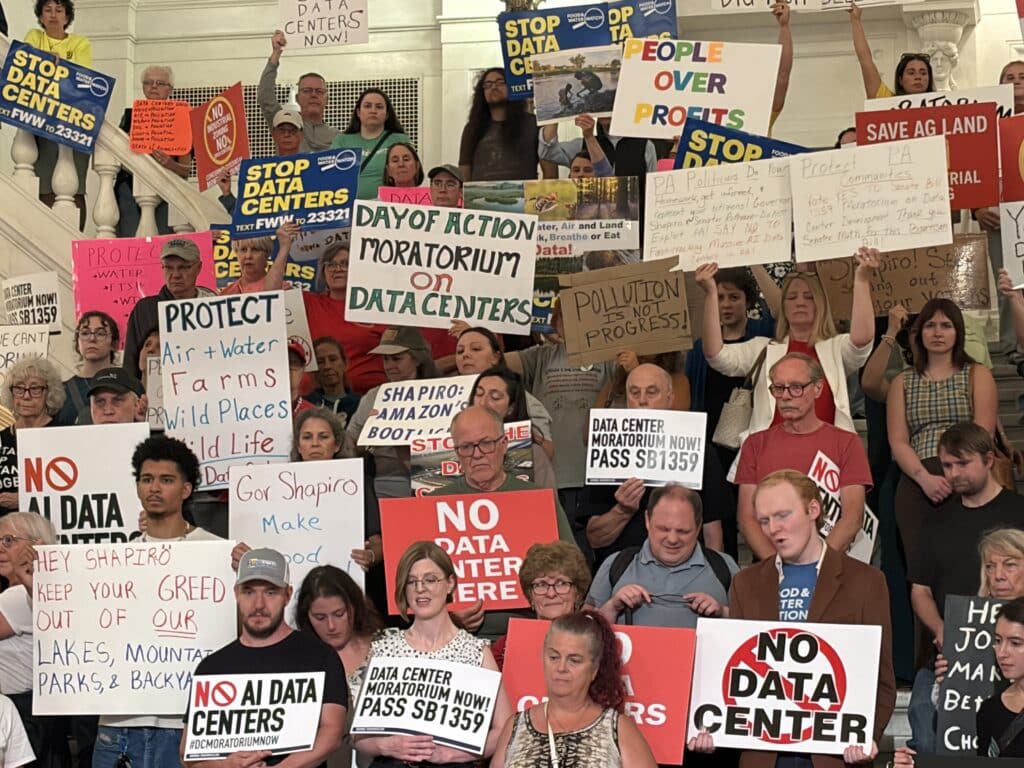
Public opinion on data center developments appears to be souring in some parts of the commonwealth as dozens of companies submit applications to build in suburban and rural communities. But state legislators in Harrisburg have largely resisted any comprehensive regulation, instead focusing on piecemeal, largely bipartisan efforts.
Four such bills moved through the legislative process this week, mostly with near-unanimous votes.
One could require better emergency planning coordination with local officials while two others would allow municipalities to pause applications altogether.
But a proposal that would prohibit the use of non-disclosure agreements (NDAs) encountered significant opposition Tuesday, with several Republicans sharing concerns about publicizing trade secrets.

Rep. Joe Ciresi (D-Montgomery) painted House Bill 2359 as a way to stop local government officials from signing NDAs. Opponents have said they had to file numerous Right-to-Know requests to get basic information related to the projects.
“We’ve heard from our residents over and over again about data centers, and we talk in this chamber all the time about transparency and understanding,” said Ciresi. “This bill allows our neighbors to know what’s being built.”
But others disagreed, saying the bill went beyond NDAs, including requirements for public meetings and power usage reporting.
“NDAs are used in all kinds of industries … and the reasons why they’re used are very clear,” said Rep. Josh Kail (R-Beaver). “These large manufacturers or companies have to keep certain things under wraps while they’re doing their due diligence, while at the same time be able to give information to local officials.”
He noted that last week the body passed a bill giving municipalities the option to pause applications, but said this proposal takes away some of that local control.
SUPPORT: YOU MAKE OUR WORK POSSIBLE
“Nobody is forcing a local official to sign an NDA if they don’t believe it’s the right thing for their community,” he continued.
Rep. Jamie Walsh (R-Luzerne) said an NDA had “ripped a community apart” in his district, making it so that elected leaders “can’t be honest with the public.”
One Democrat, Delaware County Rep. Greg Vitali, joined 30 Republicans in the minority to vote no, but 171 members moved to send the bill to the Senate.
Preparing for data center emergencies
House Bill 2535, authored by Rep. Christina Sappey (D-Chester), moved out the Veterans Affairs & Emergency Preparedness Committee on a 25-1 vote Tuesday, which she described as a “rather straightforward,” way to mitigate potential risks to first responders in emergencies.
In order to obtain a permit of occupancy, data centers would need to submit their floor plans and interior contents to local officials, including information on emergency power shutoff switches, egress paths and manual activation points for fire suppression systems.
Plans must be updated annually and are not subject to public records laws “to the extent that the disclosure would be reasonably likely to jeopardize the safety or physical security of the facility or critical infrastructure.”
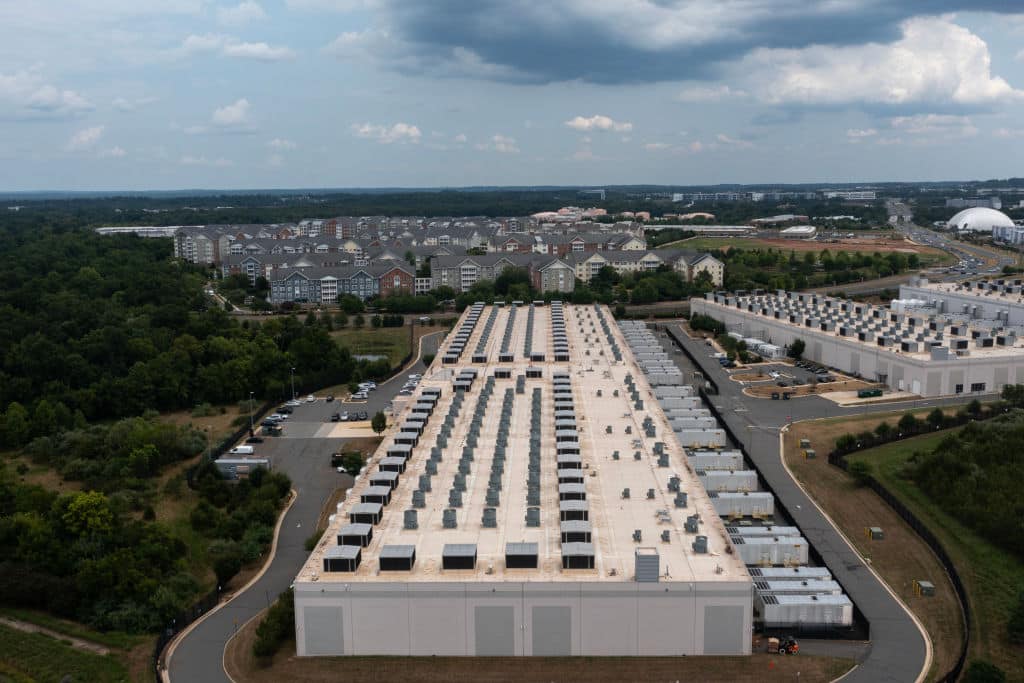
“We’ve been talking about data centers now for months, but the one thing we haven’t talked about is what could potentially go wrong inside some of these facilities,” said Sappey. “They are large and, in some cases, they have long corridors. They have different rooms with different types of equipment, and our first responders who had an alarm would not know what they were walking into.”
There’s a $10,000 penalty for the first offense, followed by a $5,000 charge for each following day until the violation is addressed.
Rep. Greg Scott (D-Montgomery), a volunteer firefighter in Fairmont, worried about instances where emergency responses might require specialized equipment or fire suppression foam — a burden that could fall on small, underfunded fire departments across the commonwealth.
“That onus should not be on taxpayers where there are billion-dollar corporations that have the resources to put this stuff forward,” continued Scott. “We cannot lose sight of the financial burden that some of these data centers will put on our fire service.”
But Rep. Michael Stender (R-Northumberland), a former Harrisburg firefighter, said that “there’s nothing here that necessarily concerns me,” adding that building codes already required sprinklers.
“The best firefighters actually are those sprinklers. They are actually better firemen than our volunteers and our career firefighters,” said Stender. “They’ll put out about 70-80% of that fire, and then the steam typically does the rest of the work.”
Other committee members pushed back on that assertion, noting that data centers rely on a wide range of energy sources that might require a more tailored response.
Stender was the lone “no” vote, adding that he had “some concerns about some of the terminology in the bill.”
Allowing municipalities to “hold” development
Lawmakers on both sides of the aisle and in both chambers seemed interested in advancing legislation allowing municipalities to pause all data center applications, as seen in two bills greenlit by the Senate Local Government Committee on Tuesday.
“The reality is that many of our local governments are being asked to evaluate these proposals before they’ve had sufficient time to understand their impacts or develop appropriate zoning ordinances tailored to this rapidly evolving industry,” said Rep. Paul Friel, the sponsor of House Bill 2496.
SUBSCRIBE: GET THE MORNING HEADLINES DELIVERED TO YOUR INBOX.
The bill would give municipalities the option to “hold” zoning applications for 180 days. The House okayed the measure on a 201-1 vote last week. Senators amended it to clarify that it would only apply to new applications and passed the bill unanimously.
Another proposal would give municipalities even more time, up to 18 months, to place a moratorium on new, hyperscale data center applications.
“Our communities need some breathing room,” said Senate Bill 1345 sponsor Sen. Jarrett Coleman (R-Lehigh). “Frankly, so does this commonwealth.”
Coleman emphasized that any moratorium must have a specific reason, such as developing ordinances or analyzing power and water supplies.
Though the bill passed on a 10-1 vote, members rejected an amendment from Sen. Rosemary Brown (R-Monroe) that would extend the moratorium up to three years.
Sen. Patty Kim (D-Dauphin) wondered about the constitutional limitations, noting that a one-year moratorium in Texas’ Hill County had to be reversed last month after a developer filed a $100 million lawsuit challenging the rule.
Both bills now move to the full Senate for further consideration.
Heartland Signal encourages news organizations and content creators to use our content. You're welcome to republish this article for free as long as you follow our republishing guidelines.
Related Articles
Missouri education board declines to seek $300 million increase in school aid
After a stalemate, the board voted to keep its foundation formula request flat despite rising costs under state law.

December trial date set for South Dakota lawmaker facing election-related felony charges
A judge in Minnehaha County set a December trial date on Tuesday for a South Dakota state senator facing election-related felony charges.

Jackson County GOP names 9/11 golf sponsorships after attack sites
Sponsorship tiers named for the Twin Towers, the Pentagon and Flight 93 are on sale for a “Tee Off in Remembrance” event on the attacks’ 25th anniversary.