
Is military engagement in Mexico the new hobby horse of the GOP?
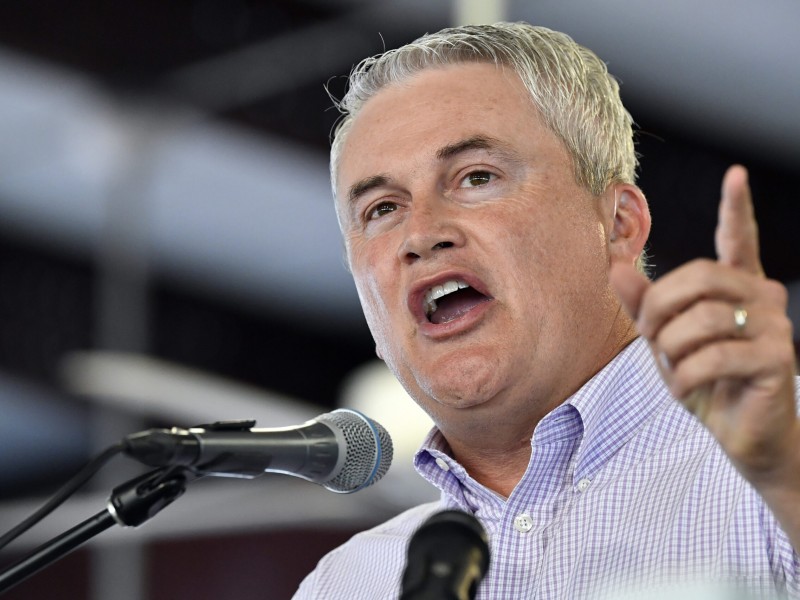
In a recent interview with “Fox and Friends,” U.S. Rep. James Comer (R-KY), the new chair of the House Oversight and Accountability Committee, lamented that former President Donald Trump did not engage in a covert military action that would have involved bombing cartel-controlled drug labs located in Mexico.
“One of the things we learned post-Trump presidency is that he had ordered a bombing of a couple of fentanyl labs, crystal meth labs,” explained Comer.” “…For whatever reason, the military didn’t do it. I think that was a mistake,” he added.
The Kentucky congressman is most likely referring to a passage in then-Defense Secretary Mark Esper’s new autobiographical book, “A Sacred Oath: Memoirs of a Defense Secretary in Extraordinary Times.” Esper writes that Trump believed that if they could conduct such operations in a clandestine fashion “no one would know it was us.”
Comer’s comments are just the most recent example of Republican saber-rattling: Earlier this year, Rep. Marjorie Taylor Greene (R-GA) expressed frustration with the fact that the U.S. was involved in Ukraine but not “bombing the Mexican cartels that are poisoning Americans.”
And Vivek Ramaswamy, an American businessman who recently announced his intention to seek the 2024 Republican nomination for President, said that, if elected, he would use “justified military force to decimate the cartels, Osama bin Laden-style.”
Such comments come on the heels of a Authorization for Use of Military Force (AUMF) bill introduced by GOP Reps. Dan Crenshaw (R-TX) and Mike Waltz (R-FL) in January. The AUMF would allow the president to declare war on the Sinaloa and Jalisco New Generation Cartel.
Don’t worry though, this piece of legislation has safeguards to prevent a quagmire like Iraq or Afghanistan.
Crenshaw and Waltz’s AUMF “establishes limitations that prohibit the use of military force against foreign persons outside the territory of the United States to ensure the civil liberties of U.S. citizens are protected and includes a sunset five years after enactment to ensure the war against cartels does not become an endless war,” Crenshaw’s press release reads.
It is true, however, that the influence of the Mexican cartels is seemingly omnipotent. In February, Genaro García Luna, Mexico’s “top cop” in the drug war and its Secretary of Public Security from 2006 to 2012, was found guilty in a New York court for accepting $274 million in bribes from the Sinaloa cartel over the course of a decade.
Luna worked intimately with the CIA, FBI, DHS and DEA during his tenure as secretary.
But surely a new, War on Terror-style engagement is just what this poly-crisis calls for.
Heartland Signal encourages news organizations and content creators to use our content. You're welcome to republish this article for free as long as you follow our republishing guidelines.
Related Articles
Missouri education board declines to seek $300 million increase in school aid
After a stalemate, the board voted to keep its foundation formula request flat despite rising costs under state law.
December trial date set for South Dakota lawmaker facing election-related felony charges
A judge in Minnehaha County set a December trial date on Tuesday for a South Dakota state senator facing election-related felony charges.

Jackson County GOP names 9/11 golf sponsorships after attack sites
Sponsorship tiers named for the Twin Towers, the Pentagon and Flight 93 are on sale for a “Tee Off in Remembrance” event on the attacks’ 25th anniversary.