
4 Heartland states where Republicans have obstructed direct democracy
Republicans across the Heartland continue to blatantly undermine direct democracy and the will of voters in their state.
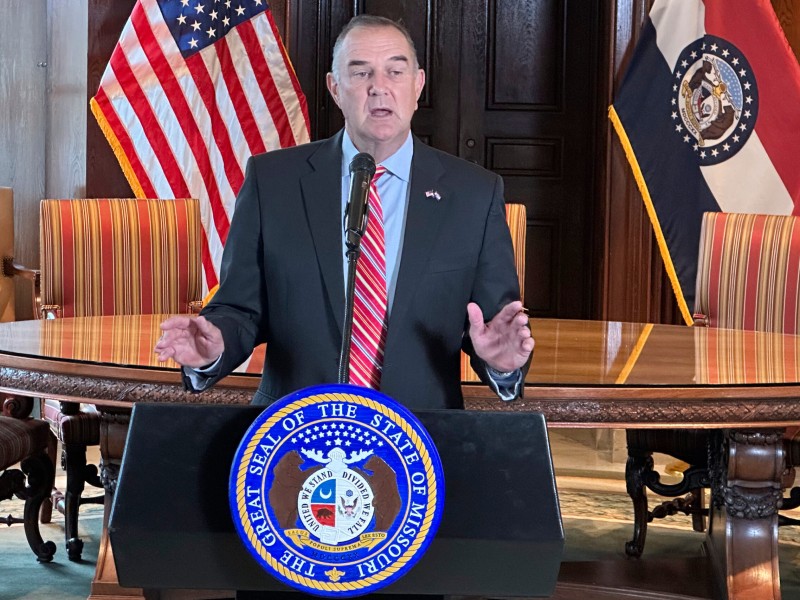
Republicans across the Heartland continue to blatantly undermine direct democracy and the will of voters in their state.
Direct democracy includes ballot measures, propositions and constitutional amendments that are put in front of voters during election season. They have allowed voters in many states (24 total, eight in the Midwest) to pass popular policies without the approval of state legislatures who are unwilling to deliver or even debate these policies.
These issues usually include popular policies like raising the minimum wage, guaranteeing paid sick leave, implementing redistricting reform and guaranteeing reproductive rights, all of which are not generally supported by elected members of the Republican Party.
“They give us power and agency to not wait for an elected official or politician to remove their own partisan lens to act on something. It gives us the power and agency to do something,” said Chris Melody Fields Figueredo, the executive director of the Ballot Initiative Strategy Center in an interview with Heartland Signal. “People want action, and ballot measures give them this.”
“They provide us an opportunity to experiment and reimagine what democracy can be and should be.”
Instead of preserving direct democracy as an institution in the 24 states where it’s available, many GOP lawmakers have taken to publicly chastising voters for passing issues that they do not support, or penning legislation to undermine the will of voters.
“As the people have used this tool to essentially address things that government is not addressing, they’re taking power into their own hands and then we have felt this sort of counter effect almost exclusively in GOP-controlled states, often Republican trifecta states, to undermine the will of the people,” Figueredo continued.
Missouri: Repealing approved ballot measures
“Missouri has really been one of the epicenters of where we have seen a lot of these different types of tactics used,” Figueredo said.
Earlier this month, Gov. Mike Kehoe (R) signed House Bill 567 into law, a Republican-written bill to repeal the guaranteed right to paid sick leave. This provision, as well as minimum wage increases, was overwhelmingly approved by voters via Proposition A last fall.
The Missouri GOP made repealing the sick leave provision a priority for the 2025 legislative session, despite Democratic attempts to stop HB 567.
The GOP also enacted Senate Bill 22, which will make it easier for confusing ballot language to appear in front of voters in the future. SB 22 was authored by state Sen. Rick Brattin (R-Harrisonville), who went viral after he insulted voters who approved Proposition A in a speech on the Senate floor in April. Brattin argued that voters had “no skin in the game” and hadn’t taken into account the bottom line of businesses with their vote.
Last November, voters also enshrined reproductive rights into the state constitution with Amendment 3. Republicans have already approved a new ballot initiative for 2026 that asks to repeal amendment 3 and restore the state’s stringent abortion ban that did not have rape or incest exceptions.
Abortion procedures have halted and resumed on multiple occasions since last November because of Republican efforts to undermine access to the health care. Republicans also penned laws to funnel state funds to anti-abortion pregnancy centers and to establish a database to track pregnant women “at risk” of seeking an abortion.
Ohio: Misleading ballot language
Last November, voters in Ohio were given the choice to pass Issue 1, a referendum that would have stopped gerrymandering in the state if approved. Both sides of the issue claimed that either voting it down or approving it would end in the same result, ending gerrymandering. It was voted down by a 54%-46% margin. This was thanks to a massive misinformation campaign conducted by the Ohio Republican Party, who has fought tooth and nail to preserve its hold over political power in Ohio since the early 2010s.
This campaign included misleading ballot language written by the secretary of state’s office and even lying about what Issue 1 would have done if it was approved.
“That is yet another tactic we are seeing around ballot language,” Figueredo said. “Whoever has the governing authority, whether it’s the secretary of state, ballot board, or attorney general, that language is going to have a huge impact of people’s understanding of what they’re voting on.”
Figueredo also agreed that the ballot language is extremely important since many people don’t know about the Issue until they get to the polls on election day.
“People want to trust that their government is not going to intentionally misinform them, and so I think that is why the work of state-based grassroots organizing is so important that are deeply connected to communities, because they are trusted within those communities to make sure that they have the opportunity to counter that misinformation that we’re seeing continue to escalate,” Figueredo continued.
Had Issue 1 passed, it would have established a 15-member commission comprised of five Republicans, five Democrats and five independents that would have been responsible for drawing legislative and congressional districts. Under the current system, Republicans have full control of the process because they hold the top offices in state government, allowing them to continue gerrymandering the state to preserve their majorities.
After voters shut down Issue 1, state party Chair Alex Triantafilou publicly bragged about confusing voters, calling it “not such a bad strategy.”
Direct democracy in Ohio helped voters in 2023 institute constitutional amendments guaranteeing a right to reproductive care and abortions as well as legalizing recreational marijuana. And constitutional amendment to preserve equal rights in Ohio could appear in front of voters at the ballot box in 2026. If approved, the amendment could negate the state’s dormant same-sex marriage ban, which could trigger if the Supreme Court of the United States overturns Obergefell v. Hodges in the future.
South Dakota: More complicated petition requirements
Another way lawmakers undermine direct democracy in states where it’s available is by passing laws that make the process more difficult. Initiatives and amendments typically require a certain number of registered voters to sign a petition to qualify for ballot access. State legislatures can change petition windows and signature requirements through legislation, as they did in South Dakota this year.
The Republican-dominated legislature enacted House Bill 1184, which moved the petition signing deadline up by three months, making it significantly more difficult to meet the required minimum. This bill, which was signed into law by Gov. Larry Rhoden (R) and took effect on July 1, spawned a lawsuit from Dakotans for Health, a grassroots organization in the state.
The legislature also approved House Bill 1256, which makes it so petition signers must provide the address where they are registered to vote, not where they live. These addresses are often not the same after people move and fail to re-register to their new address, which means the law could increase the number of invalid signatures on a petition.
Dakotans for Health spearheaded a successful constitutional amendment for Medicaid expansion in 2022, and they are also leading the process to restore reproductive rights.
Wisconsin: Confusing language
Under current law in Wisconsin, the attorney general’s office is tasked with distributing nonpartisan explainers for ballot measures or constitutional amendments in the state. However, the Republican-controlled state legislature has proposed Assembly Bill 207, which would transfer the power to write the explainers to the legislature.
Under the current makeup, the Republicans would be effectively transferring more power to themselves since Attorney General Josh Kaul is a Democrat.
Wisconsin voters could see a constitutional amendment in 2026 to create an equal rights constitutional amendment that prohibits the government from discriminating based on race, sex, ethnicity, national origin and other related categories.
Heartland Signal encourages news organizations and content creators to use our content. You're welcome to republish this article for free as long as you follow our republishing guidelines.
Related Articles

With Coleman absent, Kessler presses affordability and health card at Minnesota forum
Minnesota Senate District 48 DFL candidate Dan Kessler says health care is the one cost Minnesota can actually bring down. He made his case at a forum his opponent, Sen. Julia Coleman, didn’t attend.

Huizenga campaign spending at center of McCann’s MI-04 challenge
Democrat Sean McCann is making Rep. Bill Huizenga’s campaign spending, including $400,000 paid to his half-brother’s firm, the core of the MI-04 race.
2026 midterm debates: Why candidates are skipping or stalling them
Election debate scheduling has become increasingly contentious across several midterm races this year. Candidates across the Midwest have had disputes over debate participation, logistics and host selection, with some candidates declining to debate altogether.