
Michigan lawmakers, local officials and residents renew push for statewide data center moratorium
A group of Michigan lawmakers and residents renewed calls for a statewide data center moratorium on Tuesday. The proposed legislation would pause development until April 1, 2027, to allow for stricter environmental and regulatory reviews.
This post has been republished from the Michigan Advance under Creative Commons license CC BY-NC-ND 4.0.
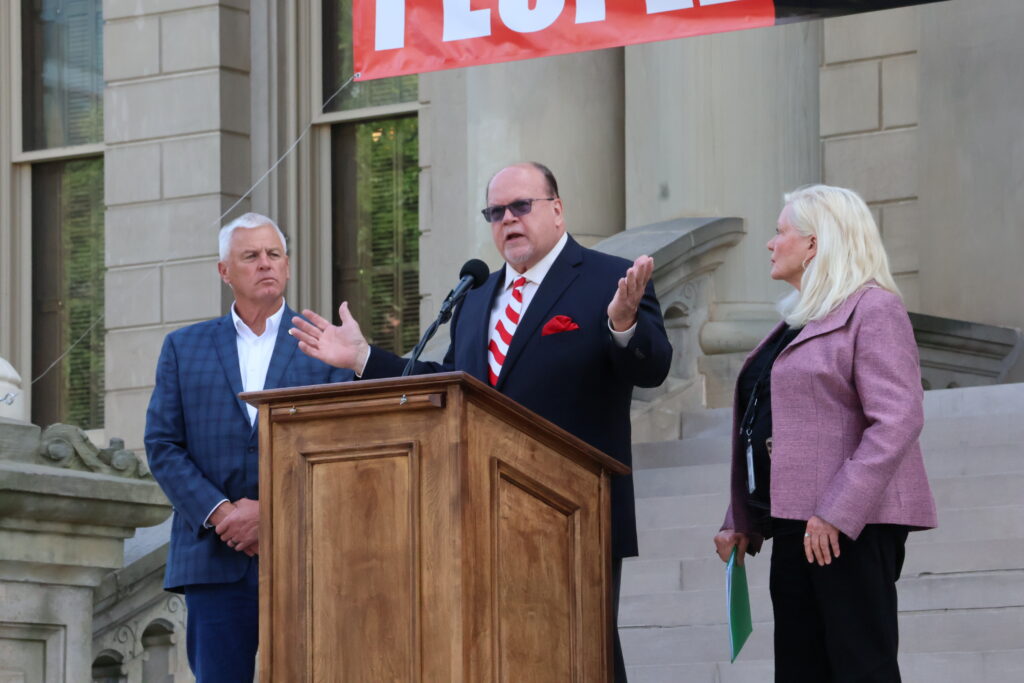
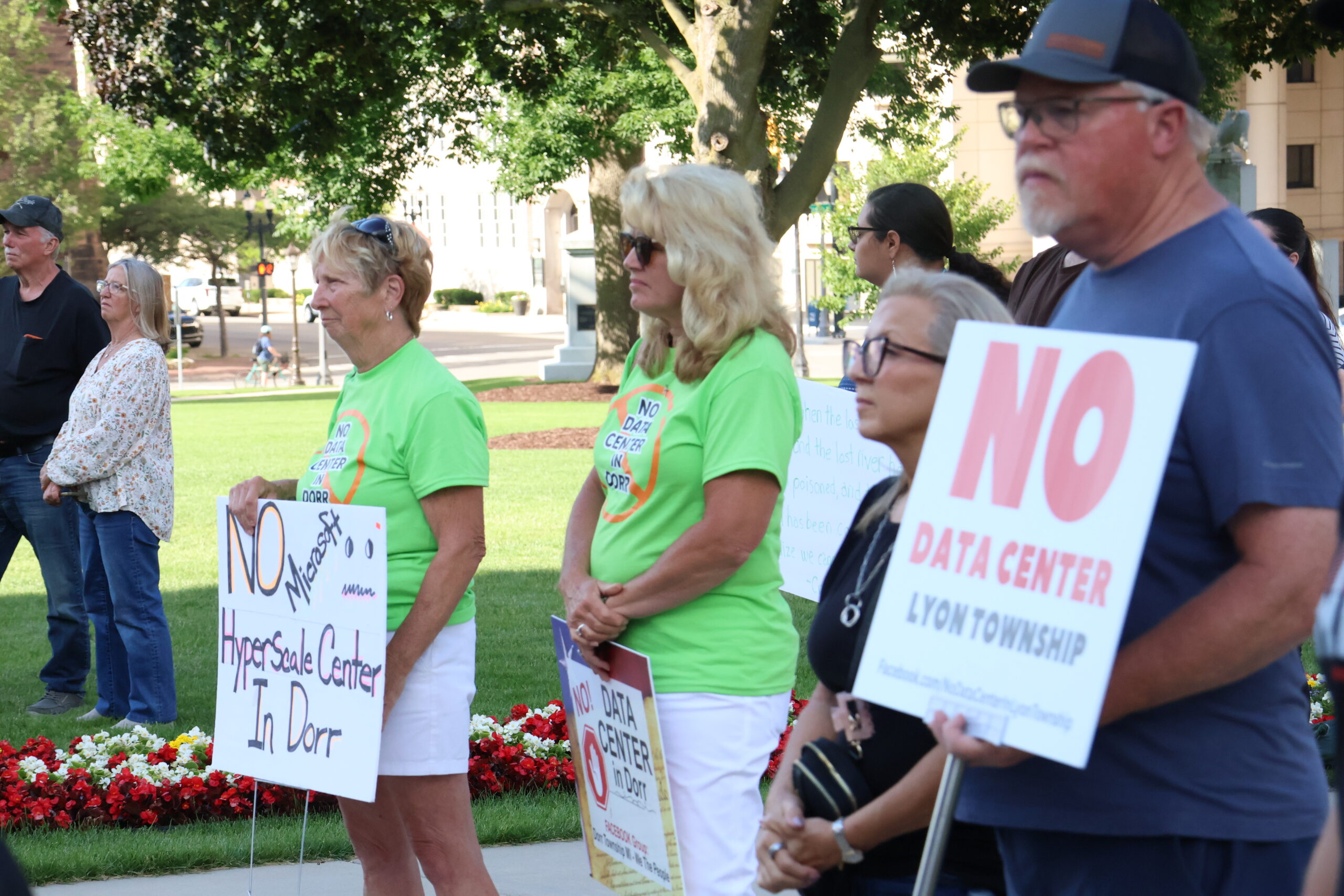
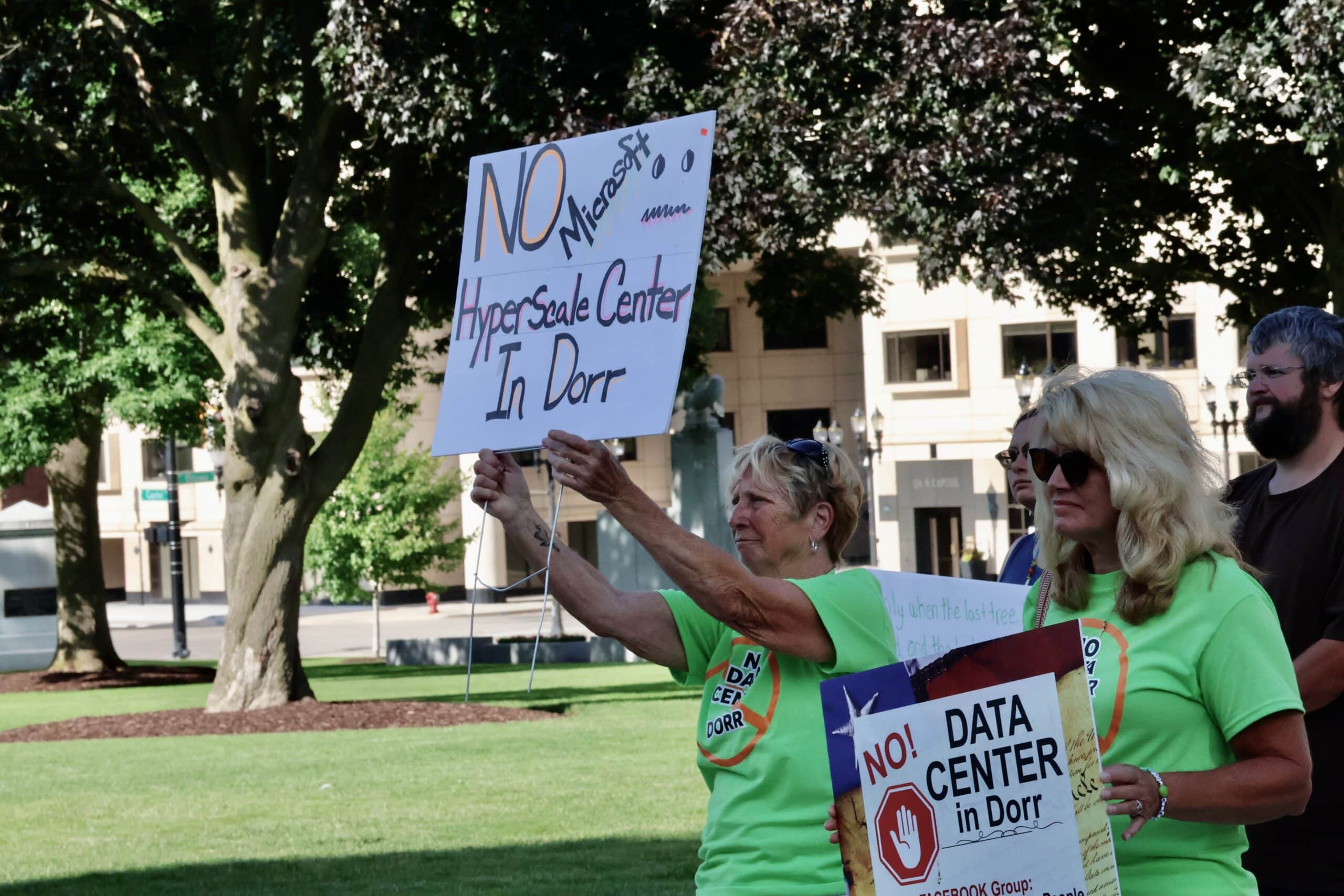
Gathering on the Capitol steps Tuesday evening, Michigan lawmakers joined with residents and officials from communities across the state to demand greater local control over data center development.
Michigan became a destination for data center developers following the creation of new tax breaks on data center equipment in 2025. However, these projects have drawn significant opposition in several communities as citizens raise concerns about these facilities’ water and energy usage and the lack of transparency around their development.
In response, members of the Michigan House and Senate have put forth proposals to establish a moratorium on data center development, pausing further development to give lawmakers and local officials time to review potential impacts and implement regulations.
State Sen. Jim Runestad (R-White Lake) and state Rep. Jennifer Wortz (R-Quincy), who led the introduction of moratorium policies, organized Tuesday’s rally, bringing together Republican and Democratic lawmakers to bring attention to efforts within the Legislature focused on data centers.
“I realize with technology there has to be a place to store our data, but I am tired of them coming after good farm ground and allowing for our tax dollars to subsidize large corporations who have more than enough money to fund these centers that they want to bring to our state,” Wortz said.






Runestad’s Senate Bills 1018–1020 and House Bills 5594–5596, which Wortz introduced alongside Reps. Dylan Wegela (D-Garden City) and Joseph Fox (R-Fremont), would halt data center development until April 1, 2027. Meanwhile, Reps. Erin Byrnes (D-Dearborn), Jim DeSana (R-Carleton) and Wegela introduced House Bills 5396–5398, which would repeal tax exemptions for data centers.
Sen. Ruth Johnson (R-Holly) told attendees she was also working on legislation to subject data centers to the same environmental standards as automotive plants.
“This isn’t something that we are 50-50 on, and it doesn’t matter whether you’re on the left or the right,” Fox said, with multiple speakers emphasizing that frustration with data centers transcends party affiliation.
Last week, Michigan Senate Democrats introduced an eight-bill package intended to address several key concerns around data centers, including capping water use, requiring data centers to bear any costs to provide the facility with energy, and barring local officials from entering into nondisclosure agreements around data centers.
SUBSCRIBE: GET THE MORNING HEADLINES DELIVERED TO YOUR INBOX.
When asked about Runestad’s proposal, sponsors of the package shied away from a statewide moratorium, encouraging a local approach when considering a hold on data center projects. Runestad said Michigan’s residents need immediate assurance that they will not wake up to plans of a proposed data center next to their property.
“The fact that they’re not supporting a moratorium – let’s hold off on these until we can get some answers – tells me this is fluff,” Runestad told reporters after the rally.
Runestad’s legislation faces an uphill battle in the Democratic-led Senate, as the moratorium package sits within the Senate Government Operations Committee, where bills are generally sent to die.
Sierra Club tells Strategic Fund Board to back off tax breaks for data centers
Earlier Tuesday, as the Michigan Strategic Fund commenced its monthly meeting, a handful of individuals took the podium for public comment voicing their opposition to state policy providing tax breaks for data center equipment.
While the state has yet to provide any of these tax breaks, Bryan Smigielski, Michigan campaign organizer for the Sierra Club, warned that Ohio and Illinois have already hit the pause button on their subsidies.
According to the Ohio Department of Taxation, the state’s tax break for data centers costs the state four times its initial $136 million projection in 2024 and 11 times its initial projection in 2025.

The nonpartisan Senate Fiscal Agency wrote that Michigan’s tax breaks on data center equipment could cost the state and local governments an unknown amount totaling at least $52.5 million. The agency said costs will likely exceed $90 million depending on the details of the proposal, the agency noted.
Without the tax breaks, this money would otherwise go toward schools, police and fire departments, roads and the state’s general fund, Smigielski said.
He also pointed to a joint letter the Sierra Club, the Michigan Environmental Council, Natural Resources Defense Council and the Citizens Utility Board of Michigan sent the board in November, arguing the body’s guidelines for the tax break do not align with the law that created them.
The law requires data centers receiving the sales and use tax exemption to source 90% of their power from clean energy resources within six years of applying through on-site generation, a contract with an electrical utility or energy cooperative and participation in an energy provider’s voluntary green energy pricing program.
However the strategic fund’s guidelines say that a data center can receive the tax breaks if it executes a long-term contract with an energy company that is subject to the state’s requirements to generate 100% of their energy from clean resources by 2040.
“The reasoning is also circular in a way that I want to make sure that you understand in these last few seconds here,” Smigielski said. “A data center can qualify as clean by pointing to its utilities plan to be clean in the future. But this surge of data center demand can be used – and we expect to be used – as good cause for the fossil off-ramp built into the climate law, which our experts expect could delay compliance with our climate standards and commit Michigan to decades of new fossil fuel.”
Heartland Signal encourages news organizations and content creators to use our content. You're welcome to republish this article for free as long as you follow our republishing guidelines.
Related Articles

Pa. House passes $1.7B tax cut on electricity, reins in utility company profits
Pennsylvanians hit by soaring energy costs could soon see major relief on their utility bills. The Pennsylvania House passed a bipartisan measure to eliminate nearly $1.7 billion in electricity taxes and put a hard cap on utility company profits. House Republicans are calling it the largest tax cut in state history.
Trump administration renews order keeping Indiana coal plants open for the third time
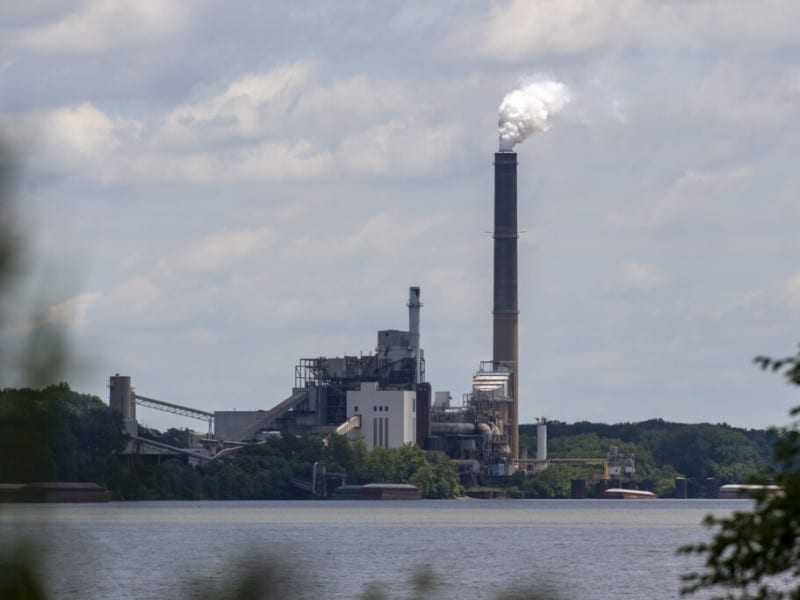
The Trump administration has renewed an emergency order keeping two aging Indiana coal plants open for the third time. Energy Secretary Chris Wright defended the move to protect the grid, even though local utility executives call the assets inefficient, unreliable, and costly to maintain.
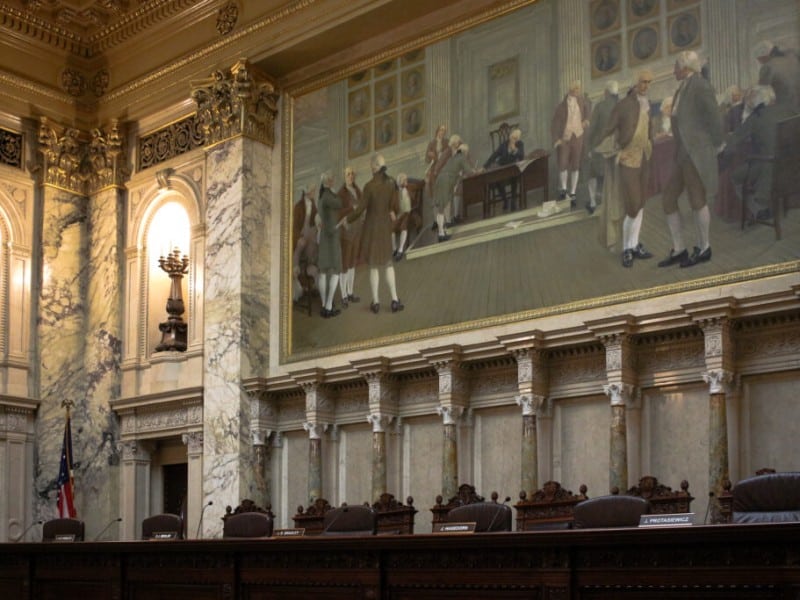
Wisconsin high court agrees that race-based college retention grants must go
The Wisconsin Supreme Court ruled Thursday that a state program providing $250 to $2,500 retention grants to minority students is unconstitutional. The decision relies on a 2023 U.S. Supreme Court ruling that ended affirmative action in college admissions.