
Michigan Democrats sweep statewide races, flip 3 congressional seats
Michigan Democrats achieved major gains in the 2026 election, securing a continuing trifecta and triplex. Three congressional seats flipped from Republican to Democrat, and Dr. Abdul El-Sayed won Michigan’s open U.S. Senate seat against Mike Rogers, becoming the nation’s first Muslim senator.
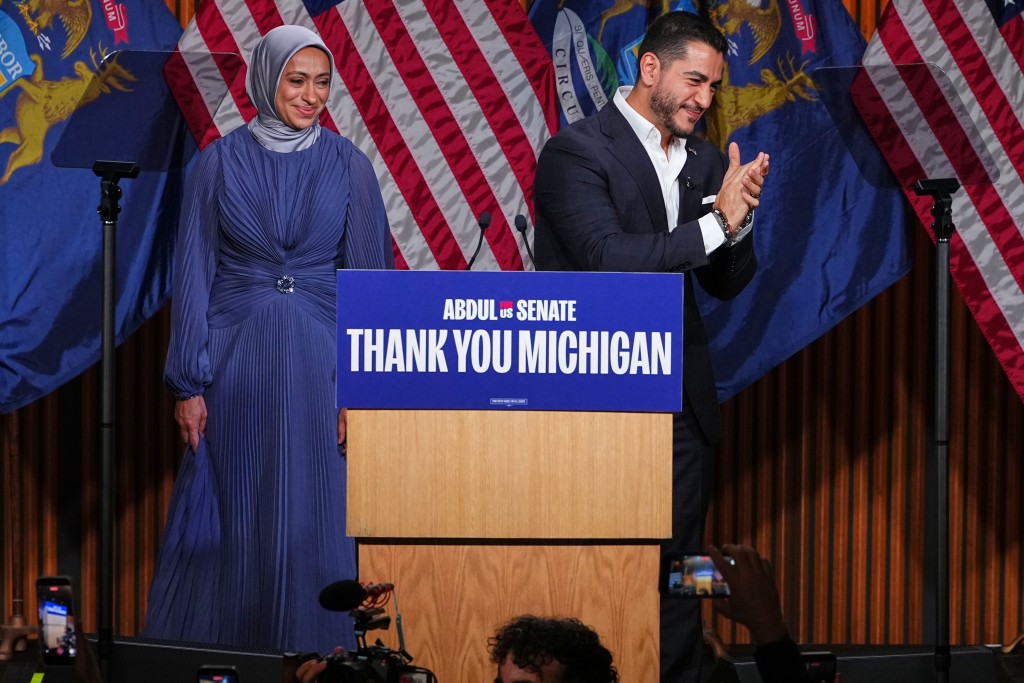
Michigan Democrats won big in Tuesday’s election.
The state will enter 2027 with a Democratic triplex and trifecta, as well as two Democratic U.S. senators. Michiganders also made decisive votes on two statewide proposals.
A continuing triplex
Lt. Gov. Garlin Gilchrist II won election as Michigan’s next secretary of state, beating Republican opponent Anthony Forlini by 10 percentage points. He will replace Jocelyn Benson, who won election as governor.
And Eli Savit, the current Washtenaw County prosecutor, beat Eaton County prosecutor Doug Lloyd to become Michigan’s next attorney general. He will replace Democrat Dana Nessel, who has held that office since 2019.
Congressional flips
Three Michigan congressional seats flipped from Republicans to Democrats. Democrats have won a majority in the U.S. House, with 240 as of 5 a.m. EST Thursday.
In Michigan’s 7th Congressional district, progressive Democrat William Lawrence ousted incumbent Rep. Tom Barrett (R-MI) by three points. Cook Political Report classified the race as a toss-up. It’s one of the seats Democrats hoped to flip to win a majority in the U.S. House.
Lawrence, a co-founder of the Sunrise Movement and community organizer, campaigned on a platform of affordability, environmentalism and anti-war rhetoric. The candidates met for one debate last month, where they discussed the impact of the Iran war, tariffs and data centers on everyday Michiganders.
In Michigan’s 10th Congressional district, represented by Rep. John James, R-Mich., who ran for governor. Democrat Christina Hines won by seven points, defeating Republican Michael Bouchard.
And in Michigan’s 4th Congressional district, Democratic challenger Sean McCann defeated incumbent Rep. Bill Huizenga (R-MI) by less than two points.
Contentious Senate race comes to an end
Dr. Abdul El-Sayed won Michigan’s open U.S. Senate seat, the first Muslim elected to the U.S. Senate. He defeated Republican opponent Mike Rogers by seven points. Rogers also ran an unsuccessful campaign against Sen. Elissa Slotkin in 2024, losing by only 19,000 votes (0.3 percentage points).
The race garnered national attention for its potential to determine which party controlled the Senate. Democrats have won control of the upper chamber of the national legislature, flipping at least seven seats. El-Sayed will replace Democratic Sen. Gary Peters, who chose not to run for a third term.
U.S. Rep. Haley Stevens, whom El-Sayed narrowly beat in the primary, had backed him but endorsed Rogers on Nov. 1 after a dispute over an outside group’s ad linking grocery prices to U.S. aid to Israel. Stevens said El-Sayed had made clear she wasn’t welcome in his campaign. Democrats, including Senate Minority Leader Chuck Schumer, condemned the move.
Rogers emphasized making housing more affordable, securing the nation’s borders and proposed reading assessments and courses as part of work requirements for people receiving government assistance.
But opponents often focused on El-Sayed’s religion and ethnic origin. Rogers alleged, a claim Bridge Michigan’s fact check found no evidence for, that El-Sayed had ties to the Muslim Brotherhood. At one point, President Donald Trump baselessly called El-Sayed a jihadist.
No to con-con, yes to campaign finance reform
Michigan also voted “no” on Proposal 1, continuing a nearly 50-year trend of voters overwhelmingly rejecting a constitutional convention. The proposal automatically appears on the ballot every 16 years thanks to a provision that has been in the state’s constitution since 1850. Michigan last held a constitutional convention in the 1960s.
Proposal 2, Money Out of Politics, won by a landslide with 81% of the vote. The measure bans monopoly electric utilities, companies with more than $250,000 in state contracts and people closely tied to them from contributing to state candidates and parties. Proponents hope the new law would reduce the influence of utility monopolies DTE Energy and Consumers Energy on state elected officials. Opponents of the law (including DTE and Consumers) argue it won’t keep dark money out of politics, and could curb free speech in elections.
The Mackinac Center for Public Policy, a conservative think tank, has already filed a lawsuit challenging two provisions on donor disclosure and campaign finance requirements as unconstitutional. DTE and Consumers filed a separate lawsuit challenging the provision on utilities’ campaign contributions on Nov. 5. Both lawsuits request immediate injunctive relief, which would render the law unenforceable until the court cases are decided.
Heartland Signal encourages news organizations and content creators to use our content. You're welcome to republish this article for free as long as you follow our republishing guidelines.
Related Articles
Minnesota DFL flips House, widens Senate majority and retakes trifecta
Democrats flipped the Minnesota House and widened their Senate majority in the Nov. 3 election, ending a 67-67 tie and restoring the DFL’s state trifecta.

Pennsylvania Senate flips to Democrats, giving Shapiro a trifecta
Democrats took a 26-24 Senate majority and at least 111 state House seats on Nov. 3. Results could open the way for a $15 minimum wage and abortion protections.
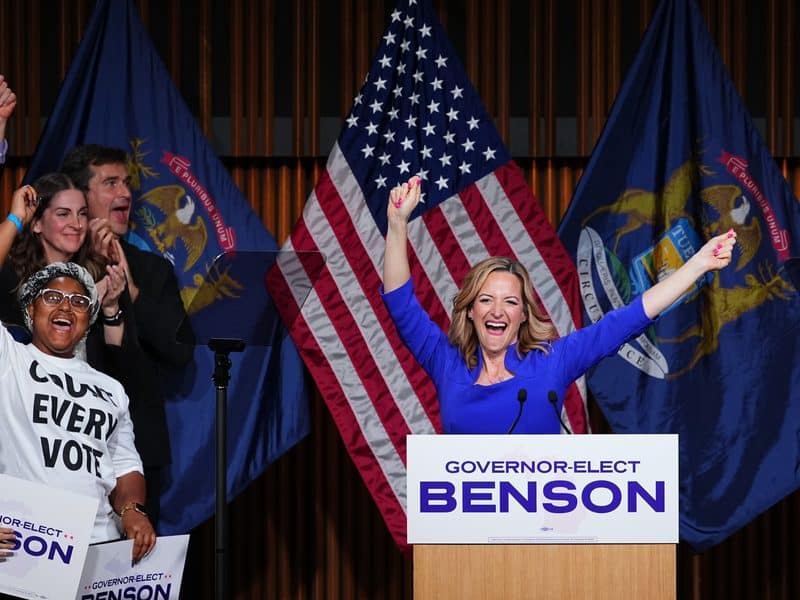
Benson beats James as Democrats retake full control of Michigan
Democrat Jocelyn Benson has won Michigan’s gubernatorial election, defeating Republican U.S. Rep. John James. Benson, currently serving as secretary of state, campaigned on affordability, education and criticism of federal overreach in elections. She succeeds term-limited Gov. Gretchen Whitmer (D).