
Ohio GOP candidate for governor has put $500,000 on the campaign credit card
Voters and donors are being left in the dark about how Ohio Republican Vivek Ramaswamy is spending campaign funds. His gubernatorial campaign has put over half a million dollars on credit cards without providing the itemized receipts required by state law. Critics warn this lack of transparency makes it impossible to evaluate if the money is being spent legitimately.
This post has been republished from the Ohio Capital Journal under Creative Commons license CC BY-NC-ND 4.0.
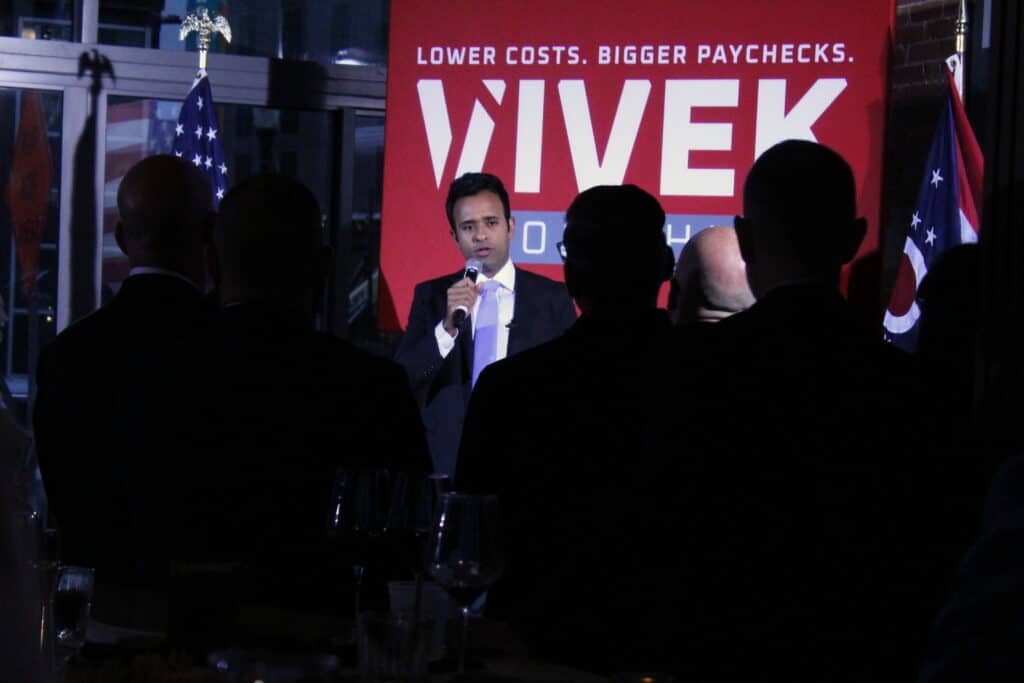
Ohio Republican Vivek Ramaswamy’s campaign for governor has racked up more than half a million dollars in credit card bills without disclosing what it’s purchasing.
The campaign’s credit card spending has jumped dramatically in recent months. Just since April, Ramaswamy’s campaign has put $280,892 on an American Express card.
Ohio campaign finance reports require campaigns to disclose each individual transaction — not just how much they spent but who they paid and what they purchased with the money. Ramaswamy’s campaign is only reporting its monthly credit card bill.
State law requires verification like a receipt or cancelled check for any expenditure of $25 or more. Ohio’s campaign finance handbook directs treasurers to attach a credit card statement or some other documentation to verify an expense’s legitimacy. It’s not clear that Ramaswamy’s campaign has provided that documentation.
To some observers, like the former leader of the Ohio Elections Commission Phil Richter, Ramaswamy’s reporting isn’t that big of a deal so long as the campaign eventually provides information to back up its spending.
“If it’s provided in a timely manner, there’s a little bit of a delay, but it’s not that out of the ordinary,” he said.
SUBSCRIBE: GET THE MORNING HEADLINES DELIVERED TO YOUR INBOX.
Others, though, see a troubling lack of transparency.
“How you spent the campaign cash should not be an obstacle to reporting what you spent it on,” Catherine Turcer from Common Cause Ohio said.
Brendan Glavin from OpenSecrets, a nonpartisan money in politics research group, warned that the campaign’s reporting could have negative ripple effects.
“Campaigns are their own economy,” he said, with workers often supporting multiple candidates and specializing in specific parts of the process.
“So, this sort of thing, if people can do less and get away with it, then that’s going to get around very quickly,” he said.
How we got here
Because state law requires campaigns to provide supporting documentation for credit card reimbursements, Ohio Capital Journal requested that information from Ramaswamy’s campaign and the Ohio Secretary of State in April.
That month, the campaign filed its pre-primary campaign finance report, which included more than $162,000 in credit card reimbursements.
The campaign did not respond to an email, and although the secretary’s office acknowledged receipt of the public records request, it has yet to provide any documents.
In the meantime, Ohio held its primary election and Ramaswamy won the Republican Party nomination for governor.
Ramaswamy’s post-primary campaign finance report included two additional months of $90,000-plus unitemized credit card reimbursements.
The Ohio Capital Journal again reached out to the secretary of state and the campaign by email and over the phone.
The secretary’s office still has not supplied supporting documentation. The office also didn’t respond to questions about whether such documents exist.
A phone call to the Ohio Elections Integrity Commission, which handles campaign finance oversight after that duty was rolled under the Ohio Secretary of State’s Office by Republican lawmakers beginning in January of this year, was routed back to the Secretary of State’s press office.
The Ramaswamy campaign again failed to answer an email. After a follow-up call, Ramaswamy’s press secretary promised to look into the issue, but did not provide documentation by Ohio Capital Journal’s deadline.
Even if every penny spent was a legitimate campaign expenditure — which it may well have been — reporting transactions under a single credit card reimbursement obscures how the campaign is spending money. It also leaves room for doubt about whether those transactions are legitimate.
Ramaswamy’s spending in context
The $509,473 Ramaswamy’s campaign has put on a credit card so far represents less than 2% of its overall expenditures. That’s due, at least in part, to the rapid pace of Ramaswamy’s spending.
The race is on track to be the most expensive governor’s race in state history. Ramaswamy has spent $28.3 million since announcing his campaign last year, and there’s four full months to go.
During the entire 2018 campaign cycle — from his announcement in June of 2017 to his post-general report in 2018 — Gov. Mike DeWine spent $27.8 million. His 2022 reelection bid cost just shy of $17 million.
Although many campaigns use credit cards, Ramaswamy is an outlier in terms of dollar amount and reporting.
If credit card reimbursements show up on an expenditure report at all, the amounts are usually small and the purpose is mundane.
It often looks like former Democratic state Rep. Richard Dell’Aquila spending $467 on catering for a campaign event in 2022, or Republican state Rep. Jim Thomas spending $52 last year on a ticket for the Canton City School District Hall of Fame Induction.
Since 2022, the only example of a candidate reporting a credit card payment like Ramaswamy was Republican state House candidate Lilli Vitale. In 2022, her expenditure report was a single $23,382 line item listed as “campaign expenses on personal credit card.” It’s not clear whether the Ohio Elections Commission formally investigated Vitale’s campaign. There is no case file listed for her in its archives.
Still, Vitale’s total is dwarfed by individual months of the Ramaswamy campaign’s credit card spending.
Ramaswamy’s campaign treasurer isn’t new to campaign finance reporting. Kevin Broghamer’s website says his company was founded in 2009 and lists several high profile clients including Ohio Republican U.S. Sen. Jon Husted and the Ohio Republican Party.
Also, Ramaswamy has experience reporting itemized credit card transactions. During his 2024 presidential run, Ramaswamy’s campaign finance reports included each individual expenditure separately. In October 2023, for instance, he spent $57,411 on food, lodging and event rentals throughout New Hampshire. He even paid $1,250 to get the Piscataqua Rangers Junior Fife and Drum Corps for a campaign event.
But in Ohio, Ramaswmay’s campaign has reported only a monthly lump sum reimbursement — effectively building a wall around those transactions. Getting any information about the campaign’s credit card use requires filing public records requests. That takes time, but the campaign calendar isn’t waiting.
“Which means that really accurate information could be lost during an election,” Turcer said.
The cop on the beat
Last year, state lawmakers eliminated the Ohio Elections Commission, the politically independent body charged with investigating campaign finance violations.
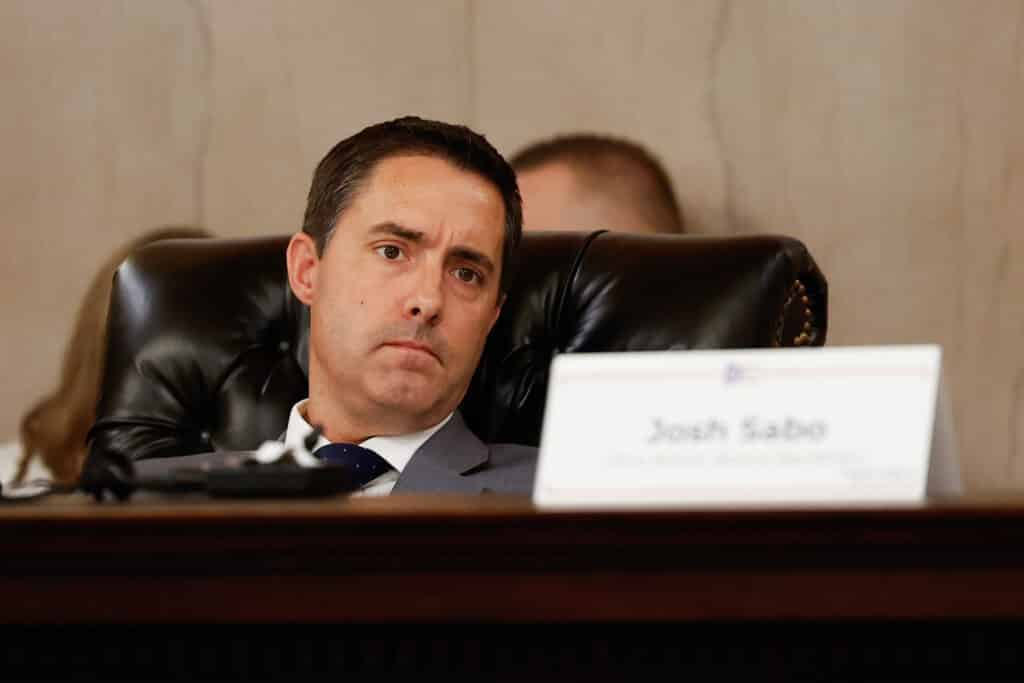
At the time, lawmakers argued that the commission was too slow and ineffectual. Secretary of State Frank LaRose, for instance, called it “increasingly toothless” in a letter to lawmakers, and noted almost $100 million in fines had gone uncollected.
“There is no reason to have campaign finance laws in Ohio if we cannot meaningfully enforce them,” he said, adding that “wrongdoing might actually be deterred if fines were treated as more than a suggestion.”
In the commission’s place, lawmakers created the similarly named Ohio Election Integrity Commission, which is housed in LaRose’s office.
From the outset, critics worried about putting campaign finance under the purview of a partisan officer.
Ohio Elections Commission getting affairs in order ahead of Jan. 1 handoff
After the proposal passed the Ohio House, the League of Women Voters urged Ohioans to call state senators and tell them to “protect independent campaign oversight.”
The group warned that, “Allowing elected officials and their allies to oversee violations of the rules that govern their own campaigns sets up a system ripe for favoritism and selective enforcement.”
LaRose, who is a Republican, has endorsed Ramaswamy. LaRose is also currently running for state auditor.
“Not that out of the ordinary”
Phil Richter has decades of experience in Ohio campaign finance law as the former executive director and staff attorney for the Ohio Elections Commission. He retired after lawmakers disbanded the commission.
Richter isn’t overly worried about the way Ramaswamy’s campaign is reporting expenses. He acknowledged that it’s insufficient, but said it’s the kind of problem campaign finance auditors deal with on a regular basis.
If the campaign doesn’t submit receipts or other documentation informally, Richter said, auditors will send out an official request.
“To assure that they’re not personal expenses that are being improperly refunded,” he said. “I think it’s fair to assume that they’re not, but that would be the process.”
Richter added that Ohio statutes give the campaign 21 days to respond, and it’s common to grant extensions if a campaign requests one.
If a campaign still doesn’t comply, he said, it’s up to the Ohio Election Integrity Commission to determine how to proceed, whether that’s hearings, sanctions, or some other course.
The Ohio Capital Journal asked LaRose’s office whether the Ohio Election Integrity Commission has made requests for additional information or begun any other kind of investigation. The secretary did not respond.
To Richter, the disclosure aspect of campaign finance reporting is more important than the timeline. He explained campaigns make mistakes or submit insufficient information on a regular basis.
“It isn’t quite as noticed as it might be here when you’re talking about almost $100,000,” he allowed, “but as long as the information is provided, that’s the critical thing that Ohio’s campaign finance laws want to assure.”
A more critical view
Other observers are far less forgiving.
“I’m shocked. I mean, it’s certainly not the spirit of the law, if it’s not outright illegal,” Ohio state Sen. Bill DeMora, D-Columbus said.
Outside of serving in the state Senate, DeMora has spent years working as a campaign treasurer for other candidates and public officials.
As an example of how reporting is supposed to work, he described going to the Democratic National Convention. To get reimbursed by his campaign, DeMora had to provide receipts for his hotel, airfare, and everything else.
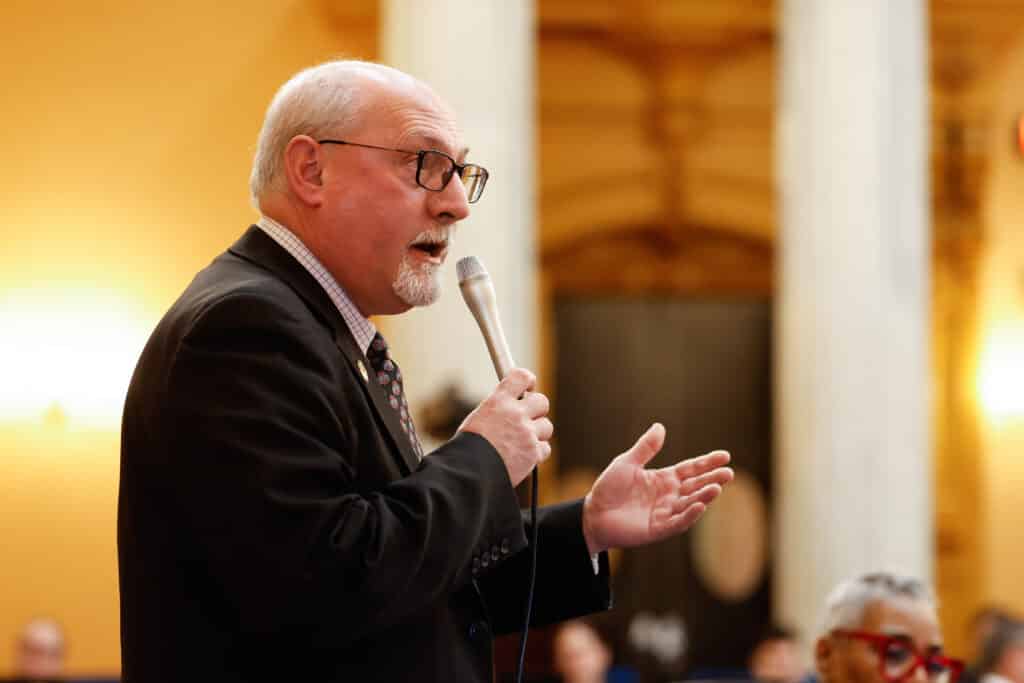
“If he’s not doing that, he’s violating the law,” DeMora said. “I don’t know why the Secretary hasn’t done something, because certainly when we have campaign finance reporting laws, it is for knowing where the money is being spent.”
DeMora added that if the shoe were on the other foot, and Democratic nominee for governor Amy Acton had racked up big credit card bills, he believes the Secretary would pursue it aggressively.
Common Cause Ohio Executive Director Turcer agreed that campaigns shouldn’t be able to obscure transactions behind a monthly credit card reimbursement.
Even for legitimate expenses, that arrangement requires the public to file records requests to see the underlying transactions, she said.
“It’s just silly that the way that the campaign pays their bill would get in the way of voters having easy access to information,” Turcer said. “And this is just basic campaign finance information that we should have — there’s no reason for there to be any hoops.”
The Ohio Capital Journal’s request for documents related to the Ramaswamy campaign’s pre-primary report has gone unanswered for eight weeks: enough time for the campaign to hit another campaign finance reporting deadline, with yet more $90,000-plus monthly credit card reimbursements.
Expenditure reports are an important tool, Turcer said, for donors to see how judiciously a campaign is spending its money. Putting transactions behind a wall, even temporarily, takes that tool away, she said.
In addition to the time it takes to produce public records, Turcer said “it’s not atypical” for the Secretary of State’s office to be a year behind when it comes to reviewing campaign finance reports for compliance with state law.
“If the campaign doesn’t share the documents that are required by law,” Turcer added, “And the Secretary of State doesn’t share the documents, which is also required by law, we have to be left wondering what happened.”
Outside observers
Glavin, from OpenSecrets, said Ohio’s campaign finance rules really don’t leave room for interpretation.
“It’s unambiguous that you’re supposed to itemize each transaction,” he said. “So, on that front there doesn’t appear to be any question of how this should be done.”
Like Turcer, Glavin said nondisclosure has consequences.
“That is a lot of money, right? Even for a gubernatorial race,” he said. “But in any kind of state race, that’s a lot of money that’s being spent by a candidate that essentially has eliminated real disclosure.”
The Campaign Legal Center’s Director of Strategic Investigations Brendan Fischer agreed that Ohio’s rules include an expectation that underlying transactions get itemized.
“You can’t avoid disclosure by putting campaign expenses on the credit card,” he said. “And in poking around a little bit and looking at the way that other campaigns and committees have reported credit card payments, it does appear that Ramaswamy is an outlier.”
“It’s entirely possible,” Fischer said, that this is just a mistake, but at the same time, “it’s not the kind of thing that should just be ignored.”
“When a leading candidate reports more than six figures in payments to a credit card company without disclosing the underlying transactions,” Fischer said, “voters lose the ability to evaluate whether campaign funds are being spent on legitimate campaign expenses or personal indulgences.”
“Voters and a candidate’s donors have a right to know how that candidate is spending their money,” he said.
Follow Ohio Capital Journal Reporter Nick Evans on X or on Bluesky.
Heartland Signal encourages news organizations and content creators to use our content. You're welcome to republish this article for free as long as you follow our republishing guidelines.
Related Articles
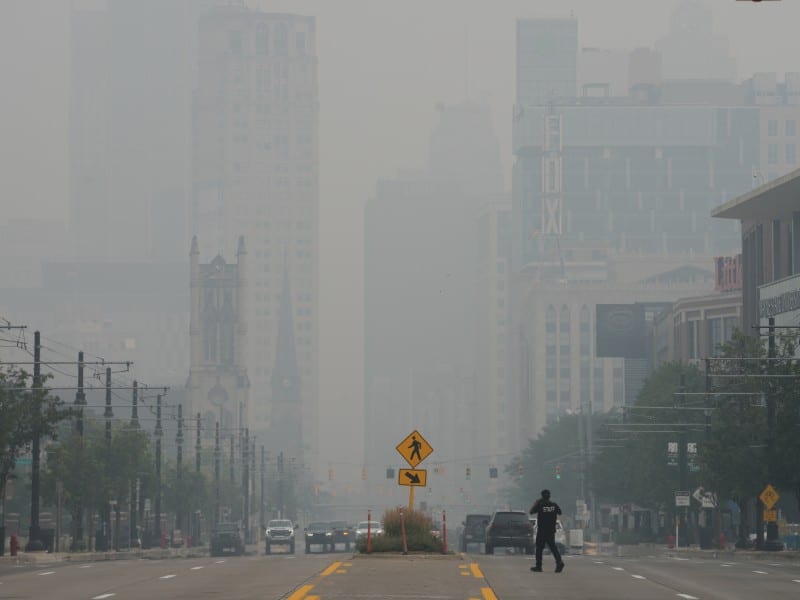
Michigan Republican films campaign ad in hazardous wildfire smoke
Michigan House candidate Laura Perry is facing scrutiny after filming a campaign ad on a soccer field during a hazardous statewide air quality alert. State health officials had recommended avoiding strenuous outdoor activities as air quality readings exceeded dangerous levels.

A Kansas hospital garnished wages of patients who qualified for free care. Then they fought back.
Legal aid group challenged the lawsuits, and Stormont Vail dropped 11 cases, settling $200,000 in debts

GOP-led Michigan House approved utility giveaways ahead of massive power grid failure
A massive Fourth of July weekend power grid failure left 400,000 Michigan residents without power, forcing some business owners to throw away thousands of dollars in food. Meanwhile, DTE Energy is pushing for a $473.3 million rate increase — months after House Republicans approved legislative handouts to major utility corporations.