
Latino turnout jumps in Michigan primary as community’s political power grows
Fourteen Latino candidates drew more than 144,000 votes as advocates look to build on the community’s growing influence.
This post has been republished from the Michigan Advance under Creative Commons license CC BY-NC-ND 4.0.
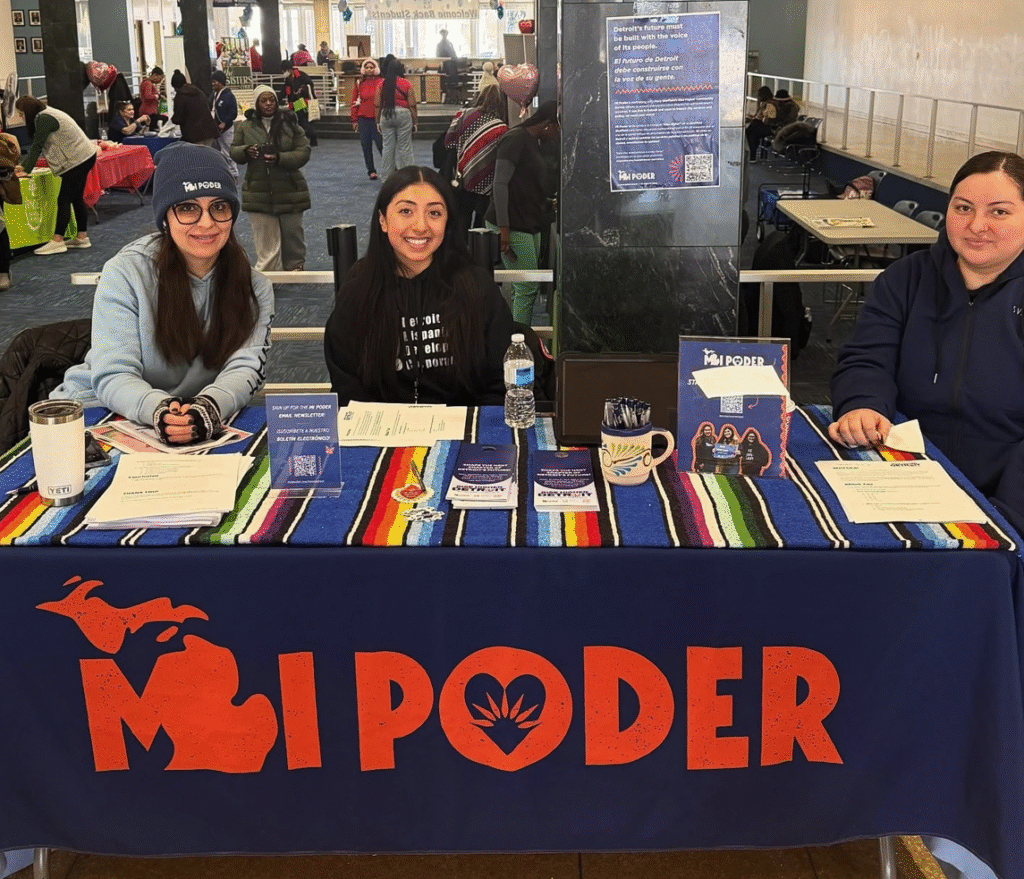
Latino and Hispanic Michiganders were motivated to vote in the 2026 primary election in part to support the community’s candidates and issues they care about, which advocates say led to a more than 10% increase in Latino turnout compared to the midterm election in 2022.
For organizations like MI Poder, a group of justice-focused grassroots organizers seeking to amplify the political power and leadership of Michigan’s Latino communities, capitalizing Latinos’ eagerness to vote will help pave that path to power.
The community’s voters also were part of Democratic U.S. Senate nominee Abdul El-Sayed’s primary-winning coalition on Aug. 4, and will likely be a key demographic to help propel either El-Sayed or Republican Mike Rogers in the upcoming November general election.
High turnout shaped Michigan primary, boosting El-Sayed and Lawrence to victory
Pete Vargas, MI Poder’s statewide organizing director, in an interview with Michigan Advance, said that it will take some time and work to make voter contacts and to engage in listening sessions to understand the community’s thoughts and feelings on the candidates and key issues at play in the November election.
Vargas said early indications show that the motivating factors for the Latino vote this year will likely be growing concerns over the economy, and the recent aggressive actions of U.S. Immigration and Customs Enforcement.
There are also encouraging signs about the overall strength of the Latino vote in Michigan.
Between 2010 and 2020, the Hispanic and Latino population in Michigan grew by more than 60%. The community is also “no longer concentrated in one neighborhood, one city, or one part of the state,” Vargas said.
“We are organizing Latino voters in Detroit and Wayne County, but also in Grand Rapids, Holland, Lansing, Kalamazoo, Saginaw, Adrian and rural communities where a few thousand additional voters can make a meaningful difference in a statewide election,” Vargas said.
MI Poder’s main focus now is making sure the community turns out in big ways this cycle.
“The real opportunity is not just persuading Latino voters who already vote regularly,” he said. “It is bringing thousands more people into the electorate and giving them a reason to believe their vote has agency.”
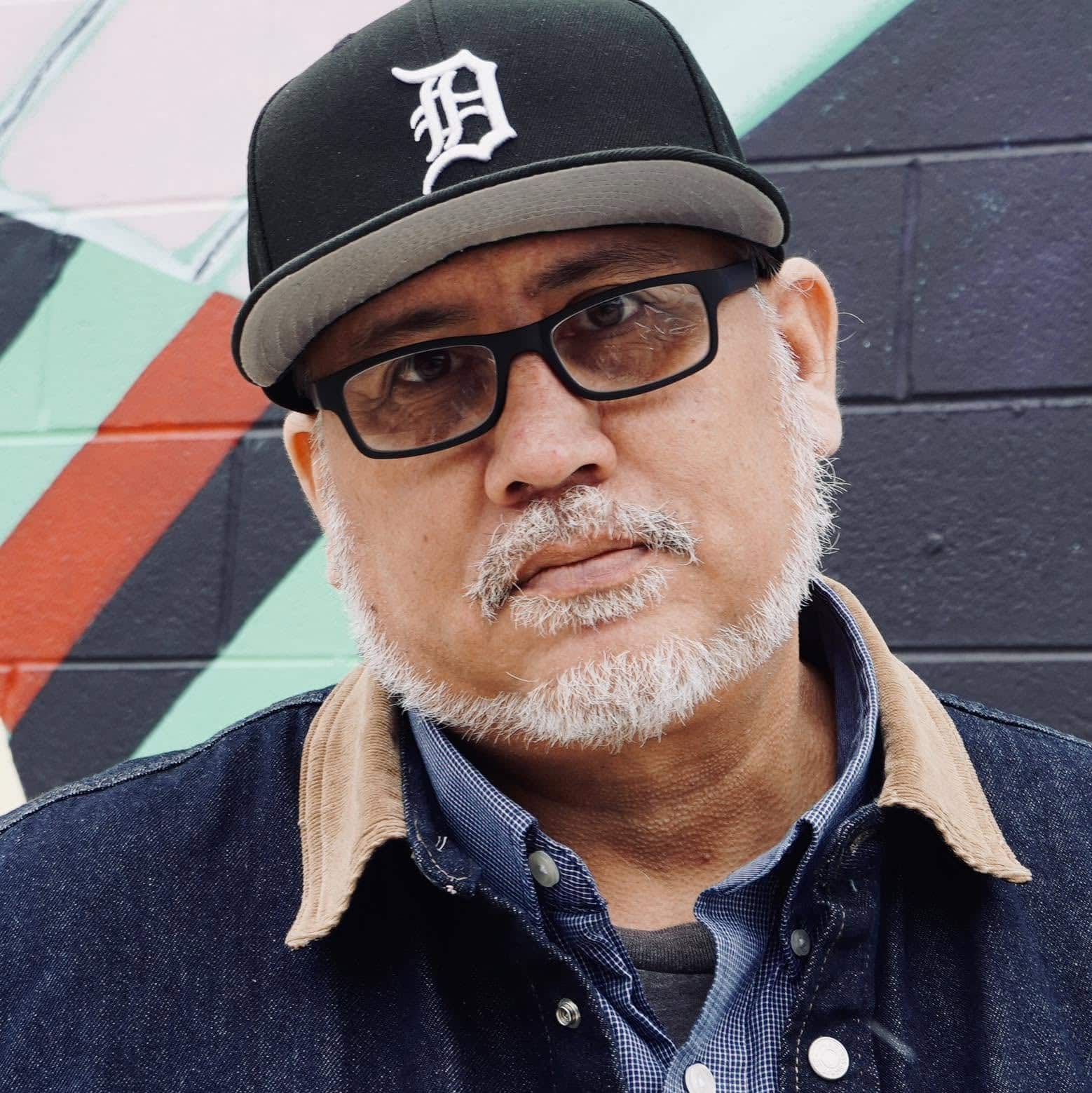
The Latino bloc is growing in strength
Over the next 10 weeks, Vargas said MI Poder is preparing to make roughly a quarter-million voter contacts, along with hundreds of thousands of text messages and other voter-engagement touches. That also plays into MI Poder’s 10-year Latino Voter Project plan, which has a goal of being able to speak to every Latino voter in the state, each year and every cycle.
MI Poder has fertile ground to work with. Its post-primary research shows that the August election saw an increase of 13% to 18% in Latino turnout compared to the 2022 primary. That growth was also among Latinos who have only voted once in a general election or a midterm, or never voted in a primary election before.
It is among those voters that MI Poder believes it can have the biggest impact. Some of the organization’s endorsed candidates included Democrats Abbas Alawieh, Donavan McKinney and Will Lawrence, who each won their respective primaries.
For too long, Latino voters have been treated as a constituency that gets added to a campaign plan near the end. We think that is increasingly outdated.
– Pete Vargas, MI Poder’s statewide organizing director
“We are seeing indications that MI Poder’s organizing model is connecting with voters,” Vargas said. “We would never claim MI Poder alone produced those victories. Campaigns are won by candidates, coalitions, organizations and voters themselves. But going three-for-three does reinforce something we have believed for a long time: When Latino voters are organized intentionally, spoken to directly and given a reason to participate, they can become an increasingly consequential part of a winning coalition in Michigan.”
Vargas, who lives in Adrian, said the turnout average in Lenawee County for midterms sits at around 12%. The Black and Latino communities there, Vargas added, hits between 40% and 50% in terms of turnout in their midterms.
The overall push for political power among Latino voters and candidates was also evident as 14 Latino candidates in Michigan amassed more than 144,000 votes on Aug. 4, the La Prensa Latina News Wire reported following the election.
Eight of those 14 candidates won their respective primaries and moved on to the general election. Among them were state Sen. Darrin Camilleri (D-Trenton) and state Sen. Mary Cavanagh (D-Redford Township), who are both of Mexican descent, and state Rep. Veronica Paiz (D-Harper Woods), another Mexican American.
Michigan House District 83 Republican nominee Cindy Ramirez, House District 92 Democratic nominee Luke Del Castillo, 67th District Court judicial candidate Cheryl Lopez, Grand Rapids City Commission Ward 1 candidate Lindsey Perez-Plescher, and Walker City Commission Ward 1 candidate Gloria Lara also all advanced out of the primary to the general election ballot.
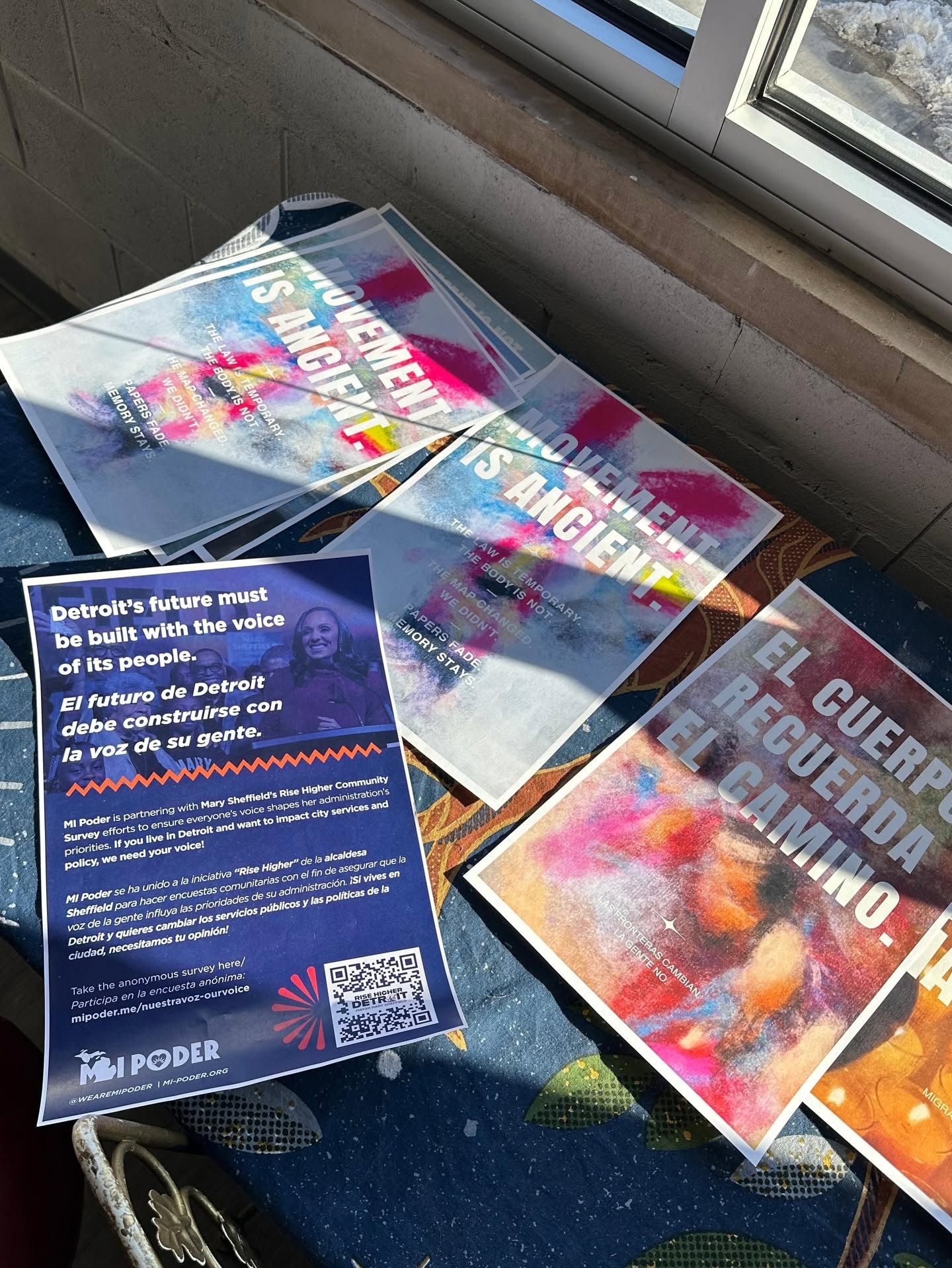
Latinos added to El-Sayed’s primary coalition. Will they do so again?
In El-Sayed’s primary race against U.S. Rep. Haley Stevens (D-Birmingham), Vargas said census data and turnout models suggest Latino voters chose El-Sayed over Stevens by a margin of 61% to 38% in districts where MI Poder operates.
Much of that U.S. Senate primary contest came down to voters in Detroit. While older, non-college Black voters voted mostly for Stevens, El-Sayed did best in areas of the city with young Black voters and in its Hispanic and Latino neighborhoods, The New York Times reported.
Vargas said MI Poder has not made an endorsement yet in the U.S. Senate race, and that process is still underway. An endorsement from the Latino community and its key players, Vargas added, should not be taken lightly, though.
“Any candidate hoping to build a winning statewide coalition should be paying close attention to this electorate,” Vargas said. “For too long, Latino voters have been treated as a constituency that gets added to a campaign plan near the end. We think that is increasingly outdated.”
For Vargas, the question isn’t simply whether Latino voters like El-Sayed enough to vote for him in the general election, it’s about whether the campaign can boost “low-propensity Latino voters” and give them “a reason to see themselves as part of the coalition.”
“If that happens in Detroit and then gets replicated in communities like Holland, Grand Rapids, Lansing, Saginaw, Kalamazoo and Adrian, you are talking about votes that may not be fully reflected in the conventional electorate models,” Vargas said. “That is where the Latino vote could become especially consequential. A candidate who can strengthen support in Detroit and Wayne County while simultaneously expanding participation among Latino and working-class voters outside the state’s traditional Democratic population centers has the potential to build a somewhat different statewide coalition.”
ICE and the economy among the motivating factors for Latino voters
Access to healthcare, affordable prices and the economy in general are among the issues Vargas said MI Poder is hearing the most about when it knocks on doors in Latino communities. Vargas said that was important to hear, as few politicians appear willing to really address those issues head on.
The presence of ICE and detention centers in Latino communities also are weighing on Latino voters’ minds.
Recent data from the Migration Policy Institute shows that the majority of deportations that have occurred within the United States interior — as opposed to southern border states — between 2021 and 2024 were individuals who hailed from Mexico and Central American nations, about 87% of all deportations.
The data also suggests that this trend has held for decades and will continue to do so, even as the Trump administration makes moves to deport more people from 192 other nations aside from Mexico and its nearby Central American countries.
El-Sayed’s policy platform emphasizes the abolition of ICE, while Rogers, formerly an FBI agent, has been in lockstep with Trump’s immigration goals and heavily supports federal law enforcement. He’s also accepted more than $20,000 from private prison companies that operate detention facilities, The ’Gander reported.
Vargas said that when they see a “federal force coming into our communities with 287(g) agreements popping up, and now we’ve got FLOCK cameras that are surveilling our communities, every single one of us can be in a sense of danger at any given moment.”
MI Poder members in the Michigan Capitol Rotunda on June 13, 2025. (Courtesy of MI Poder)
Party affiliations for Latinos remain in flux
The GOP has touted Latino and Hispanic voters across the nation becoming more conservative and shifting to the Republican Party leading up to and including the 2024 election, but the second administration of President Donald Trump has fractured the community that once moved into this orbit. His return to office also paved the way to growing concern among Latinos over immigration enforcement and the economy.
While MI Poder is out doing work to find out who the community’s potential new leaders are, they also plan to find out who the community plans to support in the general election.
Mike Rogers touts Democratic defectors as he seeks to exploit divisions over Abdul El-Sayed
“We have plenty of homes divided. … We are not a myopic community. Our issues in Detroit are different than our challenges in Battle Creek. It’s our responsibility and our charge to know what that is,” Vargas said. “We’re not going to make any assumptions. We’re going to talk to everybody because one thing I can tell you, and this is what data shows, is that our communities that did vote Republican in some previous elections do have buyers’ remorse.”
Vargas and MI Poder can’t be sure as of yet where Latino voters might land in November, what the organization can be sure of is that understanding Latino communities’ needs will undoubtedly help amplify their voices.
“It doesn’t matter if you’re white, Black, Brown, Republican or Democrat, our folks are paying high gas prices, our folks are paying high electrical bills,” he said. “When you start putting the pieces of the puzzle together and connecting the dots to say, ‘Wait, the same people that are in charge of our electric bills are getting record profits are the same folks that are investing in politicians in our community that don’t see out for our interests,’ when you have those conversations and you build that aha moment awareness, then there’s no turning back.”
Heartland Signal encourages news organizations and content creators to use our content. You're welcome to republish this article for free as long as you follow our republishing guidelines.
Related Articles
Wisconsin GOP state Senate candidate Erik Severson says life begins at conception
Medical groups say granting legal status at fertilization can delay emergency care. Severson faces Democrat Charly Ray in a race Democrats hope to flip.
Ohio governor race: Vivek Ramaswamy spent nearly $700,000 leasing private jets for campaign events
Ohio Republican candidate for governor Vivek Ramaswamy has spent nearly 700,000 dollars leasing a private jet since the start of his campaign, according to campaign finance records.
Iowa governor candidate Zach Lahn backs term limits — except for the office he wants
Lahn says he favors term limits “for most things.” But he made an explicit exception for the office he is seeking, telling a podcast he wants to serve as governor “for the next two decades.”