
DOGE grant freeze left Minnesota forest vulnerable to wildfires
A federal funding freeze by the Department of Government Efficiency (DOGE) delayed $10 million in Minnesota wildfire prevention. Local officials say the Trump administration’s pause set back forest clearing efforts by a year and a half — right before over 60,000 acres burned in the Superior National Forest
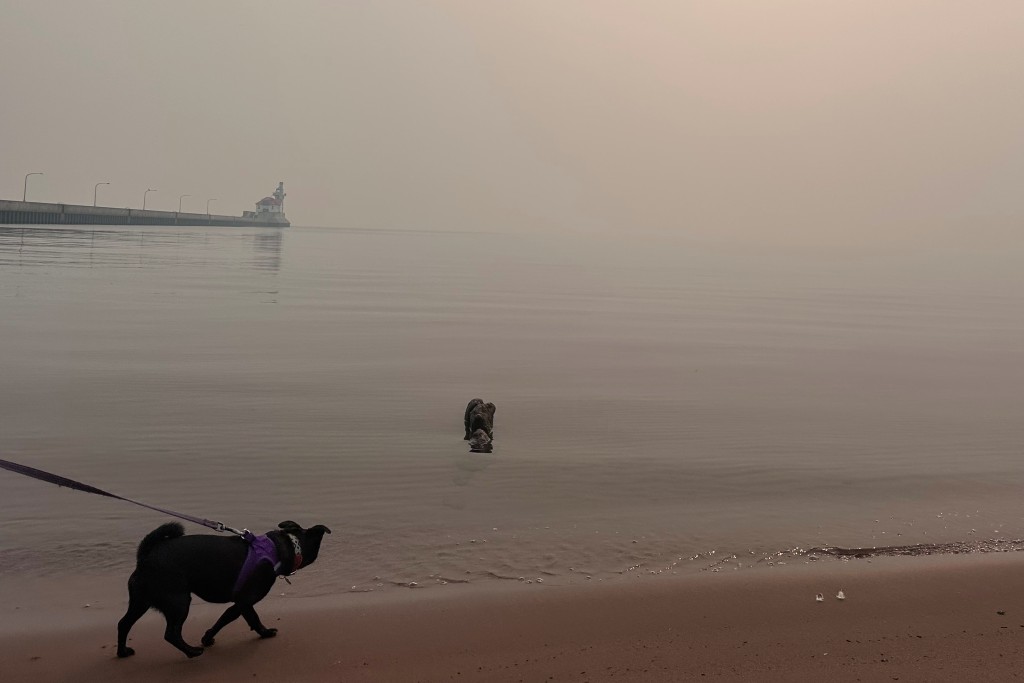
A federal funding freeze by the Department of Government Efficiency (DOGE) delayed critical wildfire prevention in northeastern Minnesota, local officials told the Washington Post.
Now, portions of the forest began experiencing wildfires in early July, with over a dozen still ablaze as of July 29. Officials say if the prevention was properly funded by the Trump administration, the wildfires would not be as severe.
In 2024, the Biden administration awarded $10 million to the Superior National Forest to clear decades of fallen trees and dry vegetation. The funding was intended to reduce the threat of wildfires in high-risk areas like the Superior National Forest. According to a July 25 Post report, the Trump administration delayed the $10 million grant in 2025. The Post cited five people familiar with the wildfire prevention plan.
DOGE paused nearly all U.S. Forest Service grant projects to review funding tied to climate and diversity initiatives. The freeze halted work that local officials say was ready to launch immediately.
“We were shovel-ready,” Aaron Kania, a former Forest Service district ranger in the Superior National Forest, told the Washington Post. “Had that work been implemented, it would have been effective in stopping or slowing down these fires.”
By the time federal officials released the funding late last year, new administrative rules required staff to redesign the project. According to Kania and two others the Post spoke to, teams were forced to focus the project around commercial timber sales to generate revenue, which halted fast-acting brush clearing. The U.S. Forest Service workforce also lost roughly 7,000 employees last year, fueled by federal agency cuts and buyout incentives implemented by Trump.
“It’s the totality of all these things that set us back about a year and a half,” said Kania.
Superior wildfire burn continues
In early July, lightning sparked a series of fires that have torched nearly 64,000 acres across northeastern Minnesota. Gov. Tim Walz (DFL) issued a peacetime emergency on July 12 and mobilized the National Guard to help combat the crisis. Fire crews are also scrambling to thin brush under emergency conditions, and they’re paying premium rates for loggers and equipment during an active crisis.
Kania noted the financial irony of DOGE’s cost-cutting mandate: emergency operations during a blowout fire are more expensive than the preventative work the grant was supposed to fund in the first place.
“The irony is that the Department of Government Efficiency created chaos which undermined a very efficient process,” Kania said. “It was pretty straightforward, we had a plan that met grant criteria, applied and received the money. We were working through finalizing partnerships when DOGE upended everything.”
State Sen. Grant Hauschild (D-Hermantown) and state Rep. Roger Skraba (R-Ely), two lawmakers from Northeastern Minnesota, are collaborating on relief legislation in wake of the wildfires. Hauschild told the Minnesota Star Tribune that the “economic relief is devastating.”
“There were business owners there telling about their economic losses in what is supposed to be their peak season,” Hauschild said. “We had outfitters telling us of six-figure losses. Businesses are getting reservations canceled as far out as October. A local radio station said they don’t want to ask for advertising from small businesses who are losing money.”
Walz has floated calling a special session on Aug. 12 to extend the peacetime emergency order.
Heartland Signal encourages news organizations and content creators to use our content. You're welcome to republish this article for free as long as you follow our republishing guidelines.
Related Articles

Iowa’s 1st District: Where Christina Bohannan stands on gun policy
Iowa Democrat Christina Bohannan shoots at the range and backs gun rights. So why has gun safety group Everytown spent nearly $1.5 million boosting her campaign? A look at her voting record and where she stands on assault-style weapons.

Zach Nunn and Medicaid cuts: Iowa clinics close in the 3rd District
Rep. Zach Nunn called rural hospital closure fears a “myth.” Iowa clinics are closing ahead of Medicaid cuts. Where he and Sarah Trone Garriott stand.
Zach Nunn sticks to phone sessions as Trone Garriott holds open town halls
Iowa Rep. Zach Nunn swatted at a reporter’s phone when asked about rural hospital closures — after calling warnings about the issue a “myth” last year. Meanwhile, his Democratic opponent Sarah Trone Garriott is holding open town halls across all 21 counties, while Nunn opts for telephone sessions.