
Will the Democrats’ trifecta mean action on Wisconsin’s Black maternal health crisis?
Black lawmakers and advocates in Wisconsin want the incoming Democratic majority to pass the long-stalled Birth Equity Act.
When Tamara Thompson stood at the Wisconsin State Capitol on Oct. 12, 2021, she was holding her one-month-old daughter, Demara, while urging lawmakers to pass the Birth Equity Act, legislation aimed at improving health outcomes for Black mothers and babies.
Thompson, a doula and reproductive justice advocate, had spent years supporting other women through pregnancy and childbirth. She wanted lawmakers to understand that the policies they were discussing would shape the lives of the babies being born in Wisconsin, including her own.
“It’s racism, not just race, that’s killing Black and Indigenous people of color, moms and babies,” Thompson told reporters. She said the state’s maternal and infant health disparities were rooted in systems shaped by racism and bias, from health care to housing, food access and living conditions.
Demara died at home in Waukesha that December. Thompson has since spoken about how her daughter’s death changed the way she advocates for mothers and babies. She has not stopped pushing for the changes she stood at the Capitol to demand.
Five years later, Wisconsin’s political landscape could finally lead to meaningful legislative action. Democrat David Crowley’s November victory made him the state’s first Black governor-elect, while Democrats won control of both legislative chambers for the first time in 16 years.
Black women who have spent years asking lawmakers to address maternal and infant health disparities in the state have a question for state lawmakers: Will a new generation of leadership use its power to move legislation and direct resources toward Black families?
The stakes are reflected in Wisconsin’s health data. In 2024, Black infants in Wisconsin died at a rate of 12.5 per 1,000 live births, compared with 4.8 deaths per 1,000 among white infants, according to the state’s Department of Health Services (DHS). Black babies were more than twice as likely to die before their first birthday. State data also show that from 2020 to 2022, the pregnancy-related death rate for non-Hispanic Black women was 72.3 per 100,000 live births, nearly three times the rate for non-Hispanic white women.
The DHS found that 95% of pregnancy-related deaths were preventable. Nearly half occurred after pregnancy, when new mothers may be recovering, caring for an infant and navigating a health system that can make it difficult to maintain care.
Although Crowley’s staff did not respond to Heartland Signal’s inquiries on Black maternal health, the governor-elect has already outlined some of what he wants change to look like. In an October questionnaire for the Cap Times, he called Black infant mortality “one of the clearest measures of whether our systems work for every family.” He said reducing the disparity would require investments beyond hospitals and clinics, including maternal health care, doulas, community health workers, stable housing, paid family and medical leave and economic security.
Crowley also said he supports Medicaid coverage for doulas, community health workers, dental care, nutrition and postpartum home visits. He called for public reporting of maternal and infant health outcomes by race and geography, measurable statewide goals and an annual dashboard showing whether disparities are narrowing. Hospitals, he said, should be accountable for shifting resources when their own assessments reveal racial disparities.
Deeply entrenched disparities
For the Black women in the Wisconsin Legislature who have spent years trying to change those outcomes, the numbers are not abstract. They have experienced frightening pregnancies, premature births and medical systems that have not always listened to them. They have also watched proposals designed to address the crisis repeatedly stall before lawmakers could even debate them.
“Whatever we do needs to be at a point where it can continuously be improved upon, regardless of who sits in this seat or not,” said state Sen. LaTonya Johnson. Johnson, a Milwaukee Democrat, helped introduce the original Wisconsin Birth Equity Act with state Rep. Shelia Stubbs in 2021.
She also knows what it means to leave a hospital without the baby she had just delivered. Two weeks after graduating from college in Nashville, Johnson’s water broke early. Her daughter was born three days shy of 32 weeks, weighing three pounds and 15 ounces, and spent time in the neonatal intensive care unit. While her midwife had recognized the pregnancy as high-risk and urged more specialized care, Johnson said her concerns were not fully addressed by her doctors.
“She was a midwife, with her own expertise, and doctors told her that I wasn’t that high risk and I would be okay, and sure enough, I went into preterm labor, like she said,” Johnson told Heartland Signal. “Now, if they’re not listening to her, and she’s a white medical professional that’s a midwife, of course they’re not going to listen to me.”
Johnson emphasized how much time Black and other nonwhite legislators have had to spend explaining the realities of racism in medicine and making the case for disparities some colleagues have been unwilling or unable to understand.
“We have 16 years of struggle, defeat, oppression, underfunding,” she said.
Stubbs, a Madison Democrat, said she urged Republicans to at least hold hearings on the proposals, even if they could not support the full package. She tried to find provisions with bipartisan appeal, but none advanced. Without a hearing, a committee vote and a spot on the floor calendar, legislation cannot advance to the other chamber.
A legislative fight years in the making
The 2021 Birth Equity Act included six proposals to expand insurance access and postpartum doula visits, cover maternal mental health screenings and dental care for pregnant BadgerCare recipients, eliminate sales taxes on breastfeeding equipment and repeal the state’s Medicaid birth cost recovery policy. That policy also allows the state to seek reimbursement for birth-related Medicaid costs from unmarried fathers, which advocates say can burden families and discourage women from seeking prenatal care or coverage.
Stubbs built the original package with Black doulas, birth workers, community organizations and mothers who had navigated the health system firsthand, working alongside the Wisconsin Alliance for Women’s Health, the Foundation for Black Women’s Wellness and advocates such as Thompson. Rather than commission another study documenting disparities Black women already understood, she wanted legislation that would change the care and support families could access.
The package was reintroduced in 2026 as seven bills, adding Medicaid coverage for doula care before, during and after delivery while retaining the original proposals. The proposals target barriers that can make pregnancy and recovery more dangerous. Postpartum home visits offer breastfeeding support and physical and mental health checks without another trip to a clinic, while doulas help patients navigate medical decisions and communicate with providers.
Johnson added that addressing Black maternal health would also improve care for Indigenous women and other communities. “Focusing on Black maternal health does not mean isolating it to one set of people,” she said. “We actually would be helping everybody.”
State Sen. Dora Drake, another Milwaukee Democrat, entered her own pregnancy feeling the weight of the statistics. After developing high blood pressure for the first time, she began learning about preeclampsia and the gaps in research explaining its disproportionate impact on Black women.
Drake chose a Black OB-GYN who listened to her concerns and was proactive about her care. But she questioned whether she would have received the same attention without her position as a state senator.
“I would say it did help,” Drake said, noting that people seemed more willing to assist once they knew she was a state senator. She also knew Black women lawmakers who had faced far worse treatment.
There is a long history of medical racism in America — including the exploitation of enslaved Black women such as Anarcha, Lucy and Betsey in gynecological experiments performed without anesthesia or meaningful consent, and the theft and profit off of Henrietta Lacks’ cells without her consent or compensation. That history is partly responsible for mistrust of medical institutions in Black communities. In Wisconsin, advocates and state health officials have also pointed to structural conditions like housing insecurity, food access, chronic stress and unequal access to quality care as factors shaping birth outcomes.
******Angela Aina, co-founder and Executive Director of Black Mamas Matter Alliance, said efforts to address Black maternal mortality too often focus on educating women about their risks without addressing the health care systems that contribute to those outcomes. Information alone does little to protect mothers when they lack access to consistent care and support throughout pregnancy and after birth. “Repeating statistics without naming the solutions alongside them leaves people frightened with nowhere to put it,” Aina told Heartland Signal. “Information becomes genuinely useful when it comes with support.”
There has been some progress. Wisconsin extended postpartum Medicaid coverage from 60 days to 12 months under 2025’s Act 102, effective this past June. Johnson called it an important step, but she said longer coverage alone will not address barriers to doula care, culturally responsive treatment, mental health support or having medical concerns taken seriously. Crowley’s stated agenda suggests his administration could try to fill some of those gaps. But many policies he has described would require sustained funding, agency implementation and legislative cooperation.
Representation is only the beginning
Johnson said the new majority plans to reintroduce the seven-bill package, though lawmakers may need a different legislative approach. Electing a Black governor alone will not solve the crisis, she cautioned. Lawmakers must make maternal health a budget and legislative priority and follow through on advocates’ demands.
Aina said Wisconsin electing its first Black governor is historic, particularly given the state’s longstanding disparities in Black infant mortality. “Representation matters because it changes who is in the room and whose experience informs the decision.”
The effort to pass the Act could also face new legal challenges. Wisconsin voters recently approved a constitutional amendment restricting race-conscious government programs, which could threaten attempts to advance legislation addressing the state’s maternal health disparities. The Wisconsin Institute for Law and Liberty, which has challenged race-based programs in Wisconsin for years, has already indicated it plans to use the amendment to pursue more legal challenges. The firm sued the state in 2022 over a grant program for minority students.
For Stubbs, Johnson and Drake, there is an opportunity to turn years of advocacy into policy. But it also puts a new responsibility on the people who now hold power. Johnson said years of pushing for change have taken an emotional toll, especially knowing what needs to be done but feeling unable to help the women and families affected.
“The guilt is what’s the worst because you see it and you can’t do anything about it,” she said.
This time, she and Stubbs will have a majority behind them. Whether that translates into meaningful change will be measured not by the number of Black lawmakers in the Capitol or the historic significance of the governor’s election, but by whether the state finally acts on what Black women have been telling it for years.
Stubbs said she is tired of waiting after years of bringing the same disparities and proposals to fellow lawmakers without seeing progress. “I’ve been next for eight years, she said. “Now, I’m about to be first.”
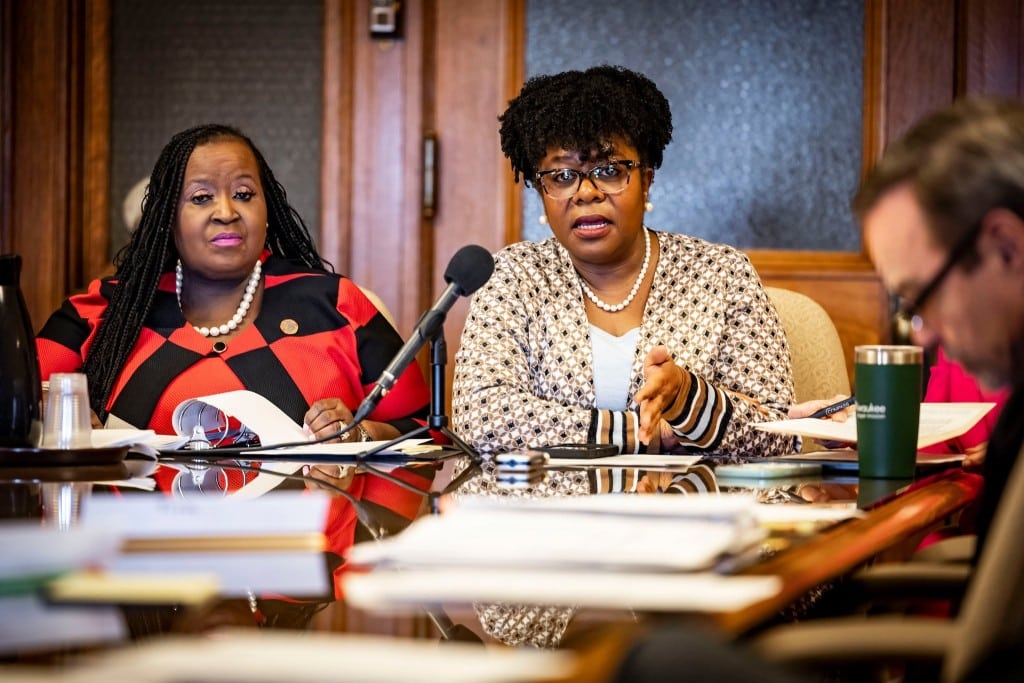
EDITOR’S NOTE (11/19): A previous version of this article incorrectly labeled Johnson as Stubbs and vice versa in the attached photo’s caption. This has since been fixed.
Heartland Signal encourages news organizations and content creators to use our content. You're welcome to republish this article for free as long as you follow our republishing guidelines.
Related Articles

Missouri Republicans weigh another redistricting fight after voters reject GOP map
Missouri voters rejected a Republican-drawn congressional map earlier this month. But was that the end of the state’s redistricting fight?
Lawrence among newly elected progressives doubling down on calls for federal data center moratorium
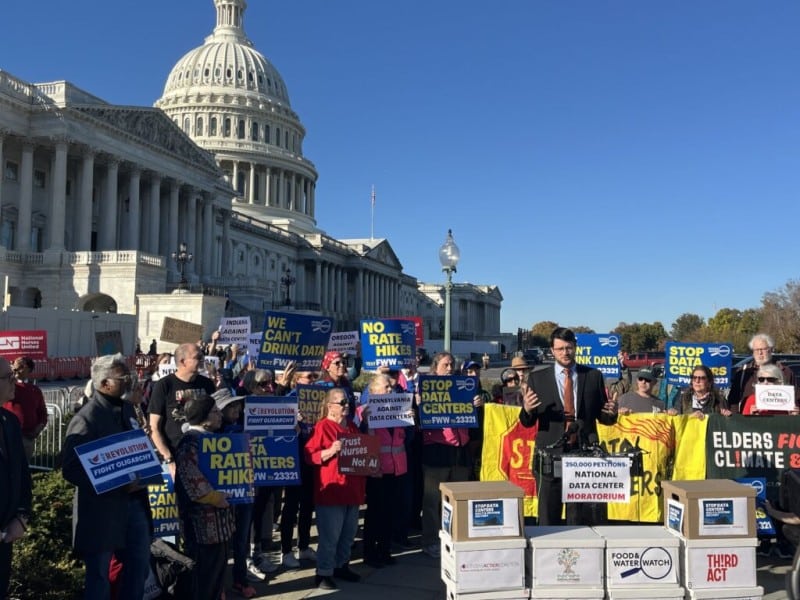
Outside of the U.S. Capitol building, standing behind stacks of bankers boxes, a number of progressive representatives gathered with labor advocates, political organizers and environmentalists to demand a pause on data center development until regulations can be put in place.
Kim Davis violated rule on disclosing her assets in decade-long case
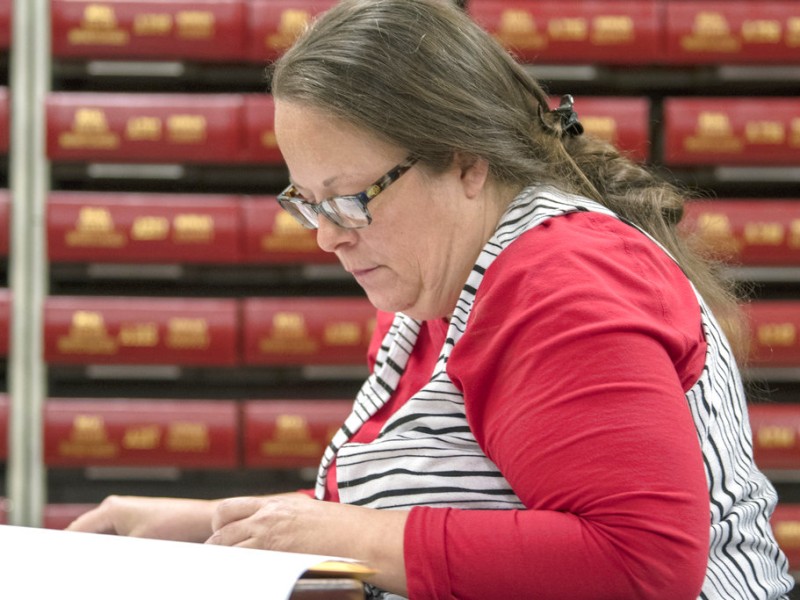
Kim Davis, the former county clerk who owes more than $500,000 after refusing to issue a marriage license to a gay couple a decade ago, violated a rule on disclosing her assets, a federal judge said.