
Wisconsin 3rd District: Where Van Orden, Cooke stand on power lines
Proposed 765-kV power lines tied to data center demand are now an issue in Wisconsin’s toss-up 3rd District race. Here’s where Cooke and Van Orden stand.
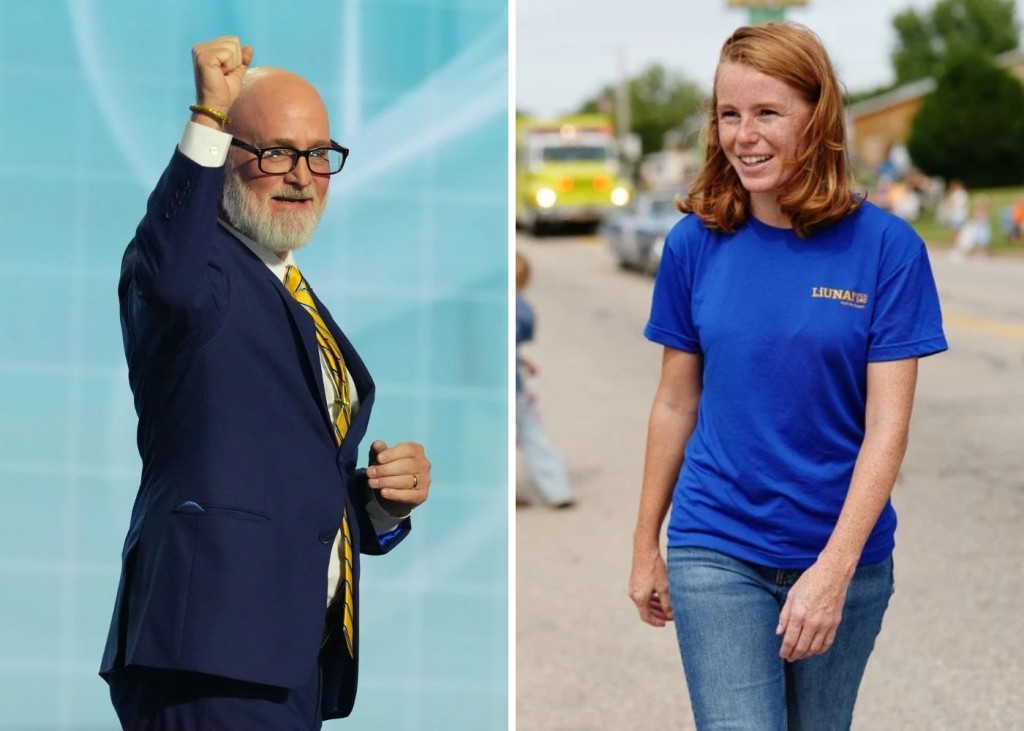
In August, Janet Johnson filed into a western Wisconsin high school gymnasium alongside hundreds of her neighbors. There, the sole agenda item for the gathering was to discuss a segment of regional power grid expansion that promised to develop a high-voltage transmission line through Richland County — and Johnson’s farm was in the study area.
“Your stomach sinks, and there’s a gut-wrenching feeling,” she said. “Everything that I’ve worked for, my entire adult life, has the potential of a private company coming through and tearing apart my land, my farm, without me having any say.”
The expansion includes two projects to develop hundreds of miles of 765-kilovolt, high-voltage transmission lines across southern and western Wisconsin. The projects, which have sparked concerns from residents like Johnson, have become part of a broader debate over increased electricity demand for data center development in the race for representation in the state’s 3rd Congressional District.
The race could help decide which party controls the U.S. House of Representatives next year. The seat, currently held by Republican Derrick Van Orden, is labeled as a toss-up by Cook Political Report.
Where the candidates stand
Rebecca Cooke, the Democrat running against Van Orden for the state’s 3rd Congressional District, has previously called for a federal moratorium on new data center development,which she said in an emailed statement could otherwise drive a surge in utility costs.
“We need to ensure the process for permitting is transparent and that we can rebuild the trust of our communities, which has been violated,” Cooke said as part of her statement. “I do not support the proposed MariBell and BECI transmission line projects that would cut through generational farmland, threaten family livelihoods, and impact our health and quality of life.”
Republican Derrick Van Orden, the incumbent in the 3rd District, has stopped short of pushing for such a moratorium, instead outlining conditions for development, and has also opposed the transmission lines. His campaign did not respond to requests for comment.
One group in the study area, No 765 Line, has organized efforts in opposition to the projects — including what it called a “Day of Power” at the U.S. Capitol on Oct. 14, where members discussed their concerns with legislators.
What’s proposed, and whose land is in the path
The BECI project, as a segment of the transmission lines plan is known, is managed by Midcontinent Grid Solutions (MGS), a joint venture between Transource Energy and Berkshire Hathaway Energy. A separate project, MariBell, is developed by Dairyland Power Cooperative and GridLiance Heartland and would run between Marion, Minn. and Bell Center, Wis.
A comment period for landowners ended Sept. 7, with MGS planning to file an application for certification with the state’s Public Service Commission in early 2027 for utility status.
Brian Radday, director of community engagement at MGS, said the line aims to strengthen the regional transmission network to prevent it from being overloaded by increased demand. The project is estimated to be in service by 2033.
“It is true that constructing the BECI Project will benefit data centers while at the same time improving electric reliability and affordability for other types of customers,” Radday said. “Our commitment is to develop a route that minimizes the impact on people, communities, property, farmland and the environment to the greatest extent possible.”
While Radday said a final route for the line won’t be confirmed until late 2026, the study area includes Johnson’s property. She bought the 50 acres of land in the town of Dayton on which her horse farm and family residence now lie in 1983, when existing 69-kilovolt lines already came through. She’s worried that more lines and towers will further disrupt her land, only a small percentage of which she said is usable because of a series of ridges.
“If they were to come through here, which I thought they were at first — and they still could — and they were to extend my easement of 40 feet on each side of these lines, I mean, my God, that would take my entire field, my entire pasture,” Johnson said. “It would just tear my farm in two.”
A rural push across party lines
The No 765 Line group’s treasurer and media lead, Michael Browne, said the opposition was formed around concerns with eminent domain, but broadly whether rural Wisconsin residents should bear the cost of the development of data center infrastructure environmentally and in their electricity bills.
“This project really represented the capitalization and privatization of what should be for the public good,” he said. “Everyone’s up in arms about data centers, but where they really need to be paying attention is the transmission lines.”
It’s a fairly bipartisan push, Browne said. More than 80 local governments have passed resolutions using a model from No 765 Line in opposition to the projects. It’s more about protecting rural communities, he said, amid rising demands for electricity.
“Rural life is hard. Services continue to be cut, budgets continue to shrink, cost of living continues to increase,” he said. “Meanwhile, the convenience that exists within a city continues to grow and grow.”
“You can’t fight this as a ‘not in my backyard,’ you have to fight this as a ‘not in anyone’s backyard.’”
What voters want to hear
And in the leadup to the election on Nov. 3, Johnson wants to see specifics of how that fight will happen on the state and federal level.
“We should have more localized control of the power that’s being brought through our state,” she said. “And from the candidates, I’d like to hear more specifically how they’re going to help fix the problem rather than just saying they’re against it.”
Heartland Signal encourages news organizations and content creators to use our content. You're welcome to republish this article for free as long as you follow our republishing guidelines.
Related Articles

Iowa governor race: Who’s funding Zach Lahn and Rob Sand
The Republican Governors Association has given Zach Lahn more than $15 million. Most of Rob Sand’s money comes from Iowa donors, including his wife’s family.
Mackenzie aide was in 2018 chat that shared racist, antisemitic memes
Pennsylvania Rep. Ryan Mackenzie voted for House resolutions condemning antisemitism, but his communications director, Arnaud Armstrong, was part of a college group chat that shared racist and antisemitic memes, including fabricated quotes from Adolf Hitler.
Mackenzie vs. Brooks: What’s at stake in Pennsylvania’s 7th Congressional District
Voters in Pennsylvania’s 7th Congressional District are weighing two vastly different visions on healthcare and rising costs. Republican Rep. Ryan Mackenzie backed federal Medicaid cuts, while Democratic challenger Bob Brooks, a local firefighter, is centering his campaign on expanded coverage and corporate accountability.