
Minnesota House 45A: Myers, Breazeale split on guns, agree on data centers
This year’s race is a rematch of 2022 when Republican Myers defeated Democrat Breazeale with 55% of the vote to her 45%. The DFL hopes to flip the seat blue and, with it, regain a majority in the Minnesota House.
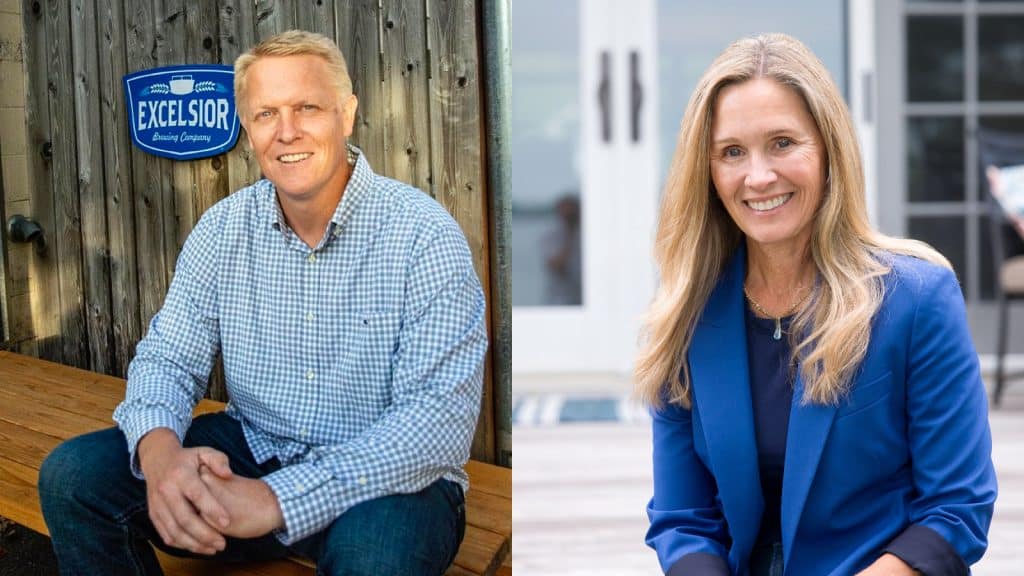
Home to the suburbs surrounding Lake Minnetonka, and one of the wealthiest regions of the state, House District 45A may seem like a long shot for Democrats. But the region has flipped back and forth between parties in recent years and the Democratic-Farmer-Labor (DFL) Party holds two of the other legislative seats in the area. So why not all three?
These were the stakes at a candidates forum late last month for DFLer Tracey Breazeale and incumbent Republican state Rep. Andrew Myers. During the forum, they argued pocketbook issues like health care and housing as well as data centers.
Breazeale and Myers on affordability
“I can’t fix your grocery bill,” admitted Myers, as he began his answer to a question about what state lawmakers can do to lower the cost of living. Myers has introduced bills to reduce property taxes and car tabs.
“Things like that can have a several-thousands-of-dollar impact on a budget,” he said. “And to be honest, down at the capitol, there’s a lot of money, and it’s about how we prioritize it”
Breazeale agreed on the need to control property taxes so they don’t get so expensive they force people out of their homes.
“I also support measures that would allow us to bring down the cost of housing both from ways of keeping corporations out of the housing market as well as looking for ways to increase supply,” she said.
The candidates debate healthcare
Nearly 400,000 Minnesotans face double-digit price increases for health insurance next year. These are people on group plans offered by small businesses, or people who buy plans on the individual market. On average, people on these plans will pay 17% more than they did this year.
In 2017, the state began what’s known as the reinsurance program to keep these costs under control. It pays 80% of medical claims between $50,000 and $250,000, leaving the rest to the insurance companies. The plan’s funding from the state expires in 2027.
Myers called the program “important” and credited it for holding down premiums. Without it, state officials said prices would have risen almost 60%.
“I think we can look to do more reimbursement rates that’s going to help with the overall cost and access.”
Breazeale said high premiums are just part of the problem.
“Prescription drug prices are another area that we need to tackle,” she said. “Our co-pays are out of control. These are putting pressure not just on people but also on businesses.”
What to do about gun violence
The two candidates took sharply different views on gun safety.
Breazeale said it was one of the most common topics she hears about from voters.
“Common sense gun violence prevention is not a partisan issue in the population,” she said “Most people would like to see some limits on high-capacity magazines. They’d like to see some limits on assault-style weapons. They’d also like to see legislation in place that allows prevention of it in the first place. Better mental health tracking of getting information ahead of time. I would support legislation that encompasses all of that.”
Myers voted with his fellow Republicans against bans on assault-style weapons and limits on high-capacity magazines. He said the legislature should look at bills both parties can get behind.
“We got to find something with bipartisan support,” said Myers. He introduced a bill that included social media threat assessment. “I learned through this process that 90% of the people that commit these acts tell somebody ahead of time and majority of them do it on social media. So what more proactive way than to do something like that?”
Their takes on data centers
Breazeale and Myers expressed similar worries about the impact of data centers in their district.
Breazeale said she was concerned over how data centers will impact local energy supplies and water infrastructure.
“I think this is an area where we want to get out ahead of it,” she said. “We want the state to be able to think about what types of legislation can we put in place to make sure that data centers are not impacting local water, that they have to find their own cooling systems, that they supply their own renewable energy and that that’s done in a way that is not negatively impacting the residents.”
Myers added, “We would like to have a little bit more knowledge, information. What’s the energy consumption going to look like? What’s the water use going to look like? And we don’t want that to impact utility costs in our own community.”
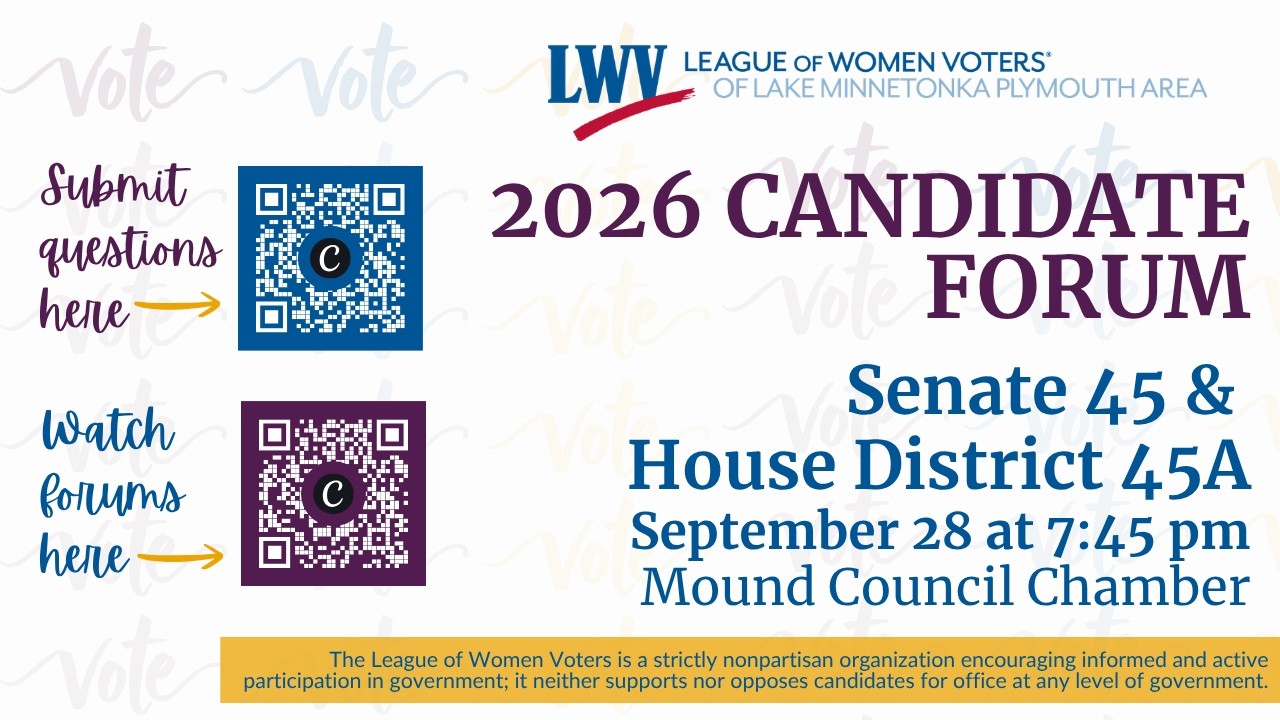
The Sept. 28 forum was hosted by the League of Women Voters of the Lake Minnetonka and Plymouth area. It can be viewed at the link below:
Heartland Signal encourages news organizations and content creators to use our content. You're welcome to republish this article for free as long as you follow our republishing guidelines.
Related Articles

Minnesota House 3B: Zeleznikar, Schweiger debate data centers, taxes
Control of the Minnesota House could hinge on District 3B, where GOP Rep. Natalie Zeleznikar won her last race by just 159 votes. DFL challenger Aaron Schweiger says investments in child care and local infrastructure are what the district needs, while Zeleznikar warns against returning to one-party state control.

Minnesota Senate District 54: Bakeberg, Olson on fraud, taxes and ICE
Republicans handily won this race four years ago. But the current seat holder is retiring and now it’s seen as a tossup.
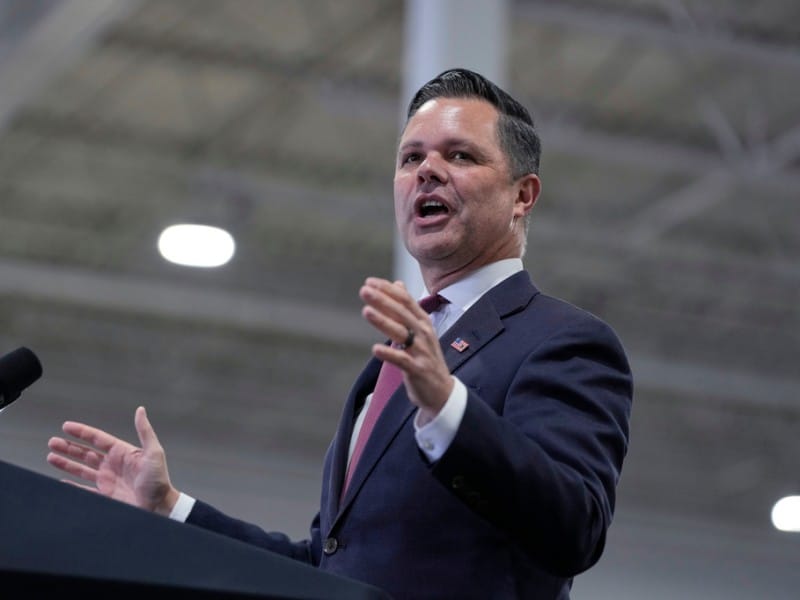
Zach Nunn sticks to phone sessions as Trone Garriott holds open town halls
Iowa Rep. Zach Nunn swatted at a reporter’s phone when asked about rural hospital closures — after calling warnings about the issue a “myth” last year. Meanwhile, his Democratic opponent Sarah Trone Garriott is holding open town halls across all 21 counties, while Nunn opts for telephone sessions.