‘Elections cease to matter’: Q&A with The Nation’s John Nichols on the state of democracy in Wisconsin
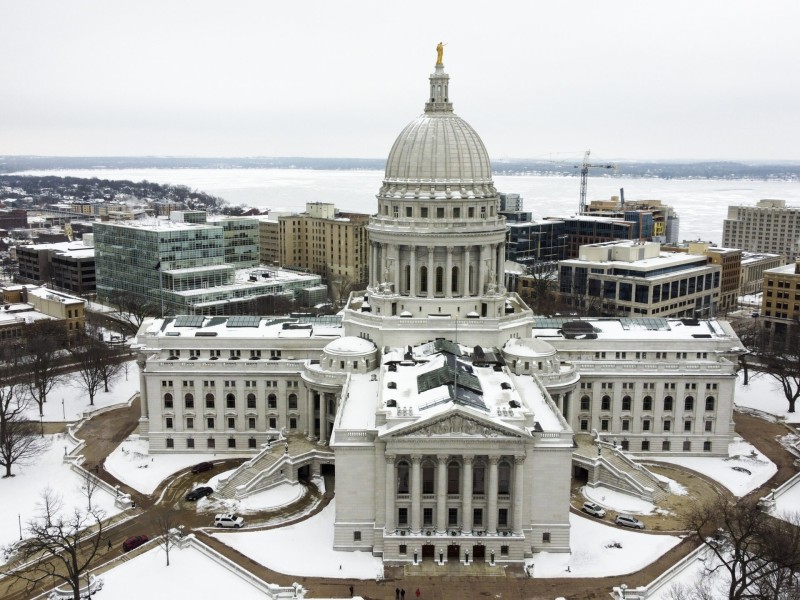
Wisconsin is a case study in American authoritarianism. Anti-democratic forces in that state have used radical gerrymandering to secure control of the state legislature despite repeatedly losing the popular vote in those elections. Now, they are turning their attention to the choice of electors for the next presidential election.
To understand more about the fight in that state, I turned to John Nichols. He is the associate editor of The Cap Times in Madison, Wis. The author of many books, he serves as a national correspondent for The Nation Magazine. He helps explain our politics to the folks across the pond as a commentator for the BBC and is often seen on TV here in America as well. We spoke on December 18th.
Here’s a transcript of our conversation.
This interview has been edited for length and clarity.
Edwin Eisendrath: The last hour, I was on the phone with [Marquette University professor Risa Brooks,] who is quite distinguished in studying in what she calls it democratic backsliding, or the erosion of democracy around the world. It was a chilling 45 minutes, and she described how democracies break down. Everything she described is there to see in your state. You wrote about the existential threat to democracy in Wisconsin. Walk us through it.
John Nichols: Well, it’s real. And it’s especially significant in Wisconsin because Wisconsin is a divided state. Wisconsin isn’t a one-party state. It’s not entirely controlled, in this case, by the Republicans. In fact, the important thing to understand is that in most of the recent general elections that were conducted on a statewide basis, the Democrats won. Democrats and progressives won two statewide nonpartisan Supreme Court races. They have won the most recent races for governor, lieutenant governor, attorney general, secretary of state, state treasurer, U.S. senator and president of the United States.
So you say, “Wow, that’s a that’s a pretty Democratic state.” But our state legislature is radically gerrymandered today for the Republicans. It was gerrymandered a decade ago and has never shifted. And our supreme court, because of huge amounts of outside money, is balanced toward the conservatives and, frankly, for people that are relatively partisan and pretty sympathetic to the Republicans. You end up with this divided situation. But even in this situation, we have seen a severe assault on democracy that that has really resonated.
There are three elements to it that are important to understand. The first is that extreme gerrymandering that I spoke about. At the end of the day, gerrymandering is more powerful than money in politics. It’s more powerful than personalities; it’s certainly more powerful than issues. In a gerrymandered district, you can pretty well predict that the party that is positioned to win, will win.
Wisconsin has some of the most gerrymandered lines in the United States. In a couple of recent elections, you had as many as 200,000 more people voting for Democratic candidates for the state legislature than Republicans. But the Republicans maintained an almost two-to-one control over the legislature.
So Democrats win, but they lose because some votes count more than others. That’s what gerrymandering does, right? It means that you find a way to write the boundaries so that some votes count more than others. As George Orwell said in “Animal Farm” about a dysfunctional world, “Some animals are more equal than others.”
That’s exactly right. And the dynamic is in gerrymandering, you can obviously gerrymander to favor Democrats or Republicans. It could go either way. Or you can draw a line of competitive districts.
In Wisconsin, what has happened is that when the Republicans had control of the governorship and the state legislature back in 2011, they drew lines that were radically gerrymandered. And the end result was that they took a competitive situation where, frankly, Democrats or Republicans could have won control the legislature.
[Republicans] had had a good year in 2010. And they created a circumstance where they could not lose. It didn’t matter. In 2012, Barack Obama carried the state and Tammy Baldwin got elected to the U.S. Senate, but Republicans completely control the legislature. In 2018, you had a big sweep for the Democrats — they won every single statewide race. Republicans still control the legislature by roughly the same numbers. 2020: Joe Biden wins the presidency, Democrats do quite well at the congressional level. And yet, in the state legislature, Republicans can maintain control at roughly the same level. Elections cease to matter.
And that’s the number one challenge in Wisconsin: We have this radical gerrymandering. And then [three] things extend from it: voter suppression, and the Republicans in the legislature use their position to make it harder to vote. Now often, Gov. Tony Evers, a Democrat, vetoes their efforts. But the many of their initiatives have ended up in the courts. And the courts, which again, the state Supreme Court is very biased toward the Republicans, the courts have backed them up.
And they’ve effectively created a situation where there’s a constant assault on the ease of voting. Wisconsin used to be one of the easiest states in the country to vote in. It has now become significantly harder. That’s number two.
And the third thing I’ll point out is Wisconsin is a frontline state in probably the most troubling recent development in our politics. And that is the efforts by Republicans. I’m not trying to pick on Republicans here; this is where it’s coming from. It’s where Republicans are trying to overrule state elections boards, or secretaries of state. And they’re literally trying to put partisan state legislators in charge of decisions about how elections are conducted and how votes are counted.
Obviously, this is an extension of Donald Trump’s Big Lie. But in Wisconsin, we have really seen this become hyperbolic. Sen. Ron Johnson has urged the state legislature to simply overrule the state elections boards as regard rules on elections. And you see a real push at the local, county and state level to literally disenfranchise people via an overruling of the elections board.
So, let’s unpack all of those. The first thing that I want to stress with you is that is that this isn’t about conservative or liberal policies. This is just about democracy, right? Right. And the second thing is that the efforts to undermine democracy are all legal. And so, we can’t sit back and expect some court somehow to rescue democracy if people don’t do it. A legislature can pass laws, it can pass terrible laws, it can pass anti-democratic laws. But that’s legal, right?
It is up to a point. Although when you have a judicial activist court, effectively a partisan court, that can become a factor in it. And in Wisconsin, that’s the case.
I’ll give you an example. In Wisconsin, the Republican-controlled state legislature, through a new set of radically gerrymandered legislative districts in the redistricting process this year, went to extremes. They sought to maintain their overwhelming advantage in state legislative districts, despite the fact the state is quickly evenly divided.
And then the Governor vetoed that, as you’d expect him to do. In the old days, what you would have had is sort of a forced negotiation. That Democrats want to do one thing, Republicans want to do the others. Usually, you ended up with a negotiation and reasonably good maps. Or if they couldn’t sort it out, then it would go to the courts, and the courts would draw reasonably fair maps.
What has happened in Wisconsin is the Republican legislators, after the veto, took their case into the state supreme court. The state supreme court is balanced four-to-three in favor of the conservatives, and it’s frankly very pro-Republican. The state supreme court ruled that they would adopt the standards chosen by the legislature. The court will draw the maps, but they will adopt the standard chosen by a legislature.
They’ve effectively signaled that it is their intent to pack the Republicans up. You have a situation where you have challenges and flaws, but you also have an activist court, which I would argue going way beyond its purview and potentially tipping the balance.
And they’re allowed to do this this year, because the Supreme Court in Washington, in a decision, Rucho v. Common Cause, said partisan gerrymandering was perfectly legal. Shameful, shameful decision.
An awful decision. And it has a huge impact on Wisconsin. Remember, Wisconsin had this bad gerrymandering in the past. One of the major lawsuits that went up to the Supreme Court came out of Wisconsin. It’s a real problem because you had this litigation. And instead of opening it up, or at least creating a neutral situation, you’ve ended up in a situation where the state supreme court, which again, is very, very partisan, feels empowered.
And that doesn’t mean that the book is closed. It doesn’t mean that there won’t necessarily be some additional litigation on this. Because, of course, the Democrats are trying to get into federal courts. And you do have some voting rights issues and others that might possibly…
On the margins, it might make a difference.
Yeah. But the bottom line is, when this state supreme court signaled that it was going to follow the parameters or the guidelines effectively set down by the Republican legislature, a lot of hearts sank in regard to trying to get fair maps in Wisconsin.
Across the country, the Right is engaged in a three-part strategy to undermine our democracy. There are three pillars of that. One is voter suppression. And Wisconsin is moving to do that, making it harder to vote. One is election nullification, and Wisconsin and a few other states now have passed laws and are working hard to allow their partisan officials that they appoint to overturn elections to say, “Hey, we don’t like those results. Let’s call them fraudulent and not count them.” And radical gerrymandering, which means that elections don’t matter anyway. All three of them are saying are characterizing Wisconsin right now.
You see elements of them all. And this is what makes the 2022 elections for statewide offices especially important in Wisconsin. Because at this point, you still have a Democratic governor and a Democratic attorney general. And while the Republicans have a lot of advantages in the courts, there are still ways that you can intervene both legally and via a strong veto power to prevent some things from happening.
But if in 2022 a Republican was elected governor and/or a Republican elected as attorney general, you very probably would have that full control of the process by the Republicans. If they get that, then you have a situation heading into the 2024 presidential election where there’s a very realistic chance that Wisconsin would be on the front lines of the states where the potential of that Big Lie-type politics extending from Trump playing out in Wisconsin. We’re seeing in Georgia, Texas, and other places. You could have a close result in a presidential election, and still some efforts to nullify or to overturn that result. Even if the Democrat might prevail in a close race, the Republican may seek, for instance, name another set of electors to the Electoral College. Things of that nature.
And I’ll just close off this by noting that the leading Republican candidate for governor, Rebecca Kleefisch, was asked if she would support efforts to overturn the election results effectively, to send a different set of electors to the Electoral College. She refused to answer the question. Instead of saying, “No, I’d never do that. I’d respect the will of the people. I’d respect democracy,” she backed off. There’s quite a quite a bit of concern about the prospect that if she became governor, in combination with Republican legislature, you could have a very messy situation.
Right. You have a candidate who is not willing to say to voters, “Hey, you know what? You matter enough so that you get to pick who we vote for president.” And you have a senator who is pushing a radical and odd legal theory that that has been out there for a while but not ever used, that says the legislatures rather than the voters picked the winners.
Right, misread of the Constitution. It’s a misread to the Constitution. And it’s been litigated. And up to this point, it’s been said that’s not the case. But we’re now in kind of the Wild West as regards to election law, not just in Wisconsin, but nationally. And you have a U.S. Supreme Court where there’s a lot of concerns about how they will interpret some of these laws.
Wisconsin could well end up on the front line of that situation. Not just because Ron Johnson, our senior senator, has been advocating for the idea, but also because you have this very powerful legislature. And let’s say Evers, the incumbent Democratic governor, is reelected in 2022. Then I think that efforts to go with this independent legislature doctrine to try and effectively create the legislature is super powerful situation where it might be able to go around not just the governor, but the elections board as well. I think you’d very likely see some efforts in that direction.
Alright, so people can’t rely on the courts. We’ll certainly try and make that effort. They can’t rely, at least when it comes to the legislature on voting. And people will try and will turn out in great numbers. And the fact that we have great numbers showing up to vote will matter.
But the scholar that I had on before said, “Look, around the world, the ways that anti-democratic movements fail is when mass numbers of people peaceably protest.” Is it foreseeable to you that as we get closer to the next presidential election, there are going to be a million citizens of Wisconsin standing outside the statehouse in Madison saying, “We will not go home unless you make it possible for our voices to count?”
I think it’s within the realm of possibility. I mean, that’s something to at least consider and hope for. But I will point out that that Wisconsin had mass protests in 2011, and hundreds of thousands of people in the streets protesting against Scott Walker’s assault on organized labor.
And there was no question that you saw something that was profoundly inspiring. I wrote a book about it. And there were people in Egypt, you know, celebrating what Wisconsin was doing. They were saying, “My gosh, that’s an example of, you know, really fighting for democracy.” And yet, at the end of the day, Walker succeeded. He succeeded because he had the court on his side. The state Supreme Court backed him up as well as the legislature and survived. His initiative survived, and he survived politically.
I do think that there is a reasonable chance that you could see mass protests. I think the turning point in that would come, and I hate to say it. But to be honest with you, I think it would probably come late rather than early. And it would come at the point where there really was an effort to overturn an election. And at that point, I think you would see mass protest, and some real pushback, as I think you will see in other states as well.
The critical thing to understand is that the professor is right. There is simply no question. If you look at South Korea, if you look at other countries around the world, you really get to the point where there is an accountability moment and people sort of renew some commitment to democracy. It comes because it is clear that there is a destabilization of the process to such an extent that people are willing to call halt, they’re willing to go into the streets. Not just to protest, but also to kind of stop business as usual. Nonviolent, you know, certainly respecting the rule of law, but effectively demanding that the rule of law be restored. And I think there’s a good, decent possibility that we’ll get to that point.
Again, I’m probably one of the more optimistic people you’ll ever meet, I believe strongly in people power and these efforts to rise up and push for a better way. But I will tell you, in an ongoing pandemic situation, and in a situation where we’ve had some terrible court rulings, as regards to vigilante violence and things of that nature. I think building mass movements becomes harder. And it doesn’t mean it won’t happen. But it does mean that this is a challenging moment. And we should be sobered by it.
We should be very conscious that what we are up against, those of us who believe strongly in a “small d” democratic model. It’s not just some nefarious characters in one political party, but also a moment in history, where it is difficult, it is hard to push back. And to get a mass movement of people to do so is going to take a lot of organizing.
It’s frankly, also in my sense, is going to take a lot more leadership, in this case on the part of the Democrats. And I will sadly report to you that you know one of the best ways to deal with many of the problems in Wisconsin would have been to pass a number of these democracy bills that are in Congress. The For The People Act, the John Lewis Voting Rights Advancement Act, and some of the bills that Amy Klobuchar has come up with as regards to sustaining and maintaining election rules. And the U.S. Senate finished its business today and headed home for a long Christmas break, rather than, refusing to leave until they got it right.
And so, I will tell you that I believe strongly that we will save democracy, I think we’ll make it through. But I think it is made harder by the fact that some of the folks in Washington don’t seem to be taking this quite as seriously as I think they should.
They don’t think they have the votes.
I know, I understand the dynamic. I will tell you: I think Lyndon Johnson would have found the votes.
Well, he was a remarkable legislator, that’s for sure. One of the things that characterizes Democrats and progressives is a sense of optimism. And I worry that in this moment, our inability to contemplate the true darkness that is upon our democracy means we will not wake up fast enough to save it.
That’s precisely my concern, Edwin. I couldn’t agree with you more. And I will tell you that I read a lot. A lot of my writing, especially for The Nation, is about the Republican Party. And it’s not to pick on Republicans; it’s to kind of, hopefully in a very straightforward way, keep a good read on where that party is at. And I think it’s important to understand this is a party that, a few weeks ago, excommunicated Liz Cheney.
And I’ve read about the Cheneys for years. Liz Cheney is an extreme conservative. She’s a fearsome right-winger. She’s a neoconservative for foreign policy stands are, to my mind, awful. Her domestic policy stands are indefensible. She has been as cruel and destructive in many of her statements over the years is as a Marjorie Taylor Green or a Matt Gaetz. She’s not a good player.
And yet, a little over a little less than a year ago, she decided that her party had gone too far on these democracy issues, and on literally trying to overturn an election. She just simply said, “Look, I’m right wing. I’m a partisan Republican. But I can’t go that far.” Well, what has happened to her? She lost her leadership position. And now, her own state party excommunicated her. They literally said, “We will no longer recognize her as a Republican.” You’re seeing things like this around the country.
The Republican Party is becoming a far more cultish party. And there’s a lot of Democrats who say, “Oh, the Republican Party is cultish. That’ll get them defeated.” And I counsel differently. In a midterm election cycle, especially, and were you looking at a lot of voter suppression, when you have a gerrymandered situation, if you’ve got a party that is hyper loyal to a maximum leader like Donald Trump, and that is willing to excommunicate those who step out of line in any way. If they show up, and if they kind of maintain their discipline, they can be a very powerful force. They may be a minority in our politics, but that doesn’t mean necessarily that they will lose. I think that Democrats have to recognize that.
I think we err in because it’s this anti-democratic movement is coming from the Republican Party. We make the mistake of focusing on democratic policies. We’ve made a mistake focusing on issues of conservative or progressive or liberal. Anti-democratic movements in history, they can be left-wing, they can be right-wing, they can be religious. They’re anti-democratic; it has nothing to do with the policies.
So, the Republican Party is no longer a conservative party, else they would keep their arms around Liz Cheney. They are the anti-democratic Party. That’s the crime that got her thrown out. We have to recognize them for what they are: a group that its organizing principle is democracies are bad. Because for all kinds of reasons, but they’re organizing to undermine the democracy. It’s the only unifying factor now in the Republican Party.
Yeah. Look, one of the things we understand is that politics is a competition for power. That’s just the truth. It’s just what you will do to get that power is what distinguishes you. The Democrats, by and large, still compete and still play by a set of rules that says, you know, there are certain things we won’t do.
I always use the example of Al Gore, now that are part of two decades ago, he had some legitimate legal grounds to continue to contest the 2000 elections. But at a certain point, he said, “Look, this isn’t gonna work.” And he conceded. I think some Democrats are very upset with him for doing so, but he did so because he thought it was for the good of the country.
The Republicans would just never do that. That’s beyond even their comprehension at this point. And they have now become an aggressively anti-democratic party in many, many settings.
Why that is significant is that they are now committed to operating at every level, national, state, county local level, to putting people into positions of power where they can manipulate the political processes in their favor.
Now, you come from Chicago, and I read enough Chicago history to know that there have been some times in the past where Democrats got their hands on the levers of power and sought to, you know, have advantages for them. I’m not suggesting this is just one party. But what I am suggesting is at this point, the Republican Party, certainly in my state of Wisconsin and in a lot of states around this country, seems to be operating with sort of a hyper commitment to gaming the process in ways that are incredibly anti-democratic and could bring us to a real constitutional crisis in 2024.
I know great people in Wisconsin are working hard to save the democracy there. And to push back against these crimes against democracy, even if they’re not illegal, those are crimes against democracy. You have some of the best organizers in the country, you have some of the best political organizers in the country. And if democracy continues to erode in Wisconsin, then everyone in every 50 states should panic. I urge everyone to pay attention to what’s going on in Wisconsin.
I couldn’t agree with you more. And I will tell you this: Wisconsin is the classic battleground state. In four of the last six presidential elections, everyone except the two that involved Barack Obama, the presidential election in Wisconsin was decided by under 25,000 votes. I want to emphasize that. Four of the last six presidential elections decided by under 25,000 votes. Our last governor’s election was decided by under 30,000 votes. Our last attorney general election was decided by around 22,000 votes.
Wisconsin is a very, very closely divided state. And if you’ve got one party gaming the process in its favor, it’s much easier to tip the balance than in many other states. But it’s also a very, very dangerous example for the whole country. Because we often say that we’re a divided country. I don’t know how closely divided we are. But it’s relatively competitive. If we understand it as such, if Wisconsin falls, it’s hard to see how the rest of the country doesn’t fall as well.
Heartland Signal encourages news organizations and content creators to use our content. You're welcome to republish this article for free as long as you follow our republishing guidelines.
Related Articles
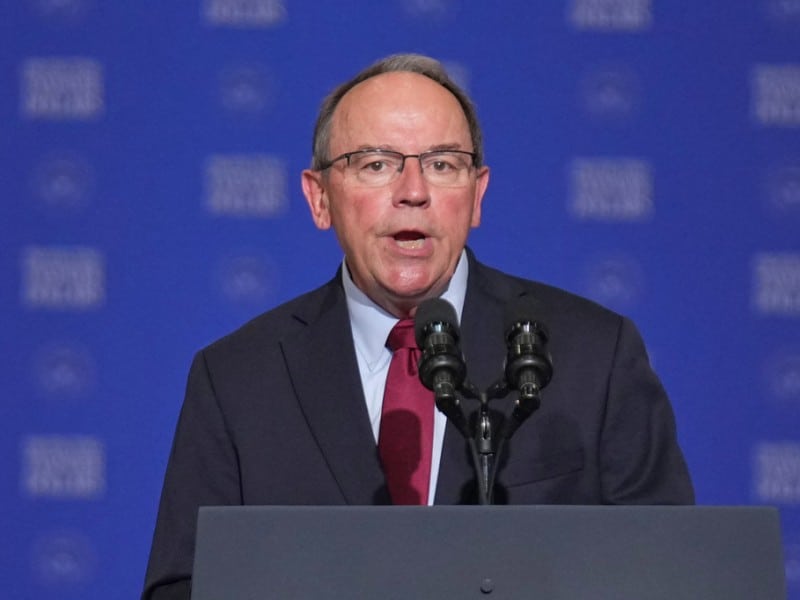
Tiffany campaign blocks Milwaukee Journal-Sentinel reporter from event
The gubernatorial campaign of Republican Tom Tiffany blocked a reporter for the Milwaukee Journal-Sentinel from entering an event in Milwaukee Thursday, preventing the state’s largest newspaper from covering the campaign.
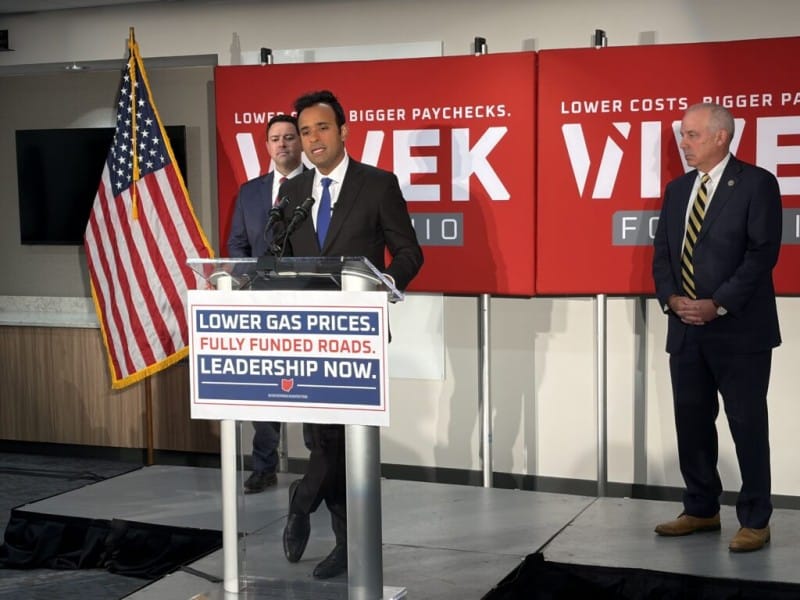
Ohio GOP lawmakers tee up votes for gas tax holiday after Acton, then Ramaswamy, back idea
Ohio Republican candidate for governor Vivek Ramaswamy introduced his plan Wednesday for a 90-day gas tax holiday. It comes on the heels of Democratic candidate Amy Acton calling for a similar halt to the tax.
Amendment 6 could make another Missouri congressional gerrymander much harder
If voters reject the gerrymandered map in November, a second ballot measure could require 80% legislative support and another statewide vote for lawmakers to pass another map prior to the next census.