OPINION: Is Rebecca Kleefisch losing her lead in Wisconsin’s Republican gubernatorial primary?
Less than three months from the primary, Rebecca Kleefisch is facing tougher challenges and has been unable to consolidate support in the party.
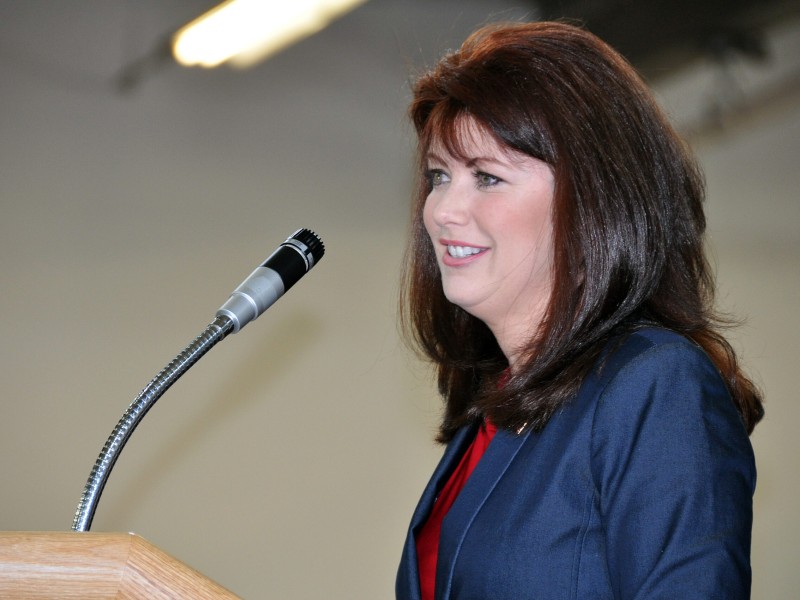
A number of important political primaries in key swing states have now come and gone, but Wisconsin’s is still months away. The Republican gubernatorial primary is now shaping up to be a competitive race. That wasn’t exactly what many were expecting.
Since the moment Scott Walker lost to Tony Evers in 2018, it was all but assumed that Rebecca Kleefisch, the lieutenant governor for eight years under Walker, would be running for governor. A Kleefisch-Evers general election was always the most likely outcome for 2022. More than likely, it still is. But it seems like much less of a foregone conclusion than it did a few months ago.
Last year, previewing the 2022 elections, I wrote that Kleefisch “is a formidable candidate…and people should not be quick to doubt her.” Her entry into statewide politics was a beat-the-odds situation, after all – she upset Walker’s preferred pick Brett Davis (46%-26%) in the race for lieutenant governor in 2010.
But for some time now, it has seemed curious that while she’s been the obvious frontrunner in the race, a significant number of Republicans have continued to look elsewhere throughout the primary campaign. The “Not-Kleefisch” campaign has stayed busy.
At various points since Kleefisch announced her run, the potential candidacies of former congressman Sean Duffy, State Rep. John Macco, longtime Republican lobbyist Bill McCoshen, former U.S. Senate candidate Eric Hovde, former Trump chief of staff Reince Priebus, and former governor Tommy Thompson have been floated as potential options. It’s clear there is a part of the party that would like to go with a candidate other than Kleefisch.
A year before making her gubernatorial campaign official, she launched and ran the 1848 Project, a conservative advocacy organization that always appeared like a quasi-campaign operation for Kleefisch. She left the project late last summer and began officially running for governor in early September.
One member of the advisory board for the 1848 Project is Tim Michels, who must have thought so highly of Kleefisch’s leadership there that he decided to challenge her in the race for governor.
Michels launched his campaign on April 25, and he’s made a particularly interesting entry. He’s been spending big, and according to a poll released May 16, he’s now neck-and-neck with the former lieutenant governor. The poll showed Kleefisch at 26%, Michels at 27%. A huge chunk of the Republican primary electorate remains undecided (29%), so there’s much still to be decided between now and the Aug. 9 primary.
But if three weeks of campaigning put Michels into a statistical tie with Kleefisch, who has essentially been running for 3.5 years, that’s not great news for the former lieutenant governor’s campaign.
The “Not-Kleefisch” movement in the Republican Party seems to have finally found its candidate in Michels.
In Wisconsin, the name Michels is a familiar one, where Michels Corp., a large family-owned construction and infrastructure firm, does a significant amount of business. The company is based in Brownsville, Wis., but is currently in the process of building a $125 million development in the city of Milwaukee’s Harbor District. Tim Michels is the son of founder Dale Michels and currently co-owns the company and serves as its vice president.
Michels is no political newcomer. He lost in a bid for the U.S. Senate in 2004 against Russ Feingold (55%-44%), but he’s been out of the political picture in the state for quite some time. He’s also been out of the state of Wisconsin for quite some time, as reports have indicated that he’s been living in Connecticut and New York since 2013.
But the Michels campaign appears to be the endpoint of an extended effort to find a not-Kleefisch candidate to run in the primary, and he’s seeing some early success.
That early success is also not great news for two other candidates in the field. There’s Kevin Nicholson, who lost in the Republican primary for U.S. Senate in 2018, and has essentially never stopped campaigning, saying he would run for whichever statewide office would be an open race in 2022 – taking the gubernatorial lane once Sen. Ron Johnson announced that he would seek re-election. Nicholson polled at just 9%. And then there’s Tim Ramthun, the conspiracy-obsessed candidate who’s been trying to “decertify” the election (which is not a real, possible thing!), who has the backing of other 2020 truthers like Minnesota pillow magnate Mike Lindell, rounding out the field. He’s at 6%.*
The clearest indication that Kleefisch has failed to consolidate support within her party came this weekend at the Republican Party of Wisconsin’s annual convention, where for the first time ever, the party did not endorse a candidate. Delegates ultimately decided between endorsing Kleefisch, needing to reach a 60% support threshold to do so, and not endorsing anyone. Kleefisch pushed hard for the endorsement, but got just 55% of votes, so the party chose not to endorse anyone.
Kleefisch has enjoyed the support of the Republican establishment in Wisconsin. She’s been endorsed by Scott Walker, Assembly Speaker Robin Vos, the Tavern League, and the state’s largest business lobbying group, Wisconsin Manufacturers and Commerce.
This campaign is going to test whether that establishment, which has effectively controlled the state for more than a decade (8 years running the governor’s office, going on 12 years of an ultra-gerrymandered Republican majority in the legislature), will hold against what appears to be a growing anti-establishment sentiment running through the party.
She’s been trying to placate that, it seems. She’s been running a very grievance-based, “own the libs!” style of campaign. When she marked the anniversary of the passage of the Act 10 law, the anti-union bill that stripped collective bargaining rights from public sector employees, she did so celebrating that “Liberals were outraged.” Regardless of your views of the merits of this controversial piece of legislation, celebrating opponent outrage as a key piece of why you view the bill succeeded 11 years after the fact is simply bizarre.
She also recently has drawn headlines after the leaked Roe v. Wade draft, saying that Wisconsin’s 1849 abortion law would stay on the books, and that there would be no exceptions for rape and incest. In a recent radio interview on the topic, she made some more odd comments, saying it’s “super out of touch for people to go around, you know, judging women, and being nasty about, you know, how babies are conceived.”
On the issue of “election integrity” and the lie of a stolen election that her party continues to embrace, she’s been tripping over herself to become more and more Trumpian, in a state where the most motivated parts of the conservative base are most fired up about this (insulting, baseless) issue of a lie of a stolen election.
The New York Times recently noted her shifting views on the matter — she’s gone from saying Joe Biden won the state’s election fairly a year ago, to saying she wasn’t sure of the victory in February, to saying “it was rigged” in late April. Just this week, she backed far-right elections commissioner Bob Spindell’s bid to be chairman of the Wisconsin Elections Commission, despite the fact that he was among the fake electors who attempted to cast Electoral College ballots for Donald Trump, and has repeatedly contended that the 2020 election was “rigged.” Putting someone willing to overturn the election results in charge of elections seems rather extreme, and calls into question whether or not she would uphold the results of the popular vote were she to be governor in 2024.
What also looms over this race — and over Kleefisch’s shifting views on the reality of the 2020 election – is the yet-to-be delivered Trump endorsement. He has not yet backed a candidate in this race. Last year, just weeks after Kleefisch announced, the former president was encouraging Duffy to run. Earlier this year, as the “decertify” talks were in the spotlight, reports said Trump was considering endorsing Ramthun.
Now, after an uneven record in several primaries, the Trump endorsement isn’t quite looking the same as it once had, but in a crowded primary like this one, it certainly matters, and has seemed to make more of an impact in Midwestern states like in Ohio, where Trump-backed JD Vance emerged victorious from a crowded group. If Trump joins the state’s “Not-Kleefisch” movement and endorses Michels (or even Ramthun), that could create further problems for the presumptive frontrunner.
The bottom line is this: What once seemed like it would be a coronation for the establishment-backed candidate who’s been running in this race for 3.5 years now looks like anything but. Kleefisch has not demonstrated the ability to unite her party as this primary enters its home stretch. She’s now going to face a difficult primary, and while she’s still the odds-on favorite to win it, her path to victory looks very different than it did just a few weeks ago. This will be a race to watch — in Wisconsin, and across the country.
*For Nicholson and Ramthun, both of these numbers are similar to the level of support they’d seen in the Marquette University Law School Poll, the latest of which was held shortly before Michels joined the race. There, in April, Nicholson was at 10% and Ramthun was at 4%.
Dan Shafer is a journalist from Milwaukee who writes and publishes The Recombobulation Area. He previously worked at Seattle Magazine, Seattle Business Magazine, the Milwaukee Business Journal, Milwaukee Magazine, and BizTimes Milwaukee. He’s also written for The Daily Beast, WisPolitics, and Milwaukee Record. He’s won 13 Milwaukee Press Club Excellence in Journalism Awards. He’s on Twitter at @DanRShafer.
Heartland Signal encourages news organizations and content creators to use our content. You're welcome to republish this article for free as long as you follow our republishing guidelines.
Related Articles
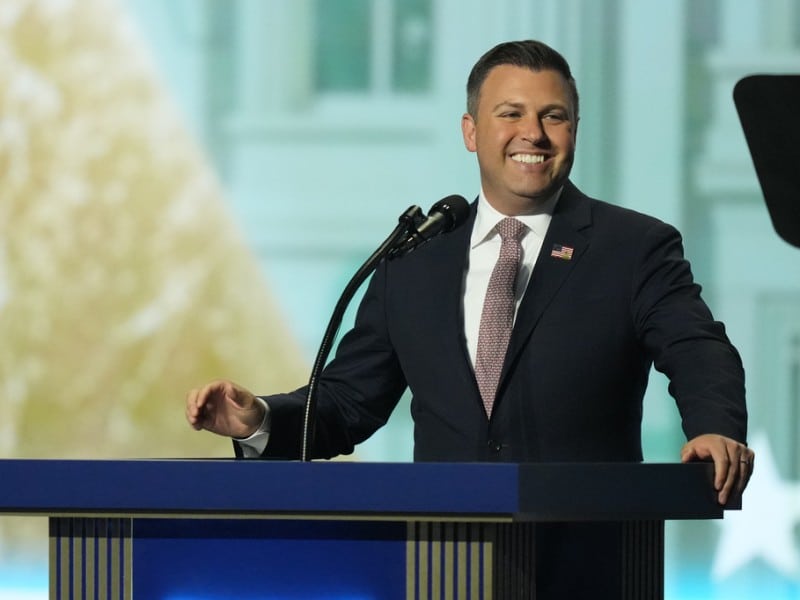
FACT CHECK: Ryan Mackenzie parrots misleading claim denying Iran War is spiking fuel prices
U.S. Rep. Ryan Mackenzie (R-PA) is repeating misleading claims that recent high fuel prices aren’t driven by the war with Iran. Experts say even with sea passages open, risk premiums and lost oil supply from ongoing Middle East conflict continue to keep prices inflated.
Sprague, Russo, and more secretary of state candidates weigh in on Trump’s expanded voter database
The Supreme Court cleared the way for the federal government to share Social Security data to build a nationwide voter database. But election officials in Minnesota, Ohio and South Dakota are divided on whether the error-prone tool will protect voter rolls or disenfranchise eligible citizens.
Cooke calls Van Orden’s AI deepfake videos defamatory, threatens legal action
Incumbent Derrick Van Orden (R) has posted numerous AI-generated deepfake videos of Rebecca Cooke on his X account. Cooke and her lawyers have issued a cease-and-desist letter to Van Orden, arguing that his conduct meets the legal standards for defamation.