
Illinois Congressman Sean Casten reacts to ‘heartbreaking’ GOP budget bill with WCPT’s Edwin Eisendrath
Late last week, WCPT’s Edwin Eisendrath talked to Illinois Congressman Sean Casten (D) on the GOP’s budget bill that had narrowly passed the House. Casten voted with all Democrats to oppose its passage.
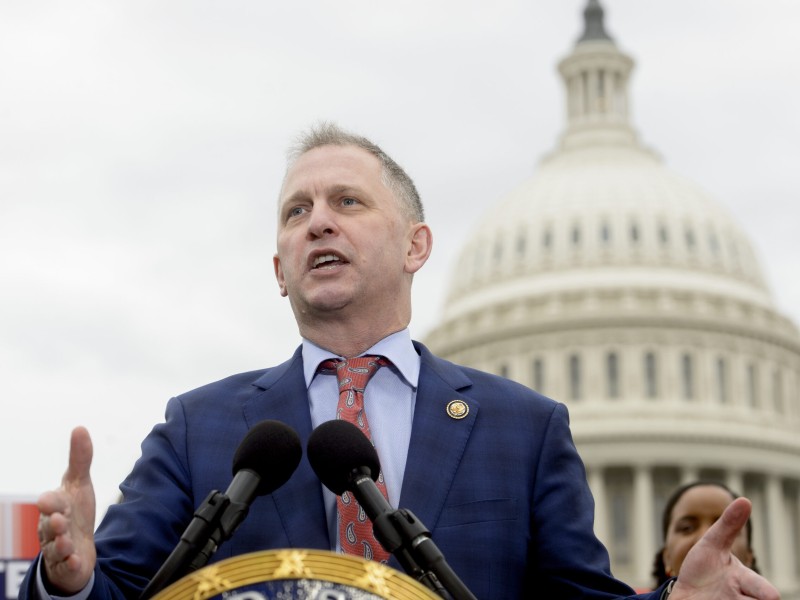
Late last week, WCPT’s Edwin Eisendrath talked to Illinois Congressman Sean Casten (D) on the GOP’s budget bill that had narrowly passed the House. Casten voted with all Democrats to oppose its passage.
“It’s a heartbreaking moment for America,” he told Eisendrath in an interview from last Friday broadcast the next day. “Now, obviously, the Senate still has to pass this, and if your listeners are concerned, it’s time to light up the phone calls, particularly Republican senators. But if this bill becomes law, it’s a complete decimation of everything that we have come to rely on as Americans.”
Casten said the legislation, as passed in the House, would authorize “the biggest-ever cut in food assistance in America, the biggest-ever cut in health insurance in America, and the biggest-ever tax cut for billionaires in America.”
“How do you go home, look your kids in the eye and say, ‘Thanks to me, kids are going to starve, and Elon Musk will be richer?’ Casten continued. “Because at the end of the day, that’s the trade. And that’s even before getting to the horrible things that this will do to raise energy costs, to hurt our environment. I don’t have a better word for this than ‘mean.'”
Noting that the bill is projected to add about $3.5 trillion to the federal deficit over the next 10 years, Casten said the dollar amount is “probably 5 trillion-plus, after it drives up all the interest costs.”
The four-term southwest suburban Chicago Democrat in the 6th Congressional District criticized House Republicans for “not right now going out and honestly representing what they did” by voting to approve the bill.
“What we have right now is those voices that have historically been very strong in our society controlling the levers of power. They are not nice people. They are not democratic people. They don’t support the rule of law. They don’t support equality. They are at odds with all of the principles on which we tell ourselves that our country was based,” Casten said. He then cited “a whole host of problems with campaign finance and gerrymandering” that have contributed to the problem.
He countered that by pointing out, that the U.S. Senate, with its statewide representation, is “ungerrymanderable.” In the House, Casten has reintroduced a package of legislation that would, among other reforms, expand the U.S. Senate to include 12 nationally elected members. These new senators would, he told Eisendrath, “have to respond to public will. That would be the first time, in 250 years, that that would ever happen in the Senate.”
Heartland Signal encourages news organizations and content creators to use our content. You're welcome to republish this article for free as long as you follow our republishing guidelines.
Related Articles

FACT CHECK: Ads fault Minnesota state senators Hauschild, Kupec on fraud vote they later backed
A GOP-backed ad campaign claims DFL state Sens. Grant Hauschild and Rob Kupec opposed fraud accountability measures. But both senators voted yes on Senate File 856, which created Minnesota’s Office of the Inspector General.
Former elections official accuses Missouri secretary of state of altering results, misleading judge
Nick La Strada, fired in May as director of election integrity, alleges Denny Hoskins also illegally used public funds to influence a St. Louis County election.