
Michigan Senate race: Mike Rogers’ literacy test plan for government assistance
In Michigan, hundreds of thousands rely on SNAP and Medicaid to get by. Republican Senate candidate Mike Rogers wants to require reading assessments and remediation before they can access that help.

When Robert L. Green was a child growing up in Detroit, his family moved into a white ethnic neighborhood. A white mob responded by throwing stones at their home. Green, who went on to become a prominent civil rights activist and Michigan State University professor, recalled the experience in a 2004 oral history preserved by The HistoryMakers.
Green’s childhood was shaped by a truth that has followed Black Americans across generations. Access to opportunity has never depended on ability alone. It has also depended on who is allowed to belong, who is presumed capable and who must prove they deserve what others receive.
Now, Michigan Republican U.S. Senate candidate Mike Rogers is proposing that people receiving government assistance demonstrate that they can read before receiving help. His remarks, made in both 2025 and 2026, have described reading assessments and courses lasting several weeks as conditions for accessing programs including food assistance. He has suggested using the first 20 to 40 hours of a work requirement for reading remediation, framing the idea as a way to help parents and break cycles of poverty.
While speaking at the 2026 Mackinac Policy Conference in May, Rogers admitted his proposal was “controversial” but that it was a way to for “you and your next generation are all trapped into the cycle of poverty and welfare and other things.”
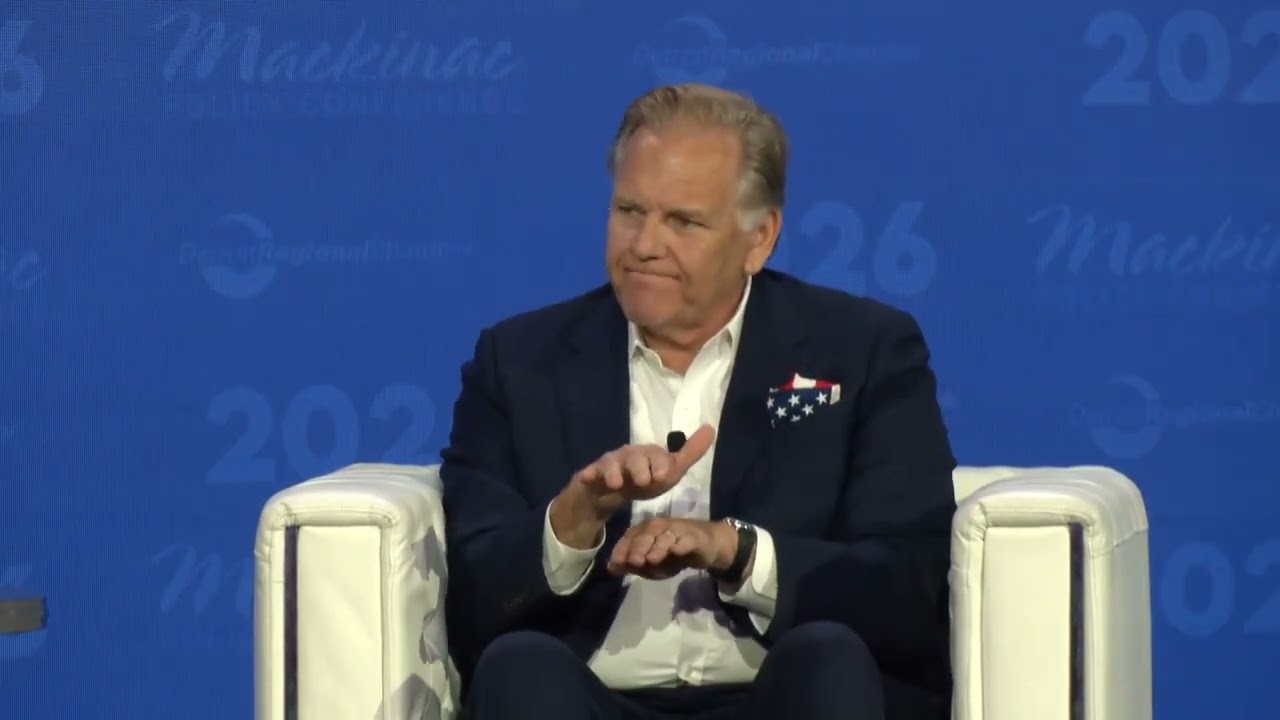
Rogers has proposed making literacy instruction part of the existing work requirements for people receiving government assistance. “One of the requirements should be,” he said on “The Tudor Dixon Podcast” in October 2025, before arguing that recipients should spend the first 20 hours on a reading remediation program and take an assessment. “We want to give you a hand up, not a handout,” he said.
The Rogers campaign did not immediately respond to a request for comment.
Rogers’ proposal is not the same as a Jim Crow-era literacy test for voting. But its premise deserves scrutiny in a state where racial inequality has long been enforced through institutions and public policy, even without the formal segregation laws associated with the South.
After the 15th Amendment prohibited denying voting rights on the basis of race, states used literacy tests, poll taxes and other barriers to prevent Black Americans from exercising that right. Officials could demand that applicants interpret complicated constitutional passages or reject their answers at their discretion. The National Archives notes that the Voting Rights Act of 1965, which outlawed literacy tests as a voting prerequisite, immediately led to over 250,000 new Black voters in the U.S.
Michigan’s history was different from the South’s system of legally mandated Jim Crow segregation, but it was hardly free of racial exclusion. During the Great Migration, Black Southerners came to Detroit seeking industrial jobs and opportunity, only to confront discrimination in housing, employment and public life, according to the Library of Congress. In 1925, when physician Ossian Sweet moved into a predominantly white Detroit neighborhood, a white mob gathered outside his home. The confrontation led to a murder charge and a landmark trial, as the Detroit Historical Society recounts.
And after the Voting Rights Act of 1965 passed, the consequences of these systems did not end when explicit racial barriers became illegal. Housing discrimination helped determine who could build wealth, where families could live and which communities had access to opportunity, shaping which members of future generations had more opportunities.
Rogers’ proposal risks equating receiving SNAP or Medicaid with a person’s intelligence, education or literacy, which is not true, according to U.S. Census data. It also risks singling out people who need assistance, treating literacy as a personal failing among the poor rather than a skill that Americans should help everyone develop.
Rogers has not publicly established that literacy requirements would reduce poverty, increase employment or improve children’s reading outcomes. (Income and literacy levels are correlated, however.) Nor has he explained how the government would assess applicants, accommodate people with disabilities or limited English proficiency, or prevent eligible recipients from losing food or health coverage because they failed to complete a course.
But research on existing benefit requirements offers a warning. A 2026 analysis by the Citizens Research Council of Michigan says new Medicaid work requirements are likely to reduce enrollment, even as Michigan could take steps to limit coverage losses.
There is also intangible racial history in Michigan. Black residents are disproportionately represented among Michigan Medicaid enrollees, according to state-by-state data by the health policy nonprofit KFF on Medicaid enrollment by race and ethnicity. Yet public assistance is not simply a story about one racial group. The U.S. Department of Agriculture’s 2023 SNAP household report shows that white, non-Hispanic people are the largest racial group receiving SNAP nationally, and white people also make up the largest share of recipients in Michigan. Poverty and food insecurity cross racial lines, but racial disparities in access and outcomes still matter.
Green’s family knew what it meant to be denied the promise of opportunity. Rogers’ proposal is different from Jim Crow literacy tests, but it places another hurdle between people and the help they need.
Heartland Signal encourages news organizations and content creators to use our content. You're welcome to republish this article for free as long as you follow our republishing guidelines.
Related Articles
FACT CHECK: Ad blames Minnesota Rep. Matt Norris for fraud he tried to stop
A new attack ad blames Minnesota state Rep. Matt Norris for “$9 billion stolen” in recent state fraud scandals. Campaign records and legislative filings show a very different story: Norris actually chief-sponsored the state’s marquee anti-fraud oversight bill.

FACT CHECK: Helping a rapist? Overseeing fraud? Minnesota state House candidate calls attack ad ‘deplorable’
A Renew Minnesota ad ties DFL candidate Jason Heaser to a pardon and the Feeding Our Future fraud. We checked each claim against his record and the timeline.

Hinson asks Iowans for ‘gas money’ as fuel costs climb amid Iran war
Ashley Hinson asked Iowans for gas money for her $92,000 bus tour. Iowa diesel is up 81% in a year, and farmers are paying for it in the middle of harvest.