
Radio Free America: It’s the perfect time to think long term
Democrats have a mandate to lower costs. The good news for them, writes Aaron Kleinman, is that the most obvious policies to pursue will kick in right after the next presidential election
Welcome to Radio Free America, Aaron Kleinman’s newsletter on stories that matter in state politics but aren’t getting enough attention. Want this newsletter delivered to your inbox each week? Sign up!
2026 was in many ways the election that Democrats were expecting in 2020 — a generational blowout and repudiation of Donald Trump that led to Democrats winning comfortable majorities in Congress and control of numerous state governments. As with so many prognostications, the optimistic 2020 projections weren’t wrong, just early.
The reason why Trump came so close to winning in 2020 is that, well, Democrats helped him. As former Council of Economic Advisors Chair Jason Furman predicted, the CARES Act-buoyed recovery from the March 2020 pandemic slowdown ended up working in his favor. Trump only narrowly lost, and then was able to win again in 2024 as voters preferred his economic record to Joe Biden’s.
Of course, you can’t fault March 2020 congressional Democrats for not wanting the global economy to collapse. For 2027, economist Nina Eichacker has put together six broad issue categories Democrats should focus on, and the two that would have the most immediate impact are ending the war in Iran and rolling back tariffs. Good luck getting the White House to agree to either. This time, the money cannon is blocked by a Stephen Miller-shaped homunculus.
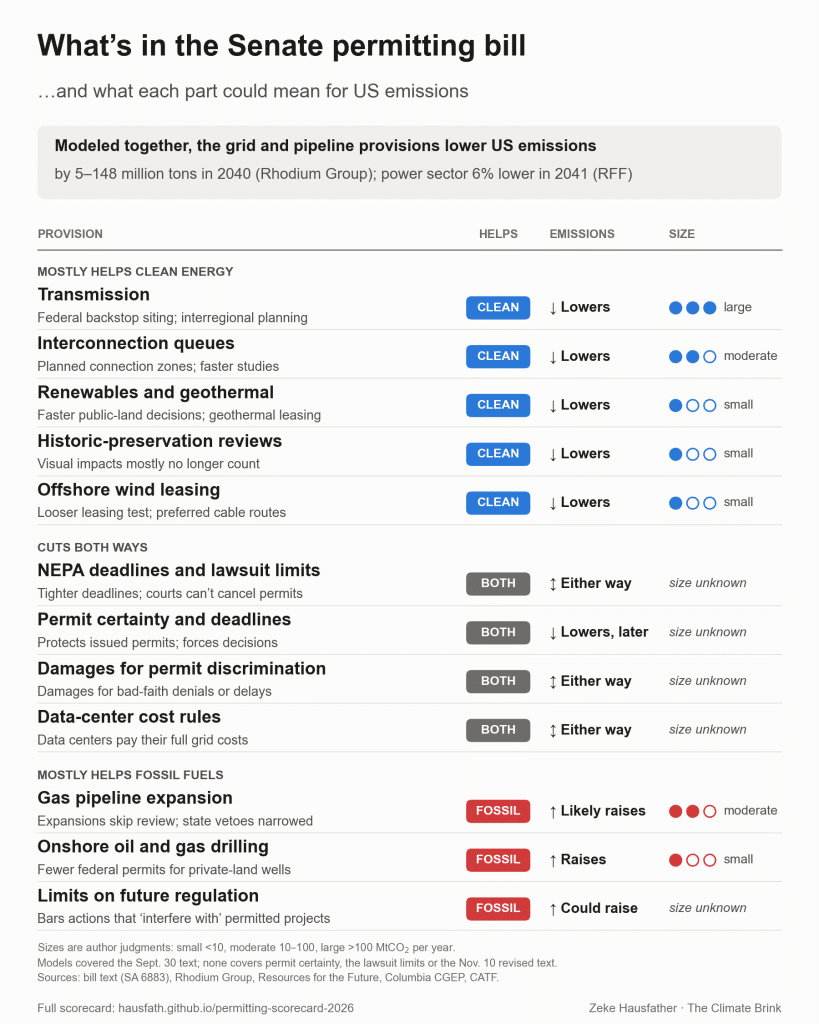
But there’s at least one deflationary policy that Trump has said he’d agree to, and its effects likely won’t even be felt until he’s out of office. The Bipartisan American Affordability and Jobs Act (BAAJA) is a deal that would make it easier to build electricity generating infrastructure across the country. While it contains some pro-pipeline provisions necessary to get Republican support, Berkeley climatologist Zeke Hausfather did a great breakdown of the tradeoffs involved (and how it still results in net decarbonization).
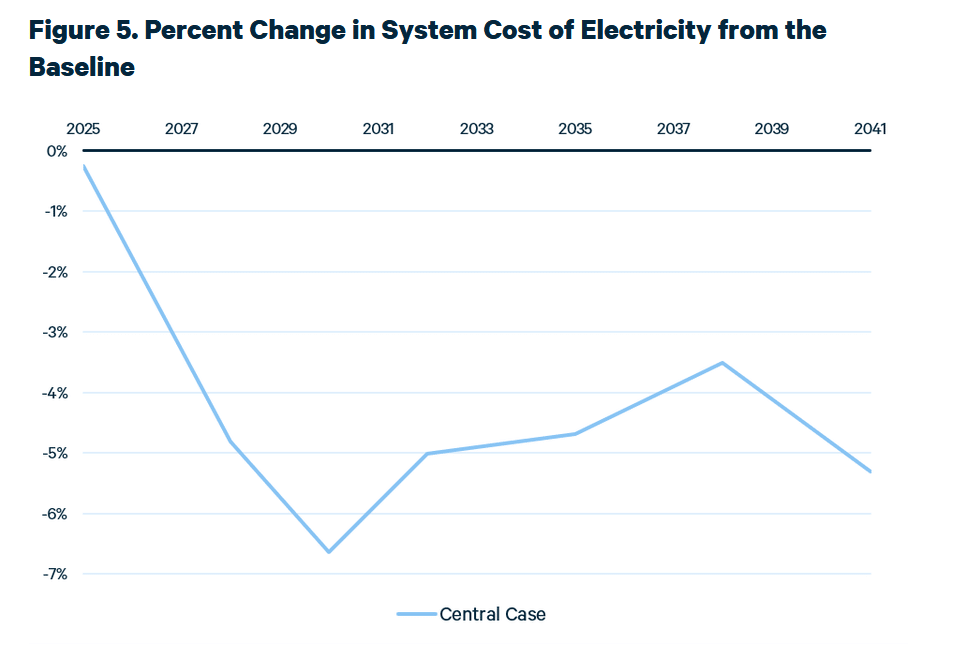
But more to the point of this newsletter, Resources for the Future found that it’ll lower electricity prices the most right around when the next president is inaugurated.
BAAJA seems like a no brainer if Democrats want to deliver on their mandate without shooting themselves in the foot electorally. But the White House has shown little appetite for collaboration beyond it. Which is why Democrats should use the other weapon in their arsenal to improve voters’ bank balances in 2029: state governments.
As I noted last week, Democrats have more power at the state level than any time in the past two decades. And not only can they fill in the gaps created by the inevitable 2027-28 federal gridlock with immediate relief (which, at the state level, is less likely to redound to Republicans’ benefit), but they can also set up 2029 and thereafter to have disinflation.
For example, in Georgia, Kansas, Texas and Wisconsin, Democrats have newfound leverage to expand Medicaid, quickly lowering healthcare costs for thousands of newly eligible recipients. Notably, that program is mostly backstopped by the federal government, which makes it easier for the state to pay for. But with state governments finding themselves fiscally constrained, it’ll be hard to address affordability concerns solely through expanding social welfare spending.
And unfortunately, a lot of the policies Democrats proposed during the 2026 campaign might only help in the short run (sales tax holidays), have limited impact (banning corporate ownership of single family homes) or end up being the subsidized demand meme (rebates for first-time homebuyers). That’s not to say that it’s not worth it to follow through on campaign promises or that they can’t help at the margins, but there’s room for lawmakers to think bigger here. Especially with a Republican in the White House, it’s the perfect time to implement policies that will lower costs over the long run.
Over the next two years, state legislatures should work toward making themselves better able to deliver on their promises. This too can have a deflationary impact. Cutting burdensome zoning regulations means more housing gets built (which, as we saw in Minneapolis, will take a few years to really be reflected in the market). Eliminating outdated requirements like fax notifications or notarizations like New York did so people can get benefits more quickly is another needed, if unsexy reform. Opening and speeding up government contracting like Maryland did to prevent capital projects from being dominated by politically connected insiders makes ambitious projects more feasible.
Building government into a more competent and efficient force means it can deliver for people faster, can get money in their pockets quicker and show them that at least someone is responsive to their needs. It also sets governments up to implement more ambitious policies in the coming years. The effect on voters’ bank accounts may be slow to manifest, but remember, time is on your side.
AROUND AMERICA
- I guess I’d be remiss if I didn’t weigh in on the important legislative leadership fights going on right now. I’m talking, of course, about the contests underway in state capitols across the country:
- State Rep. Senfronia Thompson seems to have locked up the speakership of the Texas House. It appears she will run the chamber through a combination of moral suasion and steely reserve, and not, as past speakers have, through birthday strippergrams.
- Too often, outsiders tend to view leadership contests through an ideological lens rather than understanding legislative chambers as workplaces where management style and relationships matter. For example, Washington Democrats might oust their speaker because she loads up their schedules with too many meetings.
- And Oregon Speaker Julie Fahey faces a challenge not for ideological reasons, but because she screwed up basic parts of her job like soothing tensions between lawmakers in her caucus and counting votes.
- But Montana Republicans are taking an opposite tack. Last session, the pro-Trump, pro-open carry, right-wing Speaker Brandon Ler apparently did too good of a job running the state House. So, his caucus dumped him for a more divisive chamber leader instead.
- Please ignore the horrific AI art topper on this post by Manatee County (FL) Republican County Commissioner George Kruse on how an anti-tax constitutional amendment in Florida is going to gut services like parks, libraries and the police. Sloppy policy like this is deleterious to anything resembling a functional government, though I suppose you could argue that capping property taxes ends up making it more likely the state implements a progressive income tax.
- Democrats control enough state governments that they could implement a compact where a majority of electoral votes go to the candidate who wins the popular vote. Would the current Supreme Court let anything that could harm Republican chances at the presidency stand? Probably not, but as the Brennan Center’s Jesse Wegman points out, it would fly in the face of their past jurisprudence.
CHUMP OF THE WEEK
When I interned on Capitol Hill decades ago, I really liked Rep. Mike Honda, a pro-labor Democrat who represented Silicon Valley. So I was peeved when in 2016 he lost to the more tech-friendly Ro Khanna. Of course, it wasn’t the thing I was most mad about after the 2016 election, but it was a festering wound on my psyche.
That wound has since become infected and is spewing pus everywhere, because Khanna has now reinvented himself as an ostensible leftist. Except, he doesn’t seem to actually understand what leftist policy would actually look like. To wit, his recent proposal to send Americans $1,700 Iran war rebate checks. One-time cash payments are slopulism at its worst, a sugar rush handout that starves government programs and sends the message that if we invade another country, you can buy a PlayStation. He seems dedicated to repeating the political mistake of 2020 I talked about above.
Of course, it doesn’t seem like Khanna’s left his Silicon Valley past behind, as his wife’s trust recently sold NVIDIA stock immediately before allegations about Jensen Huang came to light. And after DOGE, Khanna insisted that Elon Musk was actually a good dude that Democrats shouldn’t have alienated. (Sorry they all supported Nelson Mandela in the ‘80s, Ro!) Let’s face it: This guy’s principles start at the tips of his hair and end at his toenails. That’s why Ro Khanna is the Radio Free America Chump of the Week.
BOOK CLUB
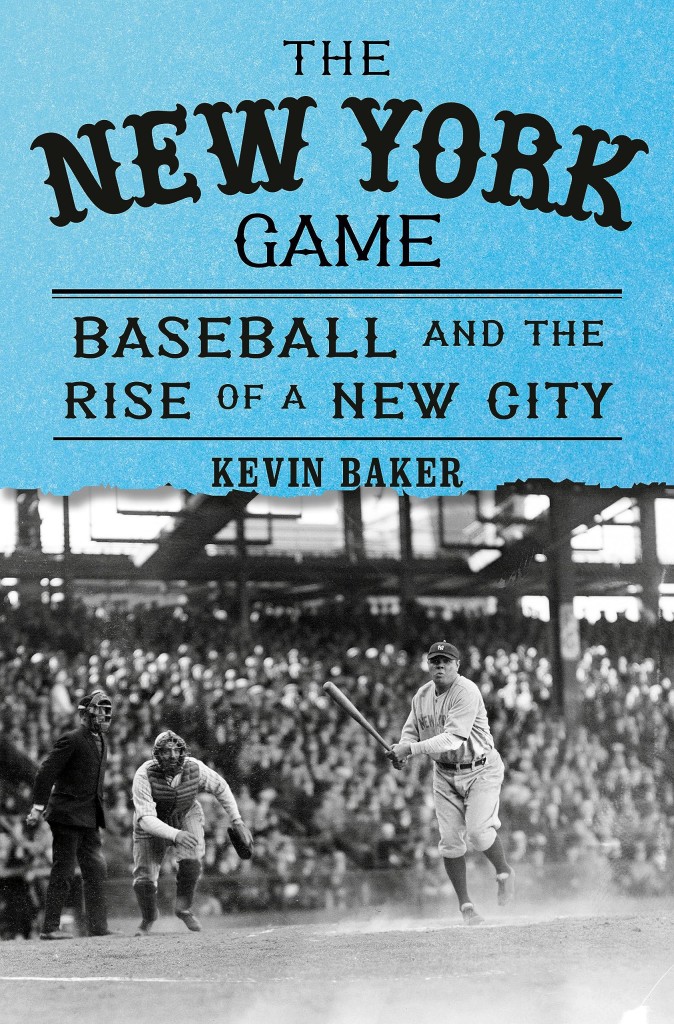
“The New York Game” by Kevin Baker is one of those books that I’ll just be bringing up constantly whenever people are talking about sports. Did you know that the Red Sox basically started off as the Savannah Bananas? That Lou Gehrig’s teammates mostly just joked about his enormous ass? That the Black Sox weren’t the only team on the take, just the ones dumb enough to get caught? Now that we might not even get to see Major League Baseball until 2028, it’s worth picking up to tide you over.
HELP US OUT
Thanks to everyone who suggested Democrats take a deep look at the DOGE teens. I haven’t seen anyone talk about subpoena’ing Edward “Big Balls” Coristine. Well, consider this notice that you should preserve your Discord chats, Eddie! By the way, your dad’s popcorn sucks.
As for this week, we’re off until the first week of December, which means oh man, it’s holiday shopping season. What are we getting for everyone this year, folks? Keep in mind my kids are seven and three, and they’ve got enough books for the time being. Email me and let me know!
Want this newsletter delivered to your inbox each week? Sign up!
Heartland Signal encourages news organizations and content creators to use our content. You're welcome to republish this article for free as long as you follow our republishing guidelines.
Related Articles
What happened in… Wisconsin? Democrats take full control
For the first time since 2010, Democrats will control the governorship and state legislature in Wisconsin. We look into how they did it and what it means for the Badger State and beyond.
Radio Free America: Project REDMAP is dead
The 2026 elections resulted in a wipeout for Republicans at the state level, and with it their power over redistricting. Aaron Kleinman argues that this is proof that it’s time for them to come together with Democrats and pass a national gerrymandering ban.
What happened in… Minnesota? DFL sweeps but trails the national swing
The DFL won Minnesota’s governorship and both legislative chambers on Nov. 3, but the state swung less than the nation. Here’s where it gained and lagged, and why.