
Indiana Supreme Court hears testimony about abortion ban
Last week, Indiana’s Supreme Court heard testimony about a challenge to the Hoosier state’s near-total abortion ban.
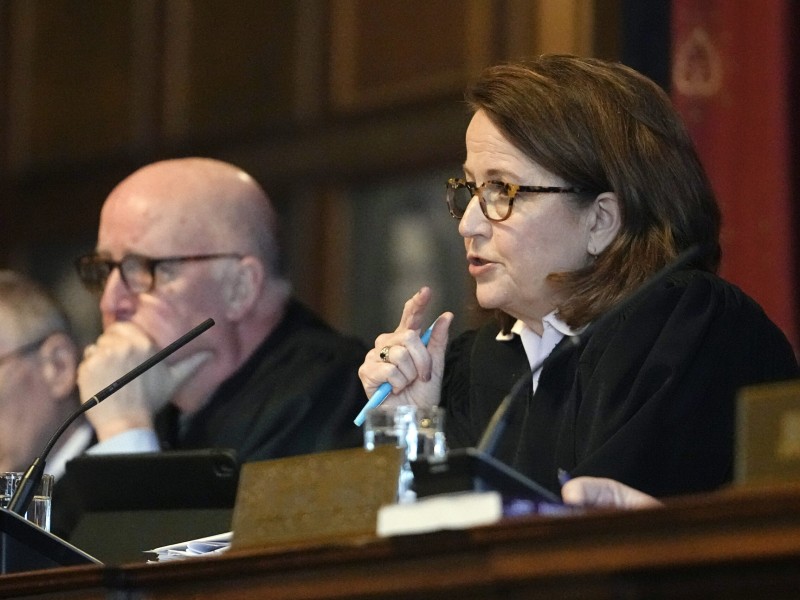
Last week, Indiana’s Supreme Court heard testimony about a challenge to the Hoosier state’s near-total abortion ban.
SOON: The Indiana Supreme Court will hear arguments regarding a lawsuit challenging Indiana’s near-total ban on abortion. Here’s a look at the line of members of the public waiting to get inside. @FOX59 @CBS4Indy pic.twitter.com/rQCc3lNs4q
— Kristen Eskow (@KristenEskow) January 19, 2023
Following the U.S. Supreme Court’s decision to overturn Roe v. Wade, Indiana quickly passed a sweeping ban on abortion in most cases that went into effect in August. The law prohibits the procedure in all cases except for rape and incest, risk to the mother’s health and lethal fetal anomaly. Even then, under the law women can only receive an abortion up to ten weeks after fertilization.
However, a lawsuit filed by abortion providers and the American Civil Liberties Union of Indiana halted the abortion ban. They contend that the Indiana constitution protects the right to privacy, and therefore a woman’s ability to make her own healthcare decisions.
The court heard arguments from both sides of the issue during the 70-minute hearing, and they did not give a clear timetable for their ruling. Although courts are supposed to be nonpartisan, all five justices on Indiana’s Supreme Court lean conservative, so it is unlikely they will rule in favor of striking down the ban.
In a post-Roe v. Wade world, state supreme courts could be the deciding factor in women having access to safe abortion care. In Wisconsin, for example, the Republican-controlled legislature is not interested in changing the state’s 19th century abortion ban. However, an upcoming election for their state Supreme court could swing the court liberal and open a path to legal abortion care returning to the state.
Heartland Signal encourages news organizations and content creators to use our content. You're welcome to republish this article for free as long as you follow our republishing guidelines.
Related Articles
WisEye streaming service gets $250k to operate for the rest of 2026
A bipartisan committee of Wisconsin legislators has signed off on a $250,000 funding deal for WisconsinEye, the livestream service that covers the state Legislature.
Michigan budget moves Rx Kids funding, but $18M remains in play
The Legislature shifted the money out of a dedicated appropriation, but the budget leaves room for competing interpretations.

Pillen memo calling for 5% cut across Nebraska agencies raises questions about governor’s authority
For the University of Nebraska, a 5% cut could subtract $36 million from its newly approved operating budget