
Reagan tried Musk and Ramaswamy’s approach to cut alleged government waste. It failed.
While Musk, Ramaswamy and Trump might be eager to trim the government’s supposed fat, experts like Randall Calvert are “optimistically skeptical” that many of the proposed cuts would come to pass, given the failures of the Reagan administration to do the same.

Since 2016, Donald Trump has been threatening to “drain the swamp” – a theoretical action to close several federal agencies and fire thousands of federal workers. With Vivek Ramaswamy and Elon Musk now set to head a newly formed office to tackle alleged “government waste”, Trump is more determined than ever to relocate or fire much of the bureaucracy that runs the federal government.
However, experts are throwing water on the idea that the administration could unilaterally implement these changes — and if they did, they would harm Trump’s base.
Randall Calvert, professor emeritus of political science at Washington University in St. Louis, says that the newly-formed office being led by Musk and Ramaswamy is not the first attempt at such an endeavor.
“The Reagan administration, with great fanfare, created the closely analogous Grace Commission in the 1980s,” Calvert said. “It recommended huge cuts which it estimated would save hundreds of billions [of dollars] over three years, and trillions in the long run. But the Grace Commission Report’s main target was ‘waste, fraud, and abuse,’ which was supposedly plentiful, but very little of which the report specifically identified.
“There are strong reasons to expect what we’ll get from Musk and Ramaswamy to be even more useless.”
Trump claims that on the first day of his second term, he is going to “shut down” the Department of Education (DoE) and “gut” several other agencies. Additionally, he says that he intends to terminate a significant number of federal employees and relocate their offices out of the D.C. metro. Calvert says the probability of layoffs happening is highly unlikely, due to regulations protecting civil servants and the Budget and Impoundment Control Act of 1974.
Calvert also says the courts have precedent for stopping the executive branch from recklessly pressuring agencies to bend at their will. The 1975 impoundment case, which involved New York City suing the EPA administrator, forced the Nixon administration to spend pre-apportioned funds for clean water. While Calvert concedes that Trump could pull a “try and stop me” approach, the likelihood of such action being buried in litigation is immense, as combative attorneys general in New York and Illinois are eager to resist.
If the administration pressed ahead and attempted to fire the employees en masse, they would have to face the fact that most federal employees are not in the D.C. area. According to the Washington Post, nearly 85% of federal employees are elsewhere, many of whom are in Midwestern battleground states. To achieve the level of alleged cost savings that Musk and Ramaswamy claim they can generate, they would likely be firing Trump voters who live in districts that favored Trump in last week’s election.
Trump has attempted some of these plans before. His administration relocated the Bureau of Land Management’s offices to Grand Junction, Colo., along with a Department of Agriculture (DoA) research center to Kansas City, Mo. Both moves were seen as retaliatory in nature — 90% of the impacted DoA staff resigned, with the agency unable to fill the positions.
Relocating agencies such as Agriculture to places like Kansas City, where agricultural industries are a major part of the local economy, could seem like a significant boon to the region if done properly and intentionally. While the courts cannot necessarily stop such relocations, the disruption they cause could prove politically unfavorable and disruptive.
The proposed closure of the Department of Education has alarmed many — specifically, the threat of what it could mean for school districts across the country.
Virtually all public-school districts in the U.S. are funded via property taxes and not directly by the federal government. School districts in progressive cities like Los Angeles and Chicago (which the administration is trying to target) would face negligible funding impacts, according to Calvert.
Instead, the closure would ruthlessly punish lower-income rural districts, which rely on DoE funding to close gaps in their budgets. Many of these districts are located in areas that predominantly voted for Trump. It would also eliminate the vast majority of educational and vocational programs for special needs children and adults. The consequences of both actions would be enormous — and as such — are incredibly unpopular on a bipartisan level.
While Musk, Ramaswamy and Trump might be eager to trim the government’s supposed fat, experts like Calvert are “optimistically skeptical” that many of the proposed cuts would come to pass, given the failures of the Reagan administration to do the same.
If they do find “waste,” Calvert asserts it’ll be untouchable, saying “the ‘waste, fraud, and abuse’ that the Grace Commission did identify were in the nature of special breaks for interest groups — like selling water from federal land to farmers at below-market prices — that proved politically impossible to touch.”
This perspective plays well into the opportunity for a concerned public, who, according to Musk, should simply post (formerly known as “tweet”) at him if he proposed cuts to a popular program. Whether or not Musk will listen could be a deciding factor in the 2026 elections.
Heartland Signal encourages news organizations and content creators to use our content. You're welcome to republish this article for free as long as you follow our republishing guidelines.
Related Articles

GOP Wisconsin legislator Zimmerman missed 225 votes last session, some to attend AI summit
Reps. Tip McGuire and Shannon Zimmerman were both booked on the same Milwaukee AI panel on June 24, 2025. McGuire withdrew so he could finish voting on the Assembly floor. Zimmerman made the panel, and votes kept being recorded in his name after he left his seat.
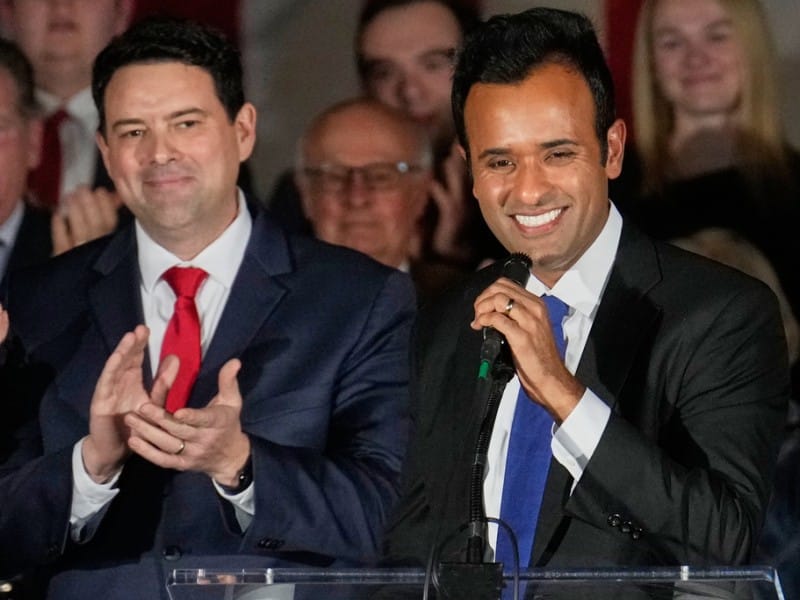
Ohio’s Ramaswamy and McColley have long backed near-total abortion bans
Even after Ohio voters overwhelmingly passed a 2023 constitutional amendment protecting abortion rights, GOP gubernatorial nominee Vivek Ramaswamy and state Senate President Rob McColley remain committed anti-abortion advocates. Audio from a recent rally shows McColley framing the constitutional defeat not as a setback, but as a shift in strategy.
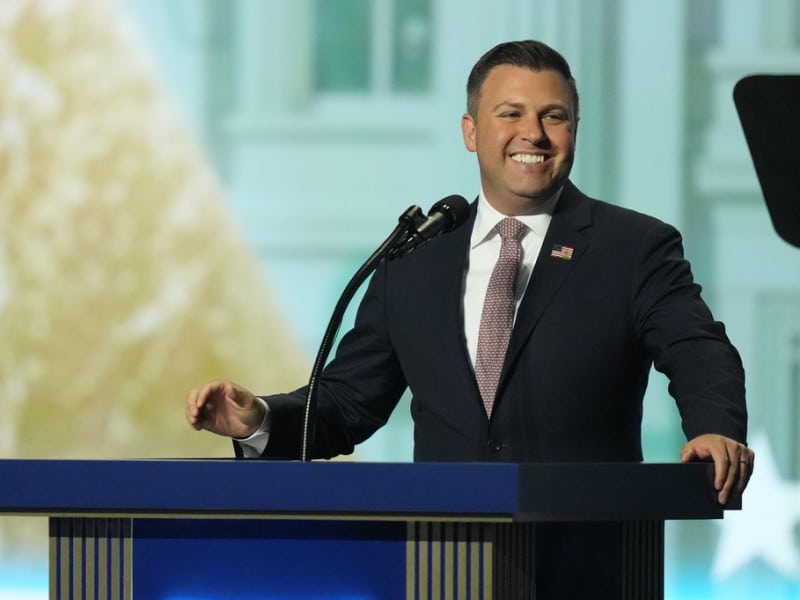
Ryan Mackenzie’s stance on data centers collides with his policy record
Rep. Ryan Mackenzie says data centers should pay their fair share. His record includes a 2021 tax exemption vote and support for limits on local oversight.