
Michigan 4th District race: McCann, Huizenga split over energy costs
In Michigan’s 4th Congressional District, a close race pits state Sen. Sean McCann (D) against longtime Rep. Bill Huizenga (R), who supports federal rollbacks of clean energy subsidies and expanded fossil fuel production. Both candidates diverge sharply on why utility prices are so high and solutions.
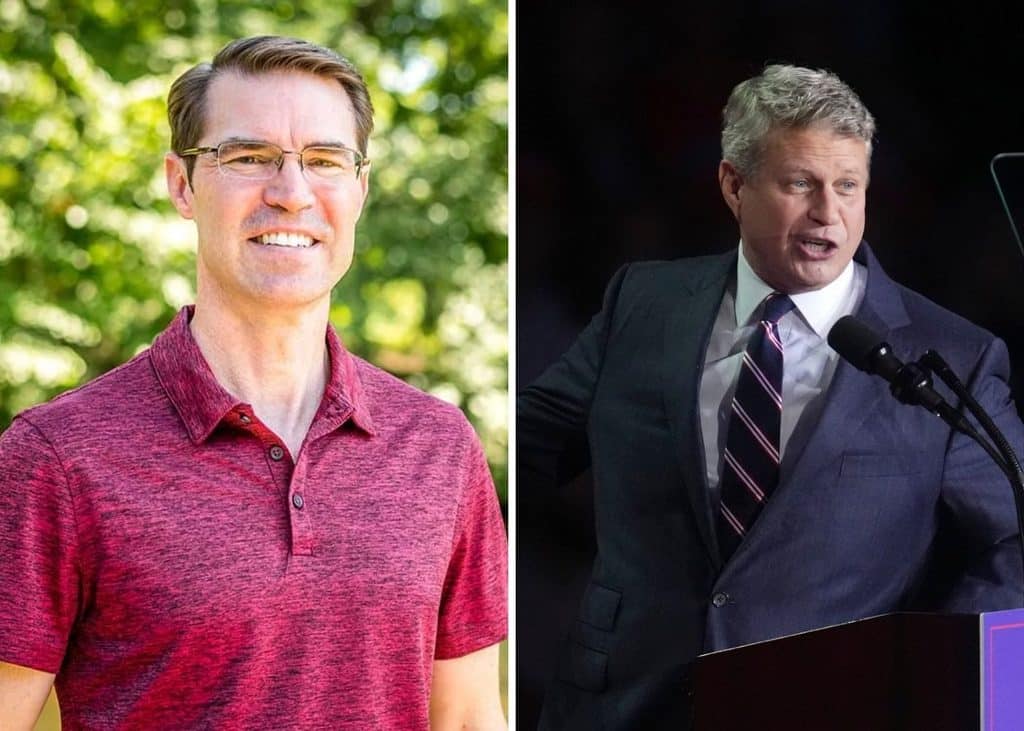
In Michigan’s 4th Congressional District, a leader in state green energy policy is challenging the long-time GOP incumbent who has consistently voted to expand fossil fuel production.
Michigan state Sen. Sean McCann (D-Kalamazoo) is vying for a seat in Congress after serving in the Michigan Legislature for twelve years. McCann has served on the Senate’s Energy Committee since 2019 and has supported the state’s clean energy transition efforts.
U.S. Rep. Bill Huizenga (R-MI) has served in Congress since 2011. Unlike McCann, he is critical of state-level policy changes and supports federal legislation that has cut clean energy subsidies and expanded fossil fuel production.
Republicans have represented the area for decades. But Cook Political Report rates the race as a “toss up.”
Both candidates are running on a platform of making energy more affordable for residents.
Michigan’s clean energy goals
In 2023, Gov. Gretchen Whitmer (D) signed the Clean Energy and Jobs Act into law, setting a 2040 deadline for Michigan to produce 100% clean energy. The bill package also allowed state regulators to approve large-scale solar and wind projects, effectively leap-frogging local leaders and residents.
McCann voted for the package and said it is “integral” to his vision for clean energy in Michigan. Huizenga has criticized the Clean Energy Act, saying that it is responsible for higher energy costs.
This is a common talking point for the Michigan GOP, which argues that the clean energy requirements create enormous costs that utilities pass on to residential ratepayers.
Lee Shaver, a senior energy analyst at the Union of Concerned Scientists, a science advocacy group, says those price increases come from maintaining Michigan’s aging grid — not renewable energy.
“Most of what folks are actually paying in their electric bill is for all of the capital costs to build and maintain the grid,” he said.
For over a decade, Michigan utilities have requested rate hikes for both gas and electricity almost every year to cover long-overdue infrastructure upgrades. Michigan’s utility regulation commission wrote a letter to Whitmer in July outlining changes the state needs to make to stop utility companies from continuously hiking rates.
McCann has co-sponsored legislation that would require utility companies to wait three years before filing another rate hike request with state regulators.
Renewable energy is also cheaper to produce, Shaver said. Utilities pass fuel costs for gas and coal plants directly to ratepayers, so when those prices swing, customers pay. Wind and solar have no fuel cost.
“The way that utilities purchase power, the utilities don’t pay any of those costs,” he said. “Those fuel costs are passed directly on to the ratepayers, whereas with renewables, there’s no fuel costs.”
Last month, Huizenga voted against a war power resolution that would withdraw American troops from Iran, while McCann called for the war to end.
Reversing federal clean energy policy
Huizenga has also voted to reverse Biden-era clean energy initiatives. The One Big Beautiful Bill Act (OBBB), which Huizenga supported, rolled back measures that would make renewable energy more accessible and affordable, Shaver said.
“There were a lot of really common sense things in that legislation that were since removed by Trump that were really effective at controlling and reducing electric prices,” he said.
The Trump administration’s omnibus bill cut subsidies for solar and wind technology. It also slashed tax credits and other incentives for residents to upgrade their cars and homes to be more energy efficient.
That includes the pot of money intended to fund Michigan’s MI Solar for All program. State officials paused the program last summer after the EPA cut its funding, citing the OBBB. The program would have helped low-income Michiganders install rooftop solar power systems in their homes, reducing their utility bills in the long run.
The OBBB will also decrease energy generation and increase electricity costs in the U.S., according to Princeton University’s ZERO Lab.
Huizenga has also supported the Department of Energy’s mandate to keep the J.H. Campbell Generating Plant in West Olive, Mich. open. Operating the plant has cost the company hundreds of millions of dollars and could increase electricity costs for residents across the Midwest.
Both candidates support re-opening the Palisades Nuclear Power Plant located in the 4th District.
Although many of the solutions to Michigan’s energy problems lie at the state level, there are steps the federal government can take to ease energy burdens on everyday Americans. Skyrocketing utility bills and unreliable service have Michiganders weighing options for municipal power and tightening campaign finance laws alongside the regular congressional races.
Heartland Signal encourages news organizations and content creators to use our content. You're welcome to republish this article for free as long as you follow our republishing guidelines.
Related Articles
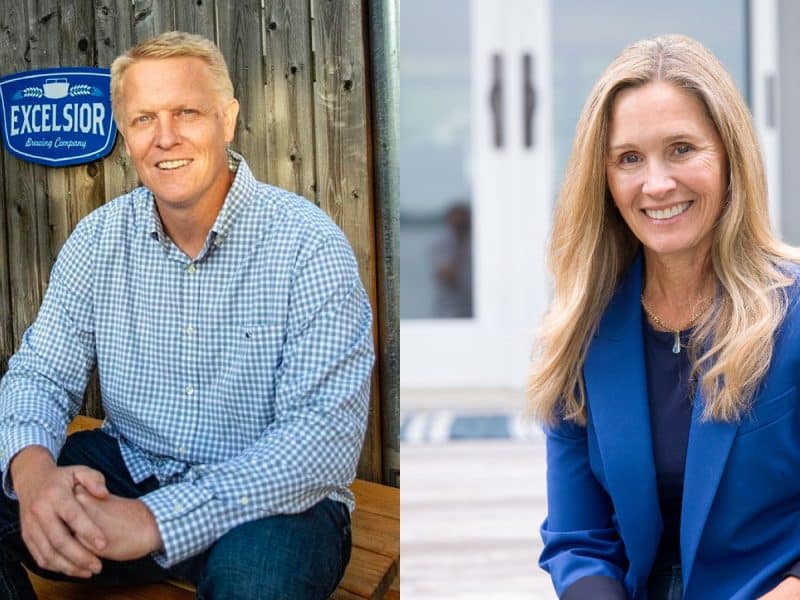
Minnesota House 45A: Myers, Breazeale split on guns, agree on data centers
This year’s race is a rematch of 2022 when Republican Myers defeated Democrat Breazeale with 55% of the vote to her 45%. The DFL hopes to flip the seat blue and, with it, regain a majority in the Minnesota House.

Minnesota House 3B: Zeleznikar, Schweiger debate data centers, taxes
Control of the Minnesota House could hinge on District 3B, where GOP Rep. Natalie Zeleznikar won her last race by just 159 votes. DFL challenger Aaron Schweiger says investments in child care and local infrastructure are what the district needs, while Zeleznikar warns against returning to one-party state control.

Minnesota Senate District 54: Bakeberg, Olson on fraud, taxes and ICE
Republicans handily won this race four years ago. But the current seat holder is retiring and now it’s seen as a tossup.