
Minnesota Senate District 3: Hauschild, Zupancich on fraud and tariffs
Northern Minnesota provides 80% of the iron ore used in automotive steel, leaving the Iron Range directly exposed to Canada’s retaliatory tariffs. In a tight rematch for Minnesota Senate District 3, Grant Hauschild and Andrea Zupancich clashed over state fraud, data centers and the cross-border trade war.
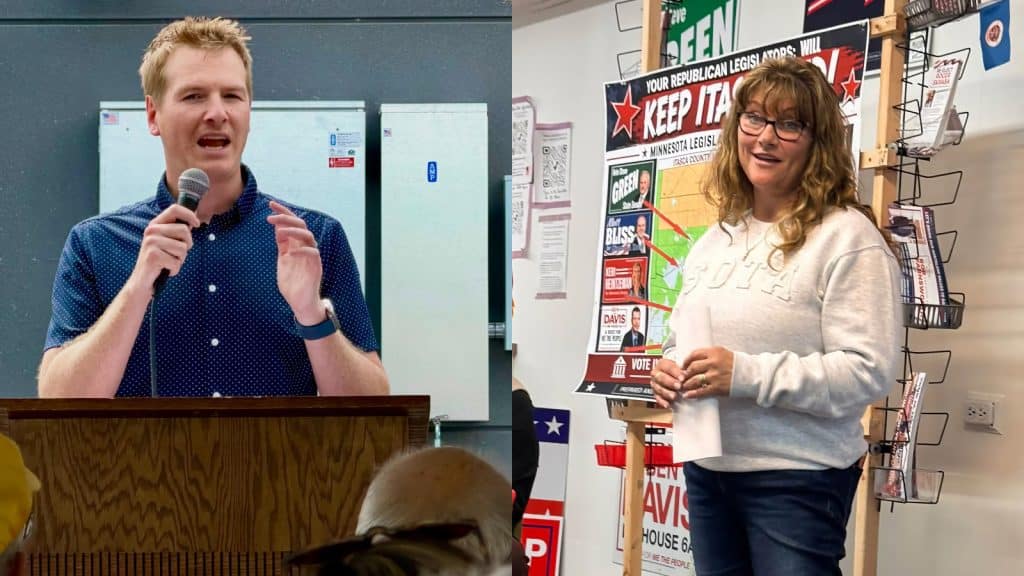
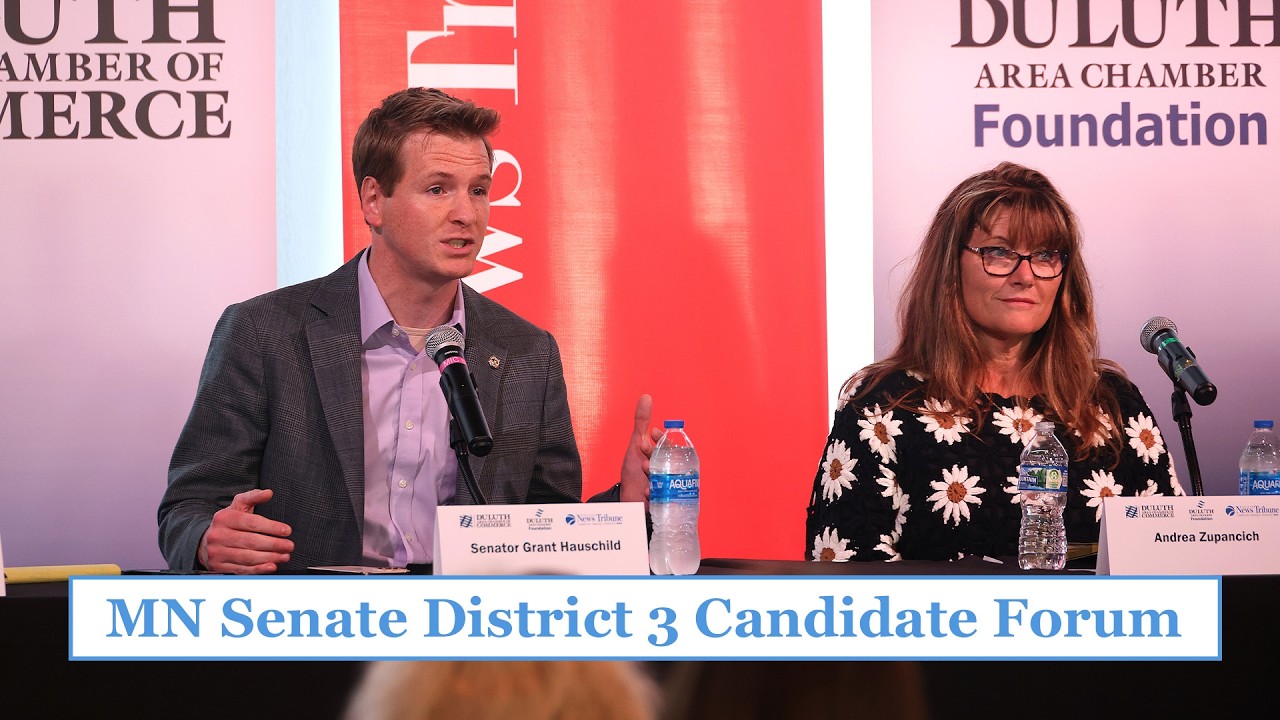
It was déjà vu in Duluth as Minnesota Senate candidates Grant Hauschild and Andrea Zupancich debated the state’s fraud scandals, the tariff war with Canada and data centers at a candidate forum last month.
This year’s closely watched race is a rematch of 2022 when Hauschild narrowly defeated Zupancich by only 703 votes. And Republican-aligned groups have spent $925,000 towards flipping the seat red. But at a Sept. 28 forum sponsored by the Duluth News Tribune and the Duluth Chamber of Commerce, it was all about the issues.
Where Hauschild and Zupancich stand on fraud
“The number one thing that Minnesotans are concerned about,” Hauschild said about the scandal over the state’s social spending programs. He laid the blame on Republican and Democratic administrations for ignoring warnings that went back decades.
“In my first term in office, we put into place several checks on fraud,” he said. They include a new Office of Inspector General to investigate fraud and waste, giving agencies the power to withhold funds if they suspect fraud, and new powers for the state’s attorney general to prosecute.
Zupancich said nothing happened until after the Democratic-Farmer-Labor (DFL) Party lost full control of the state legislature.
“There has been theft. It’s not fraud. It’s not alleged fraud,” said Zupancich. “It’s theft that has left Minnesota and has been on the taxpayers’ back. And so, we want to see that taken care of. We want to see that stopped, right?”
Zupancich and Hauschild on Trump’s Canada trade war
Canada is Minnesota’s most important international trading partner, with about $18 billion worth of goods crisscrossing the border last year. But Trump’s tariff war has complicated things. In September, Canada struck back with new tariffs on nearly 700 items, including automobiles. Most of the iron ore used to manufacture vehicles comes from Northern Minnesota mines.
“We know that these tariffs with Canada are rising prices in our communities,” Hauschild said. “They’re creating supply chain issues, and they’re disproportionately impacting the mining industry. Because automobiles cross the border multiple times during their construction, and those additional tariffs, which we provide 80% of the iron ore in the steel for the automobile industry, are being impacted.”
Then he prodded Zupancich to join him in his criticism of Trump, but she deflected.
“I have no I have no say over tariffs or anything like that,” she replied. “President Trump isn’t calling me saying, ‘Hey Andrea, what do you think?'”
“He is trying to protect our area. I’m not happy with everything. I’ll be point blank on that. But what do I have control over? I don’t.”
The candidates on data centers
The issue of data centers arrived in District 3 earlier this year when Google proposed building one in Hermantown. Both Zupancich and Hauschild said it was important for local communities to know what’s going on and have a say in the process.
“I’m still learning about data centers,” Zupancich admitted. “One thing that I would be in favor of is being fully informed, letting the community decide and be fully open to have everyone have a seat at the table. This is going to be in their backyard.”
Hauschild said Minnesota already has some of the strongest regulations on data centers in the country.
“I think above all else we need to make sure that our local communities have a say in what they are proposing and what is being presented and that the local voices is brought forward.”
The Duluth News Tribune and the Duluth Chamber of Commerce hosted the candidate forum. It can be viewed at the link below:
Heartland Signal encourages news organizations and content creators to use our content. You're welcome to republish this article for free as long as you follow our republishing guidelines.
Related Articles
Iowa’s 1st District: Where Christina Bohannan stands on gun policy
Iowa Democrat Christina Bohannan shoots at the range and backs gun rights. So why has gun safety group Everytown spent nearly $1.5 million boosting her campaign? A look at her voting record and where she stands on assault-style weapons.
Minnesota Senate District 32: Kreun, Ford on housing, schools, fraud
Sen. Michael Kreun and DFL challenger Chris Ford split on taxes, mobile home rent caps and fraud in Minnesota Senate District 32. Here is where each one stands.
Zach Nunn and Medicaid cuts: Iowa clinics close in the 3rd District
Rep. Zach Nunn called rural hospital closure fears a “myth.” Iowa clinics are closing ahead of Medicaid cuts. Where he and Sarah Trone Garriott stand.