
Vivek Ramaswamy’s anti-abortion record clashes with Ohio’s Constitutional protections
Despite Ohioans’ decisive 2023 vote to enshrine reproductive rights in the state constitution, the Republican ticket for the 2026 gubernatorial race is signaling a direct challenge to those protections.
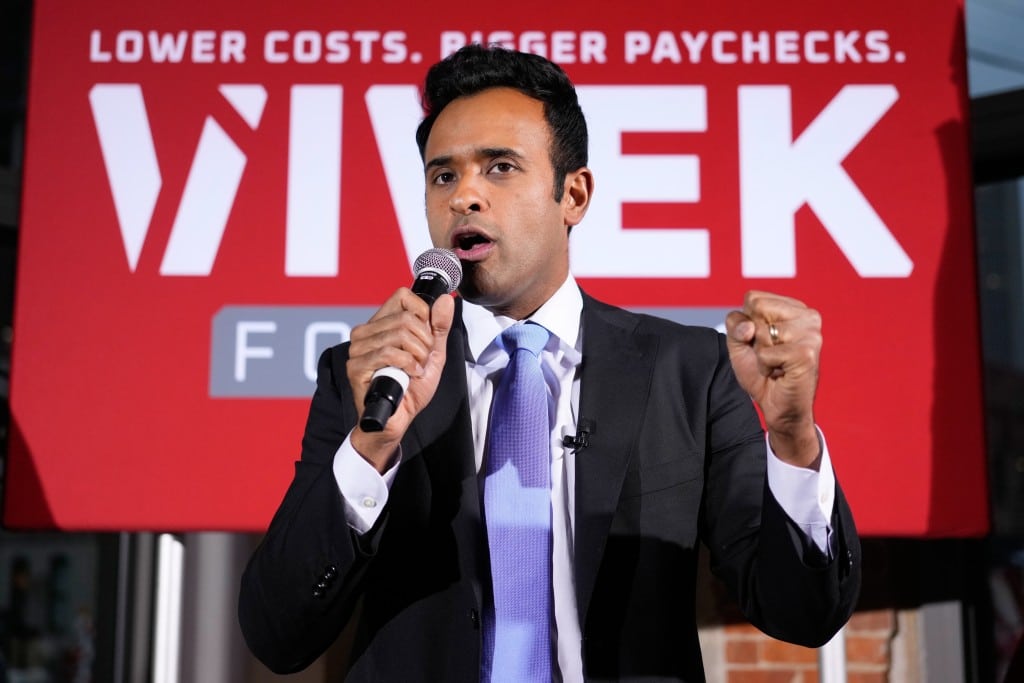
Although Ohioans approved a 2023 constitutional amendment to protect reproductive rights, Republican lawmakers in the state legislature have continued to implement abortion regulations. Gubernatorial candidate Vivek Ramaswamy’s abortion record suggests that the GOP trend will continue if he is elected governor in 2026.
Ramaswamy recently secured the Republican nomination in Ohio’s gubernatorial race, making him the frontrunner to succeed term-limited incumbent Gov. Mike DeWine (R). Even after the voters of his state enshrined abortion access into the state constitution, DeWine and his Republican colleagues have overseen numerous attempts to undermine those protections. These efforts include bills to restrict access to abortion pills, a 24-hour waiting period for abortion care, and forcing schools to show children anti-abortion disinformation.
But these policies fall short of Ramaswamy’s own views on the issue, and those of his running mate, state Sen. Robert McColley (R-Napoleon).
Ramaswamy’s anti-abortion rhetoric
While Ramaswamy was running for president, he spoke at the 45th Annual National Conservative Student Conference in July 2023. During the event, an attendee asked Ramaswamy about his abortion rights views, and he said that he was “unapologetically pro-life” without any qualification and open-minded about a federal abortion ban.
He also said that the Supreme Court of the United States was correct to overturn federal abortion protections in the Dobbs v. Jackson decision in 2022, and that he believed a six-week abortion ban passed in Iowa was “progress.”
“I actually went to Iowa when they actually signed a historic piece of legislation,” Ramaswamy said. “I don’t know if many of you were aware of it just a few weeks ago, codifying at least a six-week standard. I think that this is progress that should come from the states.”
Iowa’s six-week abortion ban, also known as a “heartbeat bill,” prohibits abortion procedures after cardiac activity is detectable in an embryo. This can occur as early as six weeks of gestation — before many women are even aware that they are pregnant — effectively making it a near total abortion ban. While the law, which went into effect in July of 2024, has exceptions for rape, incest, and the life of the mother, access to abortion is still heavily restricted in Iowa.
A six-week ban is not currently possible in Ohio since voters approved the Issue 1 ballot measure in Nov. 2023. The measure enshrined the right for one to “make and carry out one’s own reproductive decisions,” including abortion, fertility treatment, miscarriage care, and continuing pregnancy. However, it allows the state government to restrict abortion access after fetal viability (22-24 weeks of gestation), except when the pregnant patient’s life or health are at risk.
Despite these parameters, Ramaswamy falsely said Issue 1 would codify abortion access until the moment of birth, a statement that was fact-checked by multiple media outlets.
During a CNN Town Hall in Dec. 2023, Ramaswamy said the Supreme Court should rule against the Federal Drug Administration’s (FDA) decision to approve mifepristone, the most commonly used pill used for medication abortions. The Supreme Court is currently considering a national ban on accessing mifepristone through telemedicine. Medication abortions accounted for nearly two-thirds of all abortion procedures in 2023, according to Guttmacher Institute.
Ramaswamy has also routinely characterized abortion rights as a “human rights issue,” instead of a “women’s rights” issue. He reiterated this sentiment in a 2023 interview with LifeSite, when he also endorsed crisis pregnancy centers (CPCs).
“How can we be better to lead? And it’s by talking about the kinds of alternative values — good crisis pregnancy centers that we can support, teaching women, helping them get to ‘Yes,’” Ramaswamy said. “This isn’t about ‘women’s rights versus men’s rights.’ We’re all in this together, including greater responsibility for men. Let’s stand for those things.”
A 2022 study conducted by the Duke University of Medicine defines crisis pregnancy centers as a “unique disconcerting hybrid of anti-choice activism, religious propagandism, and pseudo-medical practice.”
“These facilities engage in purposefully manipulative and deceptive practices that spread misinformation on sexual health and abortion,” the article says. “CPCs have also been shown to delay access to medically legitimate prenatal and abortion care, which negatively impacts maternal health.”
Republican-controlled states, including Ohio, have introduced or implemented legislation to use state money to fund CPCs.
McColley’s abortion record
McColley, who has served in the Ohio legislature since 2015, cosponsored a fetal heartbeat bill that did not include rape or incest exceptions. DeWine signed the bill into law in 2019, which also made it a firth-degree felony for doctors to perform abortions after a fetal heartbeat was detected. McColley was also the primary sponsor of an Aug. 2023 amendment which attempted to raise the threshold to pass future constitutional amendments from 50% to 60%.
Although the maneuver failed, anti-abortion groups pushed to raise the threshold before the abortion rights constitutional amendment appeared in front of voters. If the threshold was raised, the abortion amendment would have failed as it only garnered 56.78% of the vote.
Ramaswamy’s campaign did not immediately respond to a request for comment on whether he still believe in his previous positions, or if he would support continued efforts from the Republican-controlled Ohio state legislature to restrict reproductive health care access.
Amy Acton’s opposing views
After their respective May 5 primary election wins, Ramaswamy and Democrat Dr. Amy Acton will officially face each other in the general election on Nov. 3. Acton is a physician who formerly served as DeWine’s director of health (2019-20) during the COVID-19 pandemic.
Acton has vowed to stand up to political attacks against women’s reproductive rights if she is elected governor.
“Ohioans have made it very clear that they trust women to make their own decisions about their bodies. Every Ohioan deserves the right to make their own reproductive health care decisions, free from government interference,” said Addie Bullock, spokeswoman for the Acton campaign. “As Governor, Dr. Amy Acton will protect reproductive freedom so that every woman can access the care they need to keep themselves and their families healthy and safe.”
Although DeWine endorsed Ramaswamy in the race, he has pushed back on some of the campaign’s criticisms about Acton’s role during the pandemic. After Ramaswamy sponsored an ad claiming that Acton as responsible for postponing the 2020 primary elections in Ohio, DeWine denounced the ad and said he was responsible for the decision.
“In government this happens all the time. Do you think a member of the president’s cabinet would issue this kind of order without his approval?” DeWine said last month. “I told her to issue the health order. The decision was mine.”
Heartland Signal encourages news organizations and content creators to use our content. You're welcome to republish this article for free as long as you follow our republishing guidelines.
Related Articles
Ohio’s Ramaswamy and McColley have long backed near-total abortion bans
Even after Ohio voters overwhelmingly passed a 2023 constitutional amendment protecting abortion rights, GOP gubernatorial nominee Vivek Ramaswamy and state Senate President Rob McColley remain committed anti-abortion advocates. Audio from a recent rally shows McColley framing the constitutional defeat not as a setback, but as a shift in strategy.
Ryan Mackenzie’s stance on data centers collides with his policy record
Rep. Ryan Mackenzie says data centers should pay their fair share. His record includes a 2021 tax exemption vote and support for limits on local oversight.

Crowley calls for constitutional amendment on abortion rights
Democratic candidate David Crowley committed to advocate for a constitutional amendment that would allow voters to decide whether access to abortion and reproductive healthcare is a right protected by the state constitution.