
Iowa governor race: Who’s funding Zach Lahn and Rob Sand
The Republican Governors Association has given Zach Lahn more than $15 million. Most of Rob Sand’s money comes from Iowa donors, including his wife’s family.
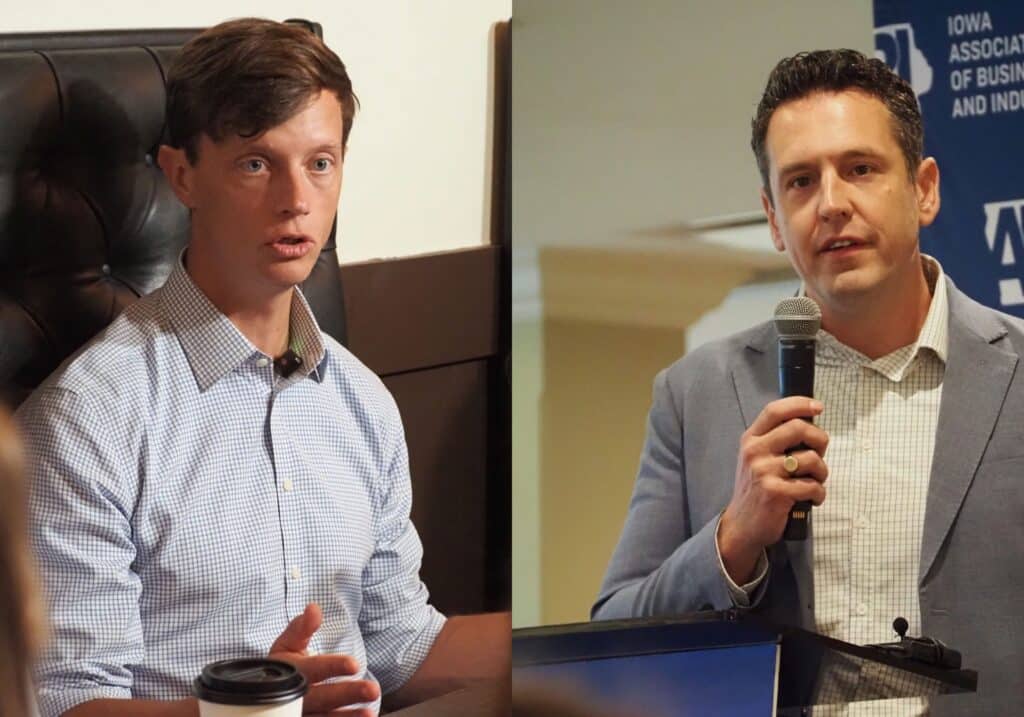
The Iowa gubernatorial election is earning national attention, massive campaign donations and questions about which candidate is truly funded by the people of Iowa.
Analysis of campaign finance filings through July 2026 shows that most of Republican Zach Lahn’s money comes from D.C., and most of Democrat Rob Sand’s money comes from donors with an Iowa address.
Lahn and Sand both advocate for more transparency and accountability in state government. The race has highlighted Iowa’s struggles with water quality, increasing cancer rates, public education and affordability.
But the race has also brought up concerns about interests outside of Iowa influencing state politics and policy. Iowa Democrats have questioned whether Lahn, who splits his time between Kansas and Iowa, will put Iowa first if elected governor. Lahn and Iowa Republicans have accused Sand of bankrolling his campaign with funds from his wife’s family and their multi-million dollar company, the Lauridsen Group.
Cash from D.C.
The biggest donors in this race have been each party’s governor’s association. The Republican Governors Association (RGA) has given Lahn over $15 million since he won the primary in June. Most of that money came after the July 19 campaign finance filing deadline. And it’s five times as much as the $2.6 million Lahn raised that didn’t come from the RGA.
The Democratic Governors Association has given Sand $5 million, $2.7 million more than it gave Fred Hubbell, who ran in 2018. But outside of these contributions, Sand has outraised Lahn by millions of dollars — most of it from Iowa residents.
‘His own biggest donor‘
Lahn is campaigning on a platform of standing up to Big Ag and pharmaceutical companies in a state dominated by factory farms.
“My campaign has actually been a repudiation of the idea that special interests, corporate giants, and lobbyists as well as career politicians should have more influence over our government,” he said at the second gubernatorial debate last week. “I think they have far too much influence.”
In 2025 and 2026, Lahn loaned his campaign $2.5 million. Until recently, Lahn’s website said that his campaign is “self funded.” It was updated in mid-October and no longer includes the claim.
But Lahn did accept contributions from CEOs of Big Agriculture companies. Campaign filings show that Lahn accepted $50,000 from James Dean, CEO of egg producer Versova, and another $50,000 from Gage A. Kent, CEO of beef producer Kent Worldwide. Both companies are headquartered in Iowa.
Lahn has also accepted $75,000 total from Dan DeNeui and the DeNeui Living Trust. The Department of Justice charged DeNeui with assaulting a police officer during the Capitol riot on Jan. 6, 2021, but dropped the charges after President Donald Trump issued a sweeping pardon for all J6 defendants in 2025.
Lahn’s campaign did not respond to a request for comment.
Family contributions still relatively small
Lahn and Iowa Republicans have raised questions about Sand’s fundraising as well.
Sand has received $4.5 million in campaign contributions from his wife and her family, according to campaign finance statements filed with the state of Iowa. That’s about 15% of his total contributions through the July filing deadline, and 25% of contributions that have come from Iowa addresses.
But Sand has raised almost $18 million from Iowa alone — more than Lahn’s entire campaign.
Like Lahn, Sand has said he does not accept money from corporate PACs. But he did accept a $100,000 donation from a donor listed as “Samuel Walton” in Bentonville, Ark. This could be Samuel Robson “Rob” Walton, retired chairman of Wal-Mart, which is headquartered in Bentonville.
Sand’s campaign did not respond to a request for comment or confirmation about this donation.
One of Sand’s family members that donated to his campaign, his brother-in-law Walter Lauridsen, II, died in a car crash last week. He was 42 years old.
Cook Political Report rates the race as leaning Democrat after previously rating it as a toss up. Iowa hasn’t elected a Democrat to the governor’s office since 2006. The next debate is scheduled for Wednesday, Oct. 21 in Des Moines and will air on Iowa PBS at 7 p.m. Central Daylight Time.
Heartland Signal encourages news organizations and content creators to use our content. You're welcome to republish this article for free as long as you follow our republishing guidelines.
Related Articles
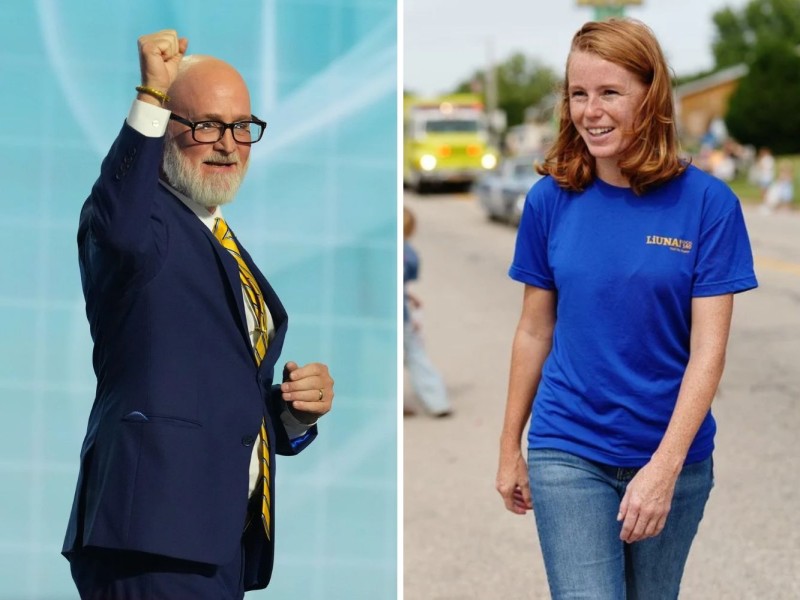
Wisconsin 3rd District: Where Van Orden, Cooke stand on power lines
Proposed 765-kV power lines tied to data center demand are now an issue in Wisconsin’s toss-up 3rd District race. Here’s where Cooke and Van Orden stand.
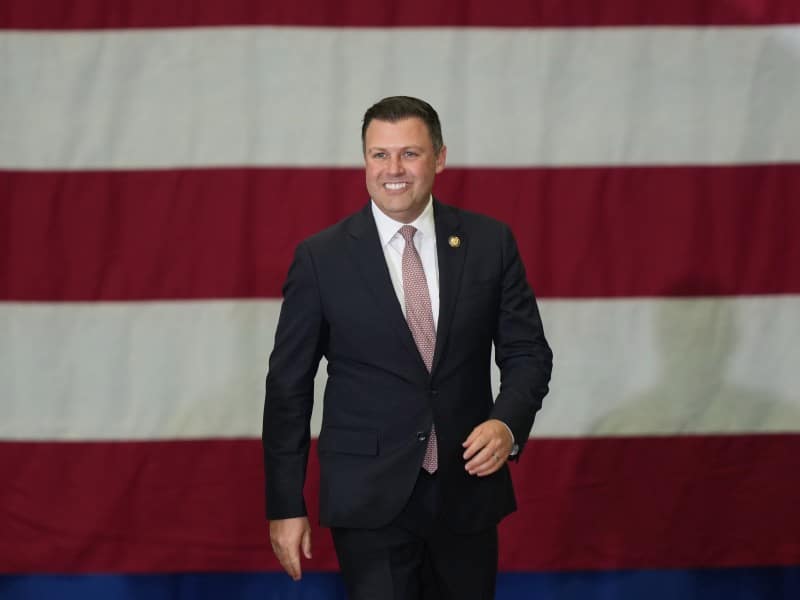
Mackenzie aide was in 2018 chat that shared racist, antisemitic memes
Pennsylvania Rep. Ryan Mackenzie voted for House resolutions condemning antisemitism, but his communications director, Arnaud Armstrong, was part of a college group chat that shared racist and antisemitic memes, including fabricated quotes from Adolf Hitler.
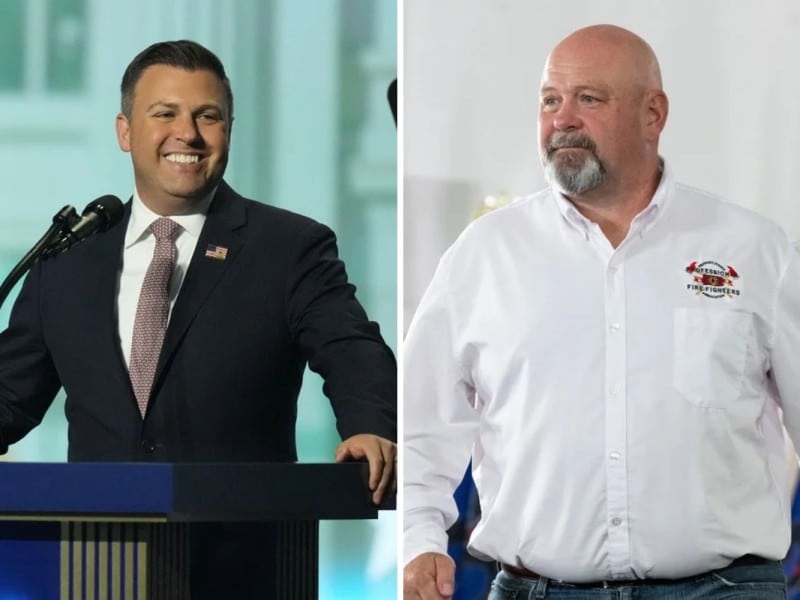
Mackenzie vs. Brooks: What’s at stake in Pennsylvania’s 7th Congressional District
Voters in Pennsylvania’s 7th Congressional District are weighing two vastly different visions on healthcare and rising costs. Republican Rep. Ryan Mackenzie backed federal Medicaid cuts, while Democratic challenger Bob Brooks, a local firefighter, is centering his campaign on expanded coverage and corporate accountability.