
LIVE 2022 Election Results
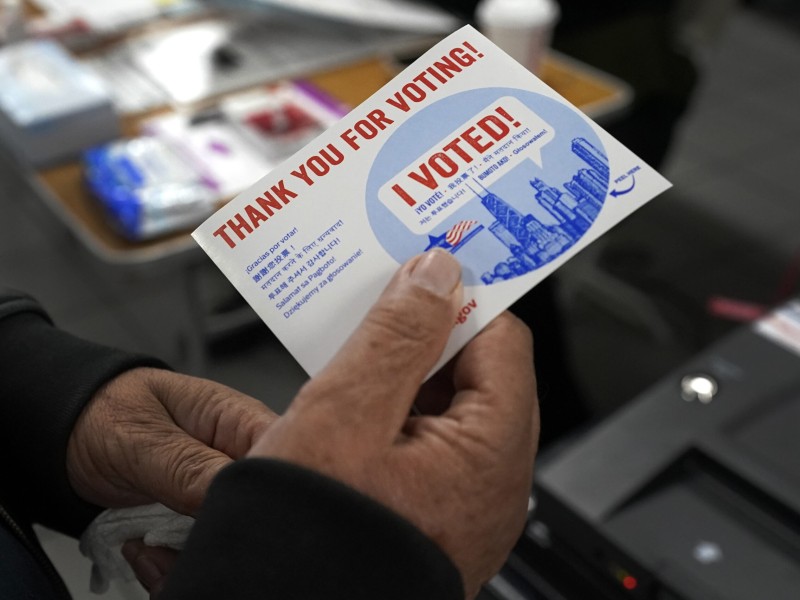
Check here for live election results as they come in. All times are in CST.
3:39 p.m.: Keith Ellison barely holds on to win reelection for Minnesota attorney general
Minnesota’s Attorney General Keith Ellison (DFL) held off his Republican challenger Jim Schultz to win reelection, winning by just one percentage point.
The Associated Press called the race for Ellison on Wednesday at 1:10 p.m. CST.
Schultz is known for his extreme anti-abortion beliefs, and he once sat on the board of a nonprofit that spread misinformation about abortion. Despite claiming to uphold current law in Minnesota, which protects abortion, Schultz has contradicted this by expressing his desire to “protect the unborn from Democratic extremists.” Schultz could also be facing the largest fine in Minnesota history for violating campaign finance laws after being accused of collaborating with an independent expenditure group.
Voters first elected Ellison as attorney general in 2018 and previously served in the U.S. House of Representatives from Minnesota’s 5th district from 2007-2019.
3:30 p.m.: Iowa votes for Republicans in all four congressional districts
Iowa faced another major election this year, with critical importance on the state’s congressional delegation. Iowa has four major districts, and each district was a political battleground between the Democratic and Republican parties. Ultimately, voters decided on an all-Republican congressional delegation for the state.
Starting off with the first district, this area was a faceoff between incumbent Rep. Mariannette Miller-Meeks (R) and Christina Bohannan (D). Miller-Meeks was the representative for the second district, but with the ending of her term, she sought re-election in one of Iowa’s other districts. Bohannan is a newer face to the political landscape in Iowa and looked for an upset win. She has experience as a law professor at the University of Iowa and also worked as an engineer with the Florida Department of Environmental Protection.
Ultimately, Miller-Meeks held onto her seat, the Associated Press projected Tuesday night at 11:08 p.m. CST. As of Wednesday at 3:15 p.m., Miller-Meeks had 53% of the vote.
Iowa’s second district is a race between incumbent Rep. Ashley Hinson (R) and Liz Mathis (D). Hinson previously served as the representative for the first district but sought reelection in the second district. Mathis has been in the Iowa state Senate, representing the 34th district since 2011. The final results would favor Hinston, with 54% voting for her and 46% voting for Mathis as of Wednesday at 3:15 p.m. CST.
Iowa’s third district election was between incumbent Rep. Cindy Axne (D) versus Zach Nunn (R). Axne has held her title in the third district since 2019, but this year’s election put her job stability at risk. While Nunn is still a young candidate, he has extensive history in Iowa’s state Senate, going back to 2015. Results from the two candidates’ race would see Nunn narrowly assuming control of the district in a flipped seat for the GOP. As of Wednesday at 3:15 p.m. CST, 50.33% of voters chose Nunn, and 49.67% voted for Axne.
Looking at Iowa’s last district, the fourth district, it would be a three-way race. The current incumbent, Rep. Randy Feenstra (R) squared off against Ryan Melton (D) and Bryan Holder (Liberty Caucus). The fourth district has been under representation from Feenstra since 2021, and the district looked to be one of the Republican party’s strongholds within the state. Final poll numbers would see Feenstra hold his seat, with 67% voting for Feenstra and just 30% voting for Melton.
2:50 p.m.: Warnock and Walker headed for runoff in Georgia Senate election
Georgia’s tossup Senate race will continue in December as both Sen. Raphael Warnock (D) and Herschel Walker (R) head into a runoff election, the Associated Press projected Wednesday.
Warnock won his seat back in 2020 during a special election to fulfill the remainder of retiring Sen. Johnny Isakson’s (R) term. During his short tenure, Warnock has supported policies like raising the minimum wage and capping insulin prices.
Walker’s chaotic campaign saw one controversy after another as the former NFL player’s messy past came to light. After Walker pledged himself against abortion rights — even suggesting a total ban with no exceptions — several women came forward to share how Walker paid for their abortions after they said he got them pregnant. Walker has also been criticized by his own campaign for blatantly lying about many things, including claiming to be a cop.
1:05 p.m.: Democrats prevail in competitive Michigan House races
In the three most competitive congressional races in Michigan, Democrats managed to either retain or even flip all three of them in Tuesday’s midterm election.
The Associated Press called the races throughout Tuesday and Wednesday.
In Michigan’s third Congressional district, former U.S. Department of Justice official Hillary Scholten flipped the seat for Democrats by defeating former Donald Trump administration official John Gibbs. It is one of the select few former GOP seats that the Democrats are projected to flip this midterm election.
Despite redistricting, Rep. Elissa Slotkin (D) was able to win reelection against Republican Tom Barrett in the seventh district, a state senator. Barrett made news when right after he won his primary election in August, he scrubbed his campaign website of his anti-abortion stances right as it became apparent that reproductive health care would be a top issue in this midterm election.
And in Michigan’s eighth Congressional district, Rep. Dan Kildee (D) narrowly won reelection over former Trump administration official Paul Junge (R). Although considered to be a tossup race in June by FiveThirtyEight, the race got ahead of Junge as time went on.
12:54 p.m.: Laura Kelly defeats Derek Schmidt to stay Kansas’ governor
Kansas Gov. Laura Kelly (D) defeated GOP challenger Derek Schmidt in a close contest.
The Associated Press called the race Wednesday at 12:24 p.m. CST. As of 12:50 p.m., Kelly led with 49% of the vote, just two percentage points ahead of Schmidt.
Schmidt is currently serving as Kansas’ attorney general, a position he has used to stir up controversy. After the 2020 election, Schmidt participated in the Texas v. Pennsylvania Supreme Court case, which was an effort by supporters of former President Donald Trump to overturn the election results.
Kelly was elected in 2018 and, like her opponent, managed to post record fundraising numbers in the tossup race.
12:49 p.m.: Ron Johnson retains Wisconsin Senate seat, defeating Democrat Mandela Barnes
Republican Sen. Ron Johnson has defeated Democrat Mandela Barnes, maintaining control of a seat he’s held for over 11 years in a highly contested race seen as an opportunity for Democrats to gain majority control of the Senate.
The Associated Press declared Johnson’s victory Wednesday at 11:46 a.m. CST. As of 12:40 p.m., Johnson holds 51% of the vote in Wisconsin, a notably purple state.
Johnson and Barnes polled closely with each other leading up to Election Day, with Johnson expecting to retain his seat by extremely tight margins. If elected, Barnes would have been Wisconsin’s first Black Senator.
Johnson has recently come under fire for cautioning against early voting in Milwaukee and making transphobic comments in October. He also made baseless claims in August that President Joe Biden’s administration “purposely” raised gas prices to “force people into electric vehicles.”
Biden won Wisconsin by less than one percentage point in 2020.
9:52 a.m.: Cannabis wins on the ballot in Missouri, loses in North Dakota, South Dakota
Recreational marijuana use is now legal in Missouri, but not in North Dakota and South Dakota. Voters said “yes” in Missouri and “no” in the Dakotas to measures on Tuesday that make these three Midwestern states join the 20 other states that have now decriminalized the drug. The New York Times made the projections throughout Tuesday and Wednesday.
Missouri voters approved Amendment 3 with 53% of the vote, amending the state’s constitution to legalize recreational marijuana. The Marijuana Legalization Initiative allows people with non-violent marijuana-related offenses to petition for release from prison and have their records expunged, though people can still get fined for using the drug in public.
Tax revenue from recreational cannabis sales will be used to help expunge criminal records, as well as subsidize veterans’ health care, drug treatment, and state public defender programs.
Critics of the measure included a conservative super PAC that falsely claimed it’s an attempt to insert Critical Race Theory into the constitution by creating a position of a “chief equity officer,” the St. Louis Post-Dispatch reported.
North Dakota has once again failed to legalize recreational marijuana, with 55% of voters saying “no” to measure 2. The amendment would have included child custody protections for parents who consume cannabis, meaning they would not lose custody due to use of the drug in compliance with state law.
The coalition New Approach North Dakota raised over half a million dollars to get the proposal on the ballot and run advertisements for it, after a similar measure narrowly failed when it appeared on the ballot in 2018.
South Dakota has also failed to legalize weed for the second time, with 53% of voters saying “no” to measure 17. Voters approved both recreational and medical use back in 2020, but the state Supreme Court nullified the results because of a lawsuit, deeming it unconstitutional. Now, only medical use is allowed in the state.
Measure 27 would have allowed individuals to purchase and possess up to an ounce of marijuana and grow up to three plants at home.
Marijuana laws have been changing rapidly across the U.S. since Washington and Colorado became the first states to legalize cannabis for adult use in 2012. A study shows that 91% of adults favor some form of marijuana legalization, according to a 2021 Pew Research Center survey, and President Joe Biden announced last month that he’d pardon all Americans who have been convicted of simple marijuana possession at the federal level.
Recreational marijuana use is now legal for more than half the nation, as a legal weed measure also won in Maryland.
9:34 a.m.: Michigan votes to grant abortion rights by approving ballot measure
The constitutional right to reproductive freedom was on the ballot in Michigan during election day, where voters chose to create a constitutional right to an abortion, the Associated Press projected Wednesday. As of 10:30 a.m. EST, the “yes” vote led with 56% of the vote.
The proposal defines reproductive freedom as “the right to make and effectuate decisions about all matters relating to pregnancy, including but not limited to prenatal care, childbirth, postpartum care, contraception, sterilization, abortion care, miscarriage management, and infertility care.” The ballot measure was similar to one included in Kansas’s primary election, where 58% of voters opted to protect abortion rights in a traditionally red state.
Michigan now joins Illinois and Minnesota as the only Midwestern states to still hold reproductive freedom as a constitutional right.
9:25 a.m.: Kentucky votes to protect abortion rights
Kentucky voted down a constitutional amendment that would have blocked the right to abortion. The amendment failed, according to a New York Times projection Wednesday. As of 10:20 a.m., the “yes” vote sat at 47%.
Just like Kansas voters did with their ballot measure in August, the traditionally red Kentucky voted to preserve abortion rights in their state. If the measure had passed, the constitution would have been amended to state that there is no right to abortion whatsoever.
Unlike Kansas, however, this is unlikely to change much of Kentucky’s current abortion laws. The state has a near-total abortion ban after trigger laws went into effect after Roe v. Wade was repealed by the Supreme Court earlier this year.
1:15 a.m.: Steve Simon wins reelection for Minnesota SoS over election denier Kim Crockett
In the political battlegrounds of Minnesota, no contest was as hot as the race for Minnesota’s next secretary of state. This year’s election would see incumbent two-term Sec. Steve Simon (D) square off against Kim Crockett (R).
Heading into the election, Crockett repeated false 2020 election denial claims. Crockett claimed, “I don’t think we’ll ever know precisely what happened. What I can tell you is that Minnesota laws were not followed.”
Simon addressed these claims, saying, “She’s an election denier, who says we don’t know who won Minnesota in 2020, who says that the election of 2020 was rigged, who says that it was lawless,” Simon said. “That’s what we’re dealing with here. And that’s not who we are as Minnesotans.”
Throughout this election process, Crockett has also made controversial claims surrounding “flabby American voters” and baseless claims that voting rights groups give homeless people “bags of candy” in exchange for voting.
With the election now over and the numbers in, Simon will continue to be Minnesota’s secretary of state.
Politico called the race early Wednesday morning. As of 1:10 a.m. CST, Simon led over Crockett by a count of 55% to 45%.
12:54 a.m.: Democrat Tony Evers remains governor of Wisconsin
Incumbent Wisconsin Gov. Tony Evers (D) narrowly defeated Republican nominee Tim Michels in Wisconsin’s gubernatorial race.
The tossup race looks like it will be decided by less than 100,000 votes. Still, NBC News called the race for Evers early Wednesday morning.
Evers has been a strong advocate for reproductive rights in Wisconsin, and he has continuously pleaded with his state’s Republican-dominated legislature to repeal an anti-abortion law from 1849. The former state superintendent also promised $2 billion in increased state funding for education should he be reelected, as well as the legalization of marijuana.
Michels, endorsed by former President Donald Trump, advocated for far-right policies like banning emergency contraceptives and the opposition to same-sex marriage. Michels previously ran in Wisconsin for the U.S. Senate, where he was defeated by Sen. Russ Feingold (D) in 2004. Michels is also the CEO of one of the largest construction companies in the United States, which has faced several sexual harassment and racial discrimination allegations.
12:48 a.m.: Top three competitive Minnesota House districts go two for Democrats, one for Republicans
With this year’s election, no state is as noteworthy as Minnesota, as it featured tense races in many of their districts. The first district saw a variety of candidates running for office: Incumbent Rep. Brad Finstad (R), Jeff Ettinger (D), Brian Abrahamson (Grassroots-Legalize Cannabis Party of Minnesota) and Richard Reisdorf (Legal Marijuana Now Party) all squared off against each other. Finstad was elected into office in August, and it was expected he would retain control of the district. The final results showed Finstad comfortably winning with 54% of the vote as of 12:45 a.m. CST.
The second district would feature one of the state’s fiercest competitions. Tyler Kistner (R) and Paula Overby (Legal Marijuana Now Party) aimed to take down incumbent Rep. Angie Craig (D). Going into the election, the district was seen as more of a tossup district with no clear favorite for either side, according to Cook Political Report. Ultimately, Craig would pull through and secure the win, according to an Associated Press projection early Wednesday morning.
The race for the third district featured a battle between incumbent Democratic Rep. Dean Phillips and Republican Tom Weiler. Ahead of the election, this race was determined to be “solid democratic” by Politico, meaning the likelihood to win was in the Democrats favor. The final results would see Phillips secure the win over Weiler, according to the Associated Press.
12:36 a.m.: Gretchen Whitmer wins in contentious Michigan gubernatorial election
In what has been a tight gubernatorial race, incumbent Gov. Gretchen Whitmer (D) has won the bid over Tudor Dixon (R) to continue being Michigan’s governor. Issues surrounding gun control and abortion have been prevalent. Other issues surrounding inflation and rising costs of food have also dominated debates.
Whitmer had been the favored candidate throughout a majority of the election process, seeing her lead reach the double digits at one point. Tudor Dixon eventually cut the lead back into the single digits, making the election a closer, more competitive race.
The Associated Press called the race at 1:20 a.m. EST. As of 1:30 a.m. EST, Whitmer led over Dixon by a count of 52% to 47%.
This election process has been a whirlwind of events for both candidates. One of Dixon’s running points in her campaign was a push to ban books, even books on marriage and divorce. Meanwhile, Whitmer’s COVID-19 policies during the height of the pandemic drew ire from conservatives, with some far-right anti-government gang members even attempting to kidnap her over them in late 2020, a court found this year.
12:05 a.m.: Lt. Gov. John Fetterman wins, defeating Republican Dr. Mehmet Oz in pivotal Pennsylvania Senate race
Pennsylvania Lieutenant Governor John Fetterman has defeated Republican Dr. Mehmet Oz in one of the nation’s premier Senate contests that was seen as an opportunity for Democrats to maintain control of a Senate that is currently divided 50-50.
NBC News declared Fetterman’s victory early Wednesday morning. As of 1:00 a.m. EST, Fetterman held 49.4% of the vote, marking a significant win for Democrats, who hoped to flip the seat held by retiring Republican Sen. Pat Toomey.
Two contestants were in a virtual tie in polls leading up to Election Day. Both President Joe Biden and former President Barack Obama campaigned for Fetterman throughout Pennsylvania in the weeks leading up to the election. Fetterman even gained an endorsement from Oprah Winfrey, who boosted Oz’s television career, last Thursday.
Former President Donald Trump endorsed Fetterman’s opponent, the celebrity heart surgeon best known as the host of TV’s Dr. Oz Show. Republicans hoped Oz’s unrivaled name recognition would bolster his chances, though a handful of Oz’s Republican colleagues seemed hesitant to get behind his campaign.
As senator, Fetterman hopes to push Biden to decriminalize marijuana and has expressed his plan to end the War on Drugs.
11:53 p.m. Nebraska passes voter photo ID requirements, called some of the strictest in the nation, with Initiative 432
Nebraskans voted “yes” to Initiative 432 on Tuesday, an amendment requiring voters to present photo identification before casting a ballot. The New York Times made the projection late Tuesday night.
The Photo Voter Identification Initiative passed with xxx% of the vote, The New York Times projected with about 76% of the vote in. This gives Nebraska some of the strictest voter ID laws in the nation, the Omaha World-Herald reported. The amendment applies to in-person voting as well as mail-in ballots, a requirement held by only 14 other states of the 36 with voter ID laws.
Nebraska’s state senators will now be tasked in deciding how and when IDs will be verified, and which types of ID will count.
Voter ID legislation has been introduced to the Nebraska State Senate at least seven times during previous legislative sessions, the Associated Press reported, but none of these bills ever passed.
Supporters of the initiative, which was spearheaded by Nebraska’s Citizens for Voter ID, argue it will ensure election integrity and help rebuild confidence in the accuracy of the state’s elections. But opponents, such as the Nebraska for Free and Fair Elections movement, say ID requirements discourage elderly, poor and minority voters, who tend to vote for Democratic candidates.
Initiative 432 saw $2,077,500 in support contributions and $69,290.26 in opposition contributions, according to Ballotpedia. Much of these support contributions came from Nebraska’s Republican Gov. Pete Ricketts, who will be replaced by Republican Jim Pillen, voters decided Tuesday.
The Lincoln Journal Star reported that 90% of the financing for Initiative 432’s ballot committee came from the family of Ricketts, who has said he believes voter IDs are necessary, despite acknowledging there was no evidence of fraud in Nebraska’s elections.
Other states like Missouri enacted photo ID laws in advance of Tuesday’s election.
11:25 p.m.: Jocelyn Benson retains role as Michigan’s secretary of state over conspiracy theorist Kristina Karamo
Jocelyn Benson, one of the Democratic secretaries of state intimidated by former President Donald Trump for correctly saying President Joe Biden won her state, won reelection for Michigan secretary of state over conspiracy theorist Kristina Karamo (R).
MSNBC called the race just after midnight EST Wednesday night.
Kamaro earned Trump’s endorsement last year and made frequent appearances on right-wing TV channels like Real America’s Voice. However, her old podcast “It’s Solid Food” proved to be a headache for state Republicans. There, the self-described Christian nationalist made inflammatory, anti-LGBTQ comments such as “You literally have to bow to the Rainbow God” and that people have “invited Satan into our nation with open arms” because of LGBTQ acceptance.
In September, Jezebel reported that Karamo’s ex-husband claimed that she once threatened to kill her entire family while she was driving a car with him and her two daughters inside.
Meanwhile, Benson is one of the country’s biggest fighters against voter intimidation. After she oversaw the 2020 election in which President Joe Biden narrowly won the state, she and her family endured multiple threats of violence.
“Through threats of violence, intimidation, and bullying, the armed people outside my home and their political allies seek to undermine and silence the will and voices of every voter in this state, no matter who they voted for,” Benson said in a 2020 statement.
10:37 p.m.: Tim Walz retains position as Minnesota governor, defeating Republican Scott Jensen
Democrat Tim Walz has retained his position as Minnesota’s governor, defeating Republican Dr. Scott Jensen in a competitive race that attracted unprecedented amounts of spending on advertising.
The Associated Press declared Walz’s victory at 10:24 p.m. CST, less than two-and-a-half hours after the polls closed. As of 10:35 p.m., Walz holds 57% of the vote, marking his second term as Minnesota governor.
Before being elected governor in 2018, Walz spent 12 years in Congress representing southern Minnesota. He was endorsed by former President Barack Obama last week, just one week after former President Donald Trump endorsed his opponent.
Walz is looking to keep Minnesota one of the two states in the Midwest that provides access to safe and legal abortions. Jensen publicly stated his intention to push for an abortion ban in Minnesota if elected.
Minnesota has not elected a Republican governor since 2006.
10:30 p.m.: J.D. Vance holds out against Tim Ryan in surprisingly competitive Ohio Senate race
Although the once-solid GOP seat faced a surprisingly strong Democratic campaign, “Hillbilly Elegy” author J.D. Vance (R) is projected to edge out U.S. Rep. Tim Ryan (D) for Ohio’s open U.S. Senate seat.
The Associated Press called the race Tuesday night at 11:19 p.m. EST. As of 11:25 p.m., Vance led over Ryan 54% to 46%.
Despite the race reaching tossup status and select polls showing a tie or Ryan lead, Vance led the RealClearPolitics poll average throughout the entire campaign. The last average showed Vance leading by eight points.
As Vance replaces retiring Sen. Rob Portman (R), the venture capitalist’s win is a major hold for the GOP in its bid to retake the Senate. Despite Vance actively opposing former President Donald Trump in 2016, he ran as a born-again Trump loyalist that earned the former president’s endorsement. Meanwhile, Ryan ran as a moderate skeptical of President Joe Biden’s more progressive policies in an effort to win over an increasingly red state.
10:23 p.m.: Marcy Kaptur wins reelection bid against J.R. Majewski for record-breaking 21st term
Rep. Marcy Kaptur (D) is projected to win her reelection term over J.R. Majewski (R) in Ohio’s ninth Congressional district, leading the way for her to become the longest-serving woman in congressional history.
The Associated Press called the race Tuesday night at 11:02 p.m. EST.
The Toledo-area congresswoman won a 21st term in the House, which puts her in line to overtake former Democratic Maryland congresswoman Barbara Mikulski (both senator and representative) to become the longest-serving woman in congressional history at over 40 years served.
Kaptur faced a serious threat in Majewski, a rising GOP star. FiveThirtyEight gave Kaptur just a 78% chance of victory Tuesday. However, the Associated Press reported in September that the Air Force veteran’s combat record and reason for demotion appeared to be either overexaggerated or fabricated. Majewski appeared unable to answer for the discrepancies.
Responding to an Associated Press report about misrepresentation of his military service, GOP House candidate J.R. Majewski (OH-09) now says his service records are classified.
Regarding Afghanistan, he says: “It’s almost impossible for me to tell you where I was on what day.” pic.twitter.com/7QujdBFNU7
— Heartland Signal (@HeartlandSignal) September 23, 2022
10:20 p.m.: Brian Kemp retains his position as Georgia governor, defeating Democrat Stacey Abrams
Republican Brian Kemp has retained his position as Georgia governor, defeating Democrat Stacey Abrams for the second time in a highly competitive election.
CNN declared Kemp’s victory at 11:14 p.m. EST, in a close race that had him ahead in the polls by only a few points leading up to Election Day. As of 11:15 p.m., Kemp holds 54% of the vote.
This will mark Kemp’s second term as Georgia governor, after a 2018 contest that was similarly known as one of the most narrowly decided races for governor that year and was dominated by allegations of voter suppression. If elected either time, Abrams — an author, lawyer and voting rights activist — would have become the nation’s first Black woman governor.
Kemp’s win could have a lasting effect on the future of abortion rights in Georgia, a central topic in the final few debates before the election. The state passed a law three years ago that bans the procedure after six weeks, which is now being contested in an Atlanta court.
Abrams supports legal abortions, unlike Kemp, who admitted in May that he was not aware of the landmark Supreme Court birth control case Griswold v. Connecticut, even as he expressed openness to passing legislation that could ban birth control.
9:40 p.m.: Josh Shapiro wins Pennsylvania governor’s race, defeating Christian nationalist Doug Mastriano
Pennsylvania’s attorney general, Josh Shapiro (D), easily won the gubernatorial election in the purple state Tuesday, defeating far-right state Sen. Doug Mastriano (R).
NBC News called the race Tuesday night. As of 10:35 p.m. EST, Shapiro led over Mastriano 56% to 43%.
Despite a tossup election for the Senate, the gubernatorial election greatly favored Shapiro due to the polarizing nature of Mastriano’s campaign. Except in limited circumstances, the state senator exclusively granted press access and interviews to right-wing and Christian news outlets. Mastriano campaigned on denying the 2020 election results (he was at the Stop the Steal rally in Washington D.C. on Jan. 6, 2021 that evolved into the insurrection attempt) and vowing to upend the election system in the state.
Facing a Jewish opponent, Mastriano’s openly Christian nationalist campaign couldn’t help but get entangled in antisemetic controversies. He paid $5,000 in consulting to Gab, the far-right, antisemetic social media platform that was the website of choice for the 2018 Tree of Life synagogue shooter. And last month, his wife Rebecca claimed the two of them “probably love Israel more than a lot of Jews do” at a press gaggle.
Shapiro campaigned on protecting voting rights and reproductive care access.
7:10 p.m.: Pritzker holds off Bailey to remain Illinois governor
Illinois Gov. J.B. Pritzker (D) defeated Republican challenger Darren Bailey to remain Illinois’s 43rd governor.
The Associated Press called the race at 7:00 p.m. — right after the polls closed — after exit polls showed a dominant win for Pritzker.
Abortion became a major issue during the race; after the Supreme Court’s repeal of Roe v. Wade this year, Illinois found itself one of the only states in the Midwest to provide safe and legal access to the procedure. With a Democrat still serving as governor, that trend will likely continue, especially given Pritzker went out of his way to preserve abortion rights long before Roe was overturned.
Bailey previously served as a state representative from Illinois’ 109th district from 2019-2021. Bailey was repeatedly slammed for his far-right positions during the campaign, including downplaying the Highland Park shooting and comparing abortion to the Holocaust.
Heartland Signal encourages news organizations and content creators to use our content. You're welcome to republish this article for free as long as you follow our republishing guidelines.
Related Articles
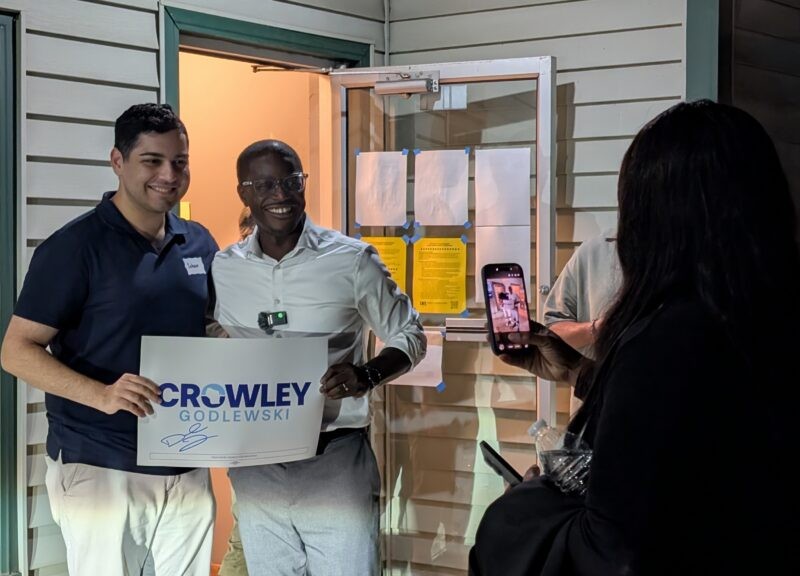
Democratic candidate David Crowley up in polls, down in fundraising
Wisconsin’s race for governor is tight with Democratic gubernatorial candidate David Crowley up in the most recent Marquette poll over Republican gubernatorial candidate Tom Tiffany, but down in fundraising.

Sand completes second 99-county town hall tour of gubernatorial campaign
As Iowa Auditor of State Rob Sand completed a 99-county tour for the second time in his gubernatorial campaign, he called for supporters to keep momentum up and bring “divided government once again” to Iowa.
Bill to end Pennsylvania’s closed primary elections passes state House
A bill to allow independent and third-party voters to cast ballots in Pennsylvania primary elections passed Tuesday in the state House.