
Cannabis wins on the ballot in Missouri, loses in North Dakota, South Dakota
Recreational marijuana use is now legal in Missouri, but not in North Dakota and South Dakota.
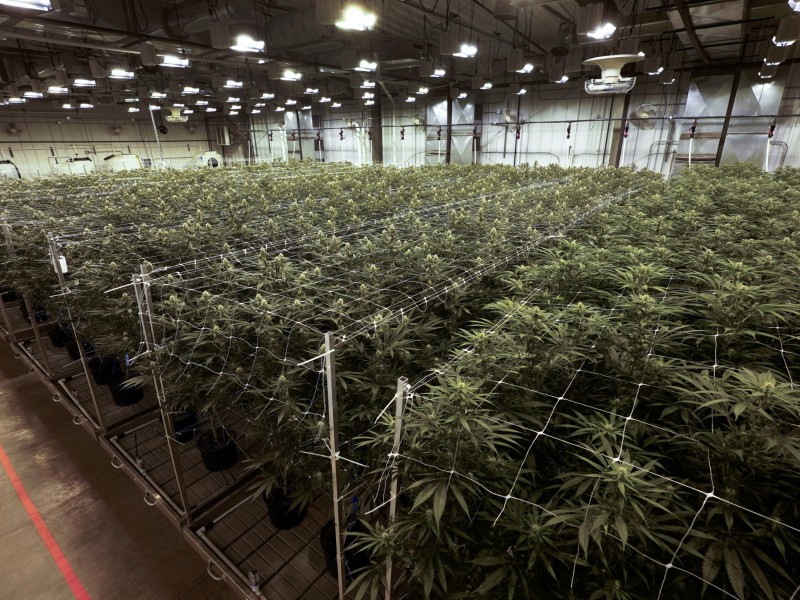
Recreational marijuana use is now legal in Missouri, but not in North Dakota and South Dakota. Voters said “yes” in Missouri and “no” in the Dakotas to measures on Tuesday that make these three Midwestern states join the 20 other states that have now decriminalized the drug. The New York Times made the projections throughout Tuesday and Wednesday.
Missouri voters approved Amendment 3 with 53% of the vote, amending the state’s constitution to legalize recreational marijuana. The Marijuana Legalization Initiative allows people with non-violent marijuana-related offenses to petition for release from prison and have their records expunged, though people can still get fined for using the drug in public.
Tax revenue from recreational cannabis sales will be used to help expunge criminal records, as well as subsidize veterans’ health care, drug treatment, and state public defender programs.
Critics of the measure included a conservative super PAC that falsely claimed it’s an attempt to insert Critical Race Theory into the constitution by creating a position of a “chief equity officer,” the St. Louis Post-Dispatch reported.
North Dakota has once again failed to legalize recreational marijuana, with 55% of voters saying “no” to measure 2. The amendment would have included child custody protections for parents who consume cannabis, meaning they would not lose custody due to use of the drug in compliance with state law.
The coalition New Approach North Dakota raised over half a million dollars to get the proposal on the ballot and run advertisements for it, after a similar measure narrowly failed when it appeared on the ballot in 2018.
South Dakota has also failed to legalize weed for the second time, with 53% of voters saying “no” to measure 17. Voters approved both recreational and medical use back in 2020, but the state Supreme Court nullified the results because of a lawsuit, deeming it unconstitutional. Now, only medical use is allowed in the state.
Measure 27 would have allowed individuals to purchase and possess up to an ounce of marijuana and grow up to three plants at home.
Marijuana laws have been changing rapidly across the U.S. since Washington and Colorado became the first states to legalize cannabis for adult use in 2012. A study shows that 91% of adults favor some form of marijuana legalization, according to a 2021 Pew Research Center survey, and President Joe Biden announced last month that he’d pardon all Americans who have been convicted of simple marijuana possession at the federal level.
Recreational marijuana use is now legal for more than half the nation, as a legal weed measure also won in Maryland.
Heartland Signal encourages news organizations and content creators to use our content. You're welcome to republish this article for free as long as you follow our republishing guidelines.
Related Articles

With Coleman absent, Kessler presses affordability and health card at Minnesota forum
Minnesota Senate District 48 DFL candidate Dan Kessler says health care is the one cost Minnesota can actually bring down. He made his case at a forum his opponent, Sen. Julia Coleman, didn’t attend.
Huizenga campaign spending at center of McCann’s MI-04 challenge
Democrat Sean McCann is making Rep. Bill Huizenga’s campaign spending, including $400,000 paid to his half-brother’s firm, the core of the MI-04 race.
2026 midterm debates: Why candidates are skipping or stalling them
Election debate scheduling has become increasingly contentious across several midterm races this year. Candidates across the Midwest have had disputes over debate participation, logistics and host selection, with some candidates declining to debate altogether.