
Blackburn moves $4.8M from U.S. Senate campaign account in apparent legal ‘workaround’
Tennessee PAC spends the same amount supporting her bid for governor, according to campaign finance reports.
This post has been republished from the Tennessee Lookout under Creative Commons license CC BY-NC-ND 4.0.
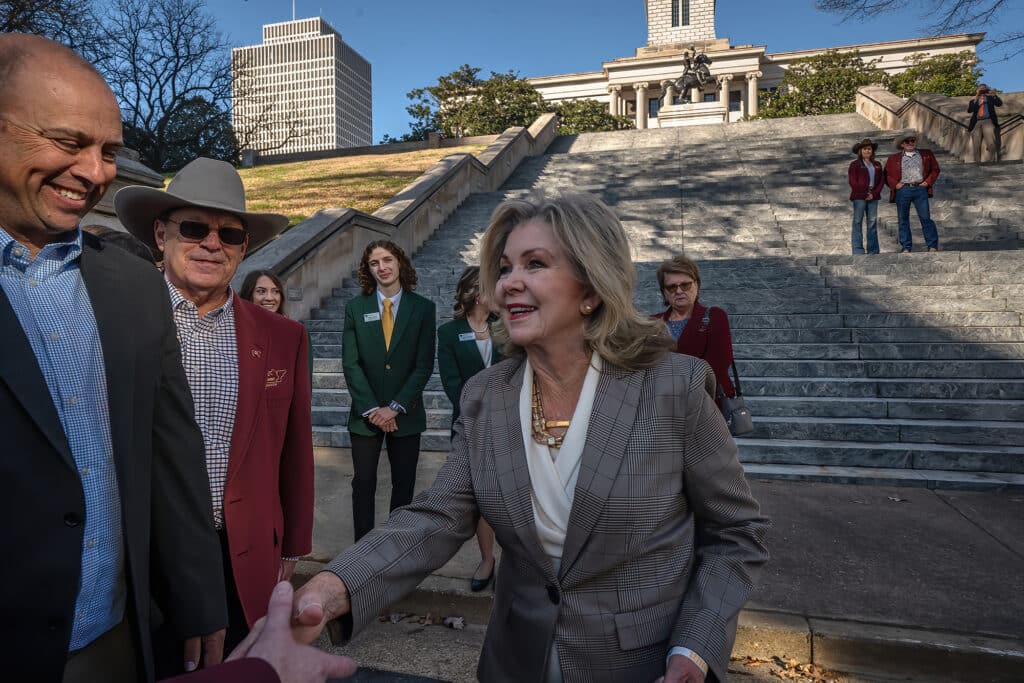
A political action committee operated by officers of the conservative pro-private school voucher group Club For Growth has spent $4.81 million backing U.S. Sen. Marsha Blackburn’s gubernatorial bid, months after Blackburn donated a nearly identical amount to the organization’s primary PAC, campaign finance reports show.
In May, Blackburn nearly emptied her federal campaign account, donating $4.8 million to the Club for Growth PAC.
Tennessee Freedom Fund, one of several PACs with close ties to Club for Growth, has been purchasing TV advertisements praising Blackburn and attacking her opponent, U.S. Rep. John Rose, since June.
Under Tennessee law, Blackburn is not allowed to directly spend her U.S. Senate campaign money in the governor’s race. Federal law does not prohibit the transaction.
“It clearly reads as a workaround to get her remaining federal campaign war funds into the state race,” said Brendan Glavin, the director of insights with OpenSecrets, a nonpartisan organization that tracks political spending.
Club for Growth operates multiple federal and state PACs that are referred to as independent expenditure groups. These groups are allowed to raise and spend unlimited funds supporting or opposing candidates, as long as they don’t coordinate with the campaigns they’re helping.
The Tennessee Freedom Fund PAC and Club for Growth Action PAC are both registered to the same Washington, D.C., address and have the same listed officers, Club for Growth CEO David McIntosh and CFO Adam Rozansky, according to federal and state campaign records.
Glavin said the layering of money makes it seem like the cash supporting Blackburn is “technically coming from another source.”
“But it is hard to ignore the obvious connection between the transactions,” Glavin said.
The Lookout asked Blackburn’s campaign manager, Abigail Sigler, specific questions about the donation and the various transactions. Sigler did not answer any of the questions.
The Lookout made multiple attempts to reach Club for Growth, including sending detailed questions about transactions and whether the donations were connected. A Club for Growth staff member answered the Lookout’s phone call Friday and said they would “get back” to us with a response. As of publication, no one from Club for Growth has answered our questions.
A dismissed complaint
Blackburn began telling people close to her she planned to run for governor in December 2024, but she didn’t make an official announcement until August 2025.
Following her November 2024 Senate reelection, Federal Election Commission records show, she continued to fundraise and spent $3.2 million in Senate campaign funds in 2025. Her spending pace was similar to what she spent during the 2024 Senate election, even though her next reelection bid wouldn’t come until 2030.
Gary Loe, a longtime Knoxville Republican activist, filed a complaint earlier this year with the state campaign finance regulator accusing Blackburn of using her Senate account to pay for advertisements, staff and travel that would help her run for governor before she announced her candidacy.
The state campaign finance board dismissed Loe’s complaint, finding that Blackburn is allowed to operate both accounts, and that because she wasn’t officially a gubernatorial candidate, they couldn’t weigh in on her Senate spending. The board declared any complaints over her federal spending would have to be made to the FEC. No FEC complaint has been filed.
State funds in federal races
Over the past decade, former state Sen. Brian Kelsey and former state House Speaker Beth Harwell both faced ethics complaints related to how they moved state campaign funds to groups helping them in federal races.
Kelsey, during his 2016 failed bid for a U.S. House seat, moved around $106,000 from his state campaign account through several PACs, eventually reaching the American Conservative Union, which purchased radio advertisements to boost his election.
Prosecutors detailed the lengths to which Kelsey went to conceal the money’s movements as a reason for bringing the case forward.
Kelsey pleaded guilty to two counts of campaign finance violations. He served two weeks in prison before President Donald Trump pardoned him.
Harwell agreed to pay a $16,000 fine after she moved $47,000 from two state campaign PACs to a federal super PAC that bought ads attacking one of her primary opponents in a failed 2022 bid for U.S. Congress.
Both these transactions were moves from state accounts to benefit federal races, which the FEC explicitly bans.
Sam Stockard contributed to this report.
Heartland Signal encourages news organizations and content creators to use our content. You're welcome to republish this article for free as long as you follow our republishing guidelines.
Related Articles
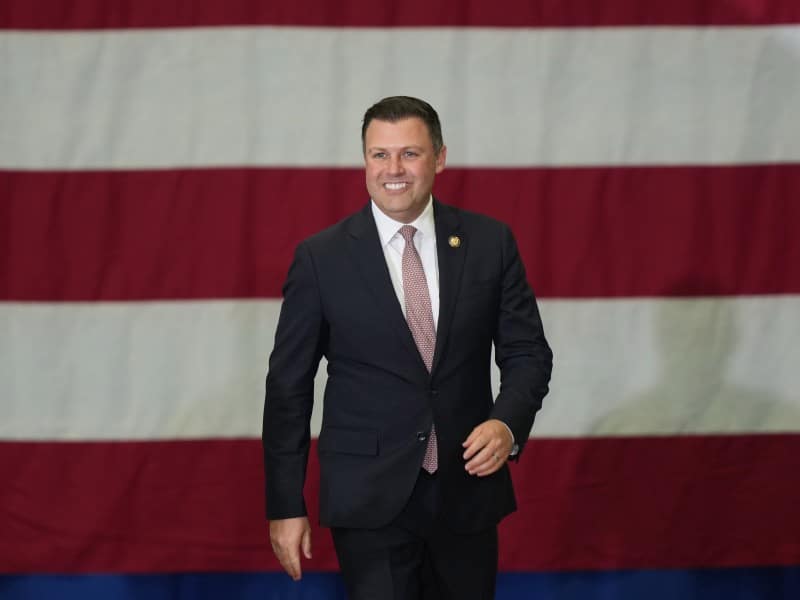
Mackenzie aide was in 2018 chat that shared racist, antisemitic memes
Pennsylvania Rep. Ryan Mackenzie voted for House resolutions condemning antisemitism, but his communications director, Arnaud Armstrong, was part of a college group chat that shared racist and antisemitic memes, including fabricated quotes from Adolf Hitler.
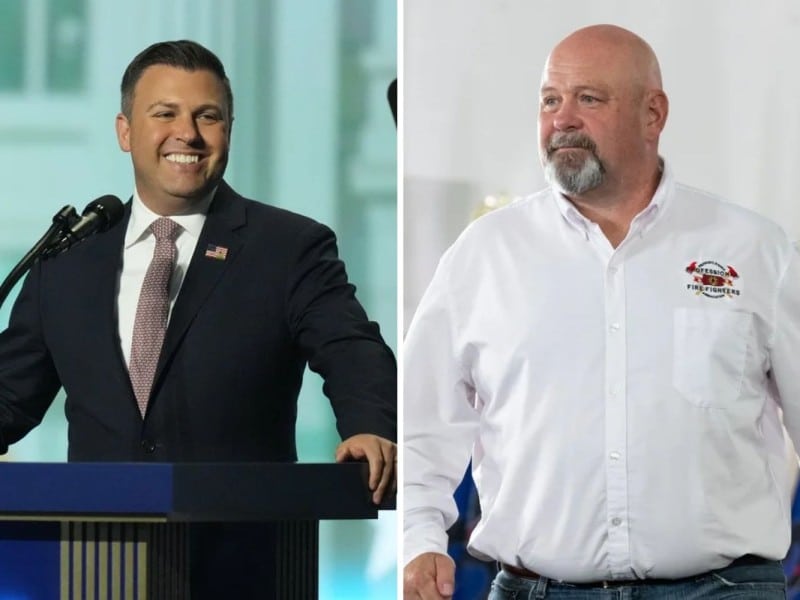
Mackenzie vs. Brooks: What’s at stake in Pennsylvania’s 7th Congressional District
Voters in Pennsylvania’s 7th Congressional District are weighing two vastly different visions on healthcare and rising costs. Republican Rep. Ryan Mackenzie backed federal Medicaid cuts, while Democratic challenger Bob Brooks, a local firefighter, is centering his campaign on expanded coverage and corporate accountability.
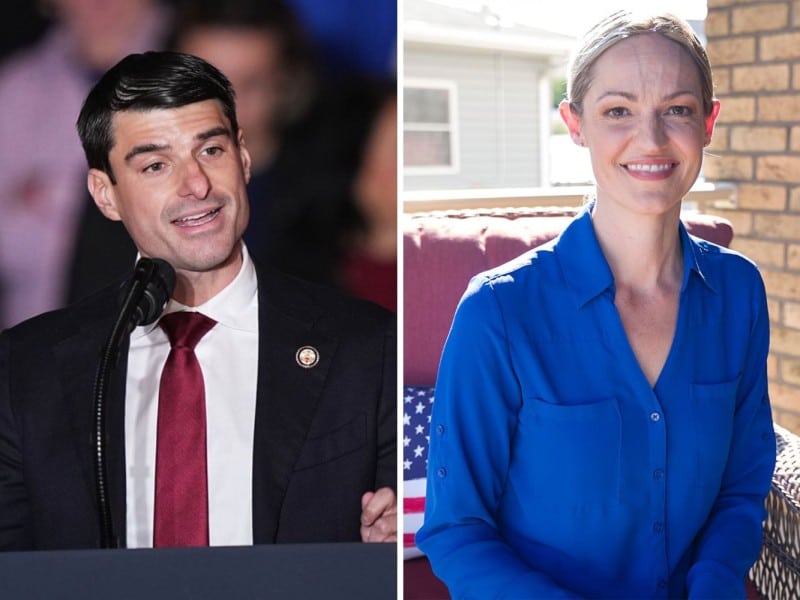
Bresnahan vs. Cognetti: What’s at stake in Pennsylvania’s 8th Congressional District
Voters in Pennsylvania’s 8th Congressional District are facing higher health care and living costs. Rep. Rob Bresnahan voted for legislation that slashed Medicaid and supported tariffs that raised prices on everyday goods. Scranton Mayor Paige Cognetti says it’s time to stop politicians from enriching themselves at the public’s expense.