
How LGBTQ+ organizers in the Midwest are “innoculating” against transphobia
LGBTQ+ advocacy organizations in Missouri and Michigan used a strategy called deep canvassing, which aims to build emotional connections, to shift public perception of transgender rights before the 2026 midterm elections.
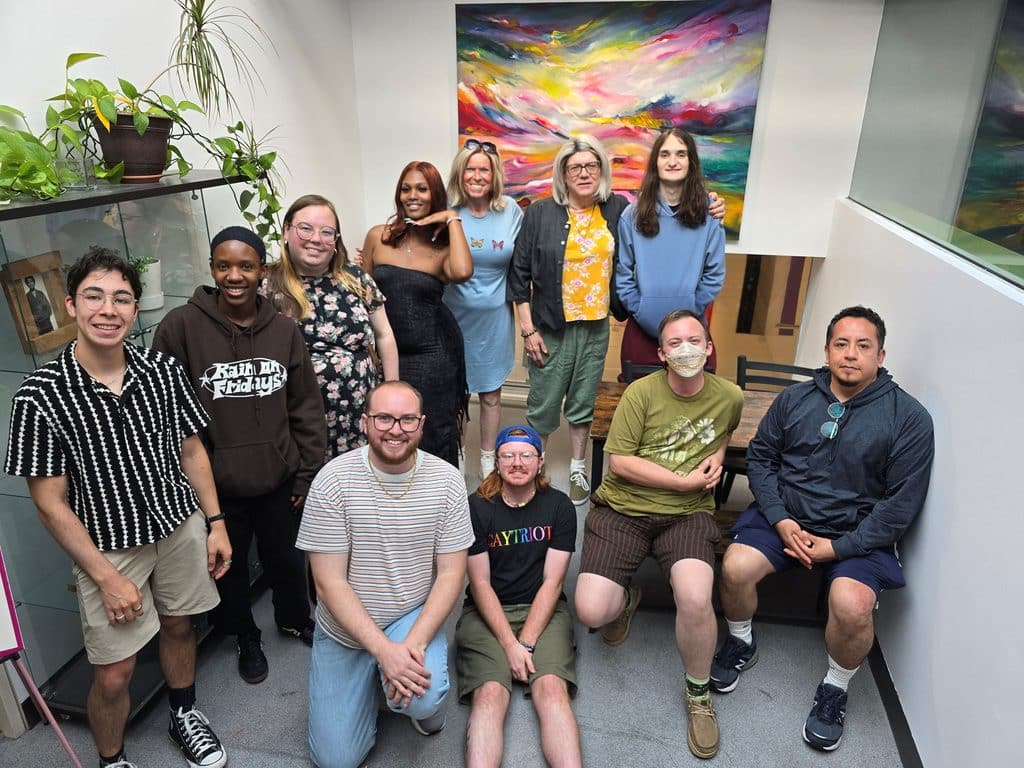
It can be daunting to knock on a stranger’s door, especially for transgender or non-binary folks — even more so for those who are about to reveal that information to that stranger in an effort to change their perception of the trans community. That’s what organizers in Missouri and Michigan did before the midterm elections this year.
The last several years has seen an increase in political spending targeting transgender people, and states have passed a barrage of laws regulating bathroom access, sports participation and access to gender-affirming care. Since the 2022 midterms, public support for protections for transgender Americans has decreased, while support for restrictions has increased.
That’s why the Equality Federation created the Trans Organizing Narrative Shift, a strategy to shift public perception and support of trans rights issues by going door-to-door and talking with people. Multiple organizations in the Midwest participated in the program in the past two years.
LGBTQ+ advocates are calling the strategy a success, and they plan to keep using it next year.
What is deep canvassing?
Ricky Servantez Bicknell is the deep canvass campaign manager at Equality Michigan. They said the program prioritizes conversation.
“Deep canvassing is much more of a storytelling kind of device,” they said.
There’s no quota and no pamphlets or flyers. Bicknell’s team started deep canvassing in June, focusing on Oakland County in the Metro Detroit area. All of Equality Michigan’s canvassers are trans or non-binary, Bicknell said.
Courtney Cook is a field organizer with PROMO, Missouri’s statewide LGBTQ+ advocacy organization. She said deep canvassing conversations provide opportunities that social media doesn’t.
“Getting to relate to someone on an emotional level will move mountains in comparison to like spitting facts at someone,” she said. “And so, it really creates an opportunity for us to like be vulnerable with our neighbors and have transparent, real conversations and get to know each other better.”
PROMO’s canvassers are a mix of trans and non-binary Missourians and allies, she said. Canvassing teams visited five regions across the state before the midterm elections.
Does deep canvassing work?
Bicknell said the project started after the 2024 presidential election, where the GOP spent millions on political advertisements targeting trans people.
The Equality Federation found that about 75% of American adults are “persuadable” on trans issues, according to internal documents shared with Heartland Signal. Equality Michigan ran a pilot program in 2025, canvassing in southeast and central Michigan.
To measure their progress, canvassers started and ended conversations with the same question: “On a scale of one to ten, one being opposed and ten being fully supportive, how much do you support trans rights?”
Bicknell said preliminary data from Equality Michigan’s efforts showed one in five residents they talked to became more supportive of trans rights after a conversation. PROMO will release their data when the organization finishes its campaign report, a spokesperson for the organization said. Both groups were unable to provide the data they collected to Heartland Signal, but research into deep canvassing in Miami in 2015 found that one conversation lasting about 10 minutes “substantially reduced transphobia” in a significant number of respondents.
In Missouri, Cook’s team was canvassing to oppose Amendment 3, a ballot measure that would have amended the state constitution to ban gender-affirming care for minors and most elective abortions. The measure did not pass on Nov. 3. Cook said PROMO’s efforts and the work done by the broader coalition opposing Amendment 3 had a real impact.
“It was an incredible moment to really feel like the tangible work that we did led to this outcome, so it was really special,” she said.
What other effects does this strategy have?
There were no ballot measures specific to LGBTQ+ or trans rights on the Michigan ballot, but the deep canvassing is still necessary, Bicknell said.
“What we’re doing is inoculating against future attacks,” they said.
Bicknell shared a story about one canvasser who is a veteran, and connected with a married couple whose child is currently serving in the military. Another canvasser met a medical resident who was still deciding which specialty to choose. By the end of their conversation, the resident said he wanted to go into psychiatric medicine to provide gender-affirming care for trans people, Bicknell said.
The strategy is meant to be proactive instead of reactive.
“The goal was never specifically to be reactionary to a ballot measure or to a piece of legislation,” they said. “We are in some ways allowing people who oppose us to define us, and that is not okay. And so we wanted to take the narrative back and try to move it in a direction that is like authentic and from trans people.”
The program serves another purpose: recruiting trans and non-binary community members and training them, Bicknell said.
“A lot of that work is vital in centering trans people by investing in trans people [and] in empowering trans people to lead the work and to drive that conversation,” they said.
What about safety concerns?
But approaching people in their homes comes with risks as well.
“That first time that you go up and you knock on a stranger’s door, it is like, ‘Oh no, what am I going to get on the other side?’” Cook said.
Before hitting the pavement, PROMO’s team practiced their canvassing skills with a group of nuns. Once they got a few houses under their belt, it felt easier, she said.
Bicknell said the Equality Michigan team prioritized safety over all else, and only had to file a police report once. One canvassing team reported that someone had started following them and shouting at them. That happened in the fall during a get-out-the-vote canvassing campaign, not the deep canvassing project during the summer.
“The odds are still very much in favor [that] this is still safe and normal kind of work,” Bicknell said.
Concerns about safety did make it harder to find recruits, Bicknell said. And the work is emotionally draining.
“There was, I don’t know, a toll that it takes on a person to be that vulnerable all the time, and to use your personal story in a way that can be misconstrued,” they said.
On top of that, it’s a lot of work to organize and staff campaigns like these. Equality Michigan knocked on 6,000 doors and had 1,365 conversations over the course of several weeks. PROMO visited tens of thousands of residences. And people are busy — not everyone has time for an unscheduled conversation with a stranger, Bicknell acknowledged.
What does next year look like?
But Cook and Bicknell said it was worth the work.
“What this has shown us is that it’s an incredibly powerful tool that I personally believe could like change the way that we see wins across the country,” Cook said.
She said PROMO plans to continue deep canvassing next year and for the foreseeable future. Missouri is still a very red state after the midterms, and there are several issues the organization could tackle, such as non-discrimination protection for gender identity and sexual orientation and modernizing state laws surrounding unintentional HIV transmission, she said.
In Michigan, Bicknell and their coworkers are starting to process the data they collected over the summer. They’re hoping to resume canvassing in April or May, when it’s warmer outside — and after finding ways to do the work without burning out. Like Cook, Bicknell said the program gives them hope.
“I’m a cynical person like a lot of folks, and I’ve been around the block, been working in politics and public policy for like 15 years,” they said. “But this has really just warmed my heart and soul, and reminded me of why the work is so important and why we continue to do it.”
Heartland Signal encourages news organizations and content creators to use our content. You're welcome to republish this article for free as long as you follow our republishing guidelines.
Related Articles
Ohio AG joins 42 others in fighting federal sports-betting maneuver
Ohio AG Andy Wilson joins a bipartisan group of 43 state attorneys general to fight for state authority to regulate sports betting.
Will the Democrats’ trifecta mean action on Wisconsin’s Black maternal health crisis?
Black lawmakers and advocates in Wisconsin want the incoming Democratic majority to pass the long-stalled Birth Equity Act.
Missouri Republicans weigh another redistricting fight after voters reject GOP map
Missouri voters rejected a Republican-drawn congressional map earlier this month. But was that the end of the state’s redistricting fight?